
Pulp Fiction, 1862 · page 37 of 114
Beadle's Dime Novels No. 35: East and West — page 37: what you’re looking at
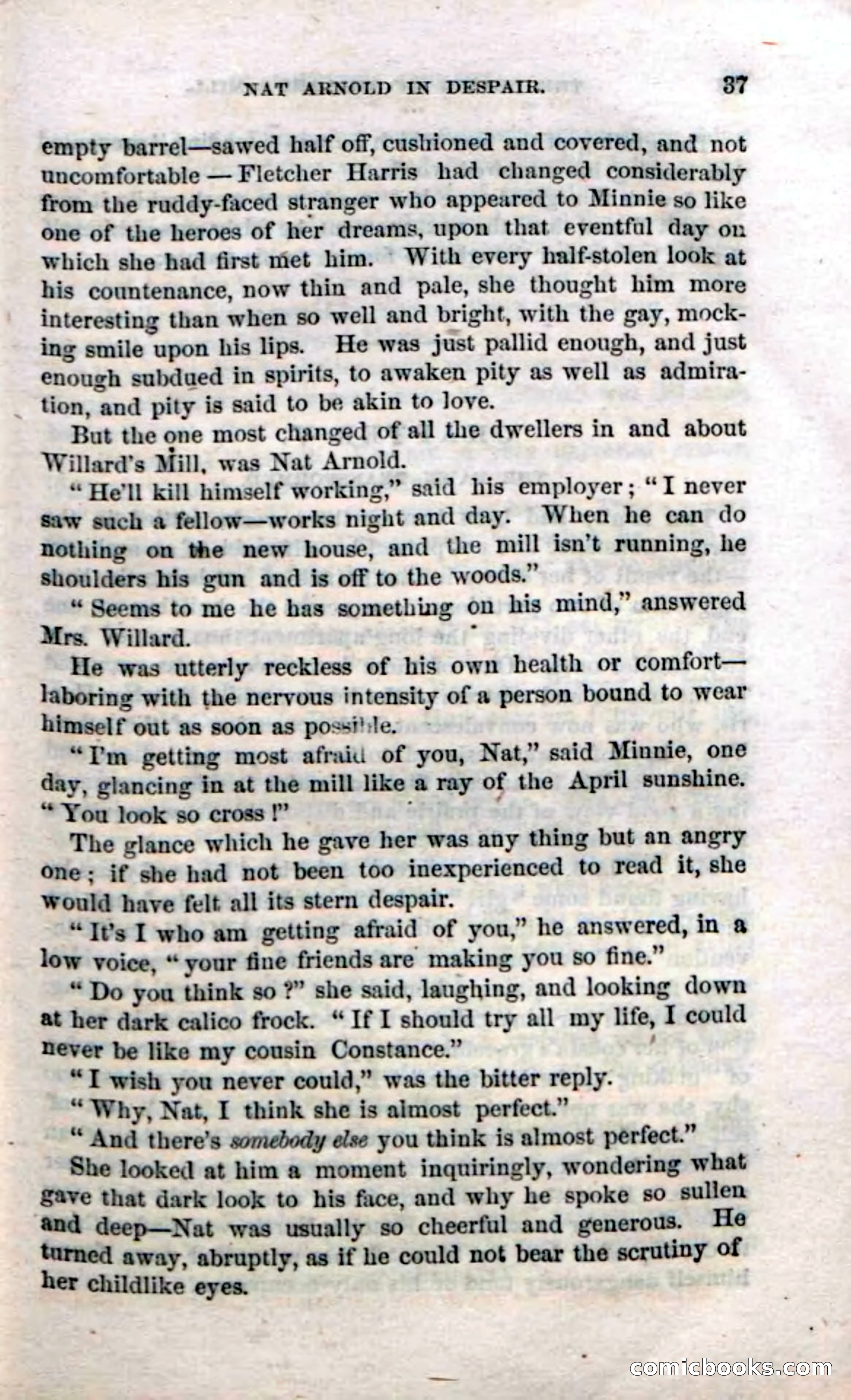
A restored page from Pulp Fiction, 1862. Page through the whole issue in the reader above.
📄 Transcribed text from this page (OCR, searchable)
Machine-transcribed from the original scan — historical spelling and the odd misread are preserved.
NAT ARNOLD IN DESPATR. 87 empty barrel—sawed half off, cushioned and covered, and not uncomfortable — Fletcher Harris had changed considerably from the ruddy-faced stranger who appeared to Minnie so like one of the heroes of her dreams, upon that eventful day on which she had first met him. © With every half-stolen look at his countenance, now thin and pale, she thought him more interesting than when so well and bright, with the gay, mock- ing smile upon his lips. He was just pallid enough, and just enough subdued in spirits, to awaken pity as well as admira- _ tion, and pity is said to be akin to love. But the one most changed of all the dwellers in and about Willard’s Mill, was Nat Arnold. “ He'll kill himself working,” said his employer ; “TI never saw such a fellow—works night and day. When he can do nothing on the new house, and the mill isn’t running, he shoulders his gun and is off to the woods.” “ Seems to me he has something on his mind,” answered Mrs. Willard. . He was utterly reckless of his own health or comfort— laboring with the nervous intensity of a person bound to wear himself out as soon as possi!ile. “I'm getting most afraid of you, Nat,” said Minnie, one day, glancing in at the mill like a ray of the April sunshine. “You look so cross !” : The glance which he gave her was any thing but an angry one; if she had not been too inexperienced to read it, she Would have felt all its stern despair. “T's I who am getting afraid of you,” he answered, in a low voice, “ your fine friends are making you so fine.” “Do you think so ?” she said, laughing, and looking down at her dark calico frock. “If I should try all my life, I could never be like my cousin Constance.” ; “TI wish you never could,” was the bitter reply. “Why, Nat, I think she is almost perfect.” “ And there’s somebody else you think is almost perfect.” She looked at him a moment inquiringly, wondering what ‘Save that dark look to his face, and why he spoke so sullen and deep—Nat was usually so cheerful and generous. He tamed away, abruptly, as if he could not bear the scrutiny of e eyes. comlicloolks.comn