
Pulp Fiction, 1861 · page 9 of 228
Beadle's Dime Novels No. 33: Maum Guinea and Her Plantation Children — page 9: what you’re looking at
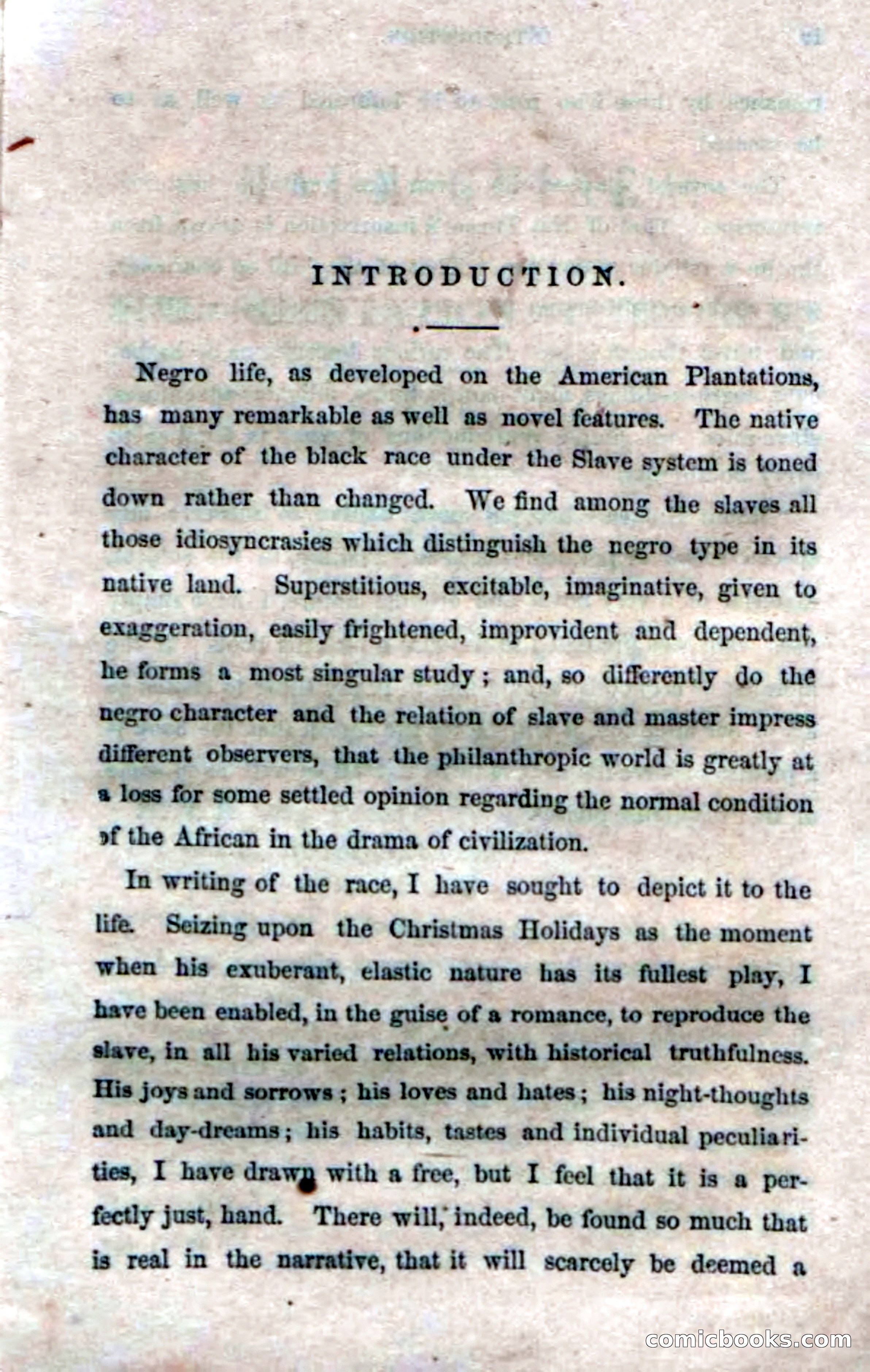
A restored page from Pulp Fiction, 1861. Page through the whole issue in the reader above.
📄 Transcribed text from this page (OCR, searchable)
Machine-transcribed from the original scan — historical spelling and the odd misread are preserved.
INTRODUCTION. s on Negro life, as developed on the American Plantations, has many remarkable as well as novel features. The native character of the black race under the Slave system is toned down rather than changed. We find among the slaves all those idiosyncrasies which distinguish the negro type in its native land. Superstitious, excitable, imaginative, given to exaggeration, easily frightened, improvident and dependent, he forms a most singular study ; and, so differently do the negro character and the relation of slave and master impress different observers, that the philanthropic world is greatly at 2 loss for some settled opinion regarding the normal condition of the African in the drama of civilization. In writing of the race, I haye sought to depict it to the life. Seizing upon the Christmas Holidays as the moment when his exuberant, elastic nature has its fullest play, I have been enabled, in the guise of a romance, to reproduce the slave, in all his varied relations, with historical truthfulness. His joys and sorrows ; his loves and hates; his night-thoughts and day-dreams; his habits, tastes and individual peculiari- ties, I have drawg with a free, but I feel that it is a per- fectly just, hand. There will; indeed, be found so much that is real in the narrative, that it will scarcely be deemed a Commiclooksaconn