
Pulp Fiction, 1861 · page 41 of 228
Beadle's Dime Novels No. 33: Maum Guinea and Her Plantation Children — page 41: what you’re looking at
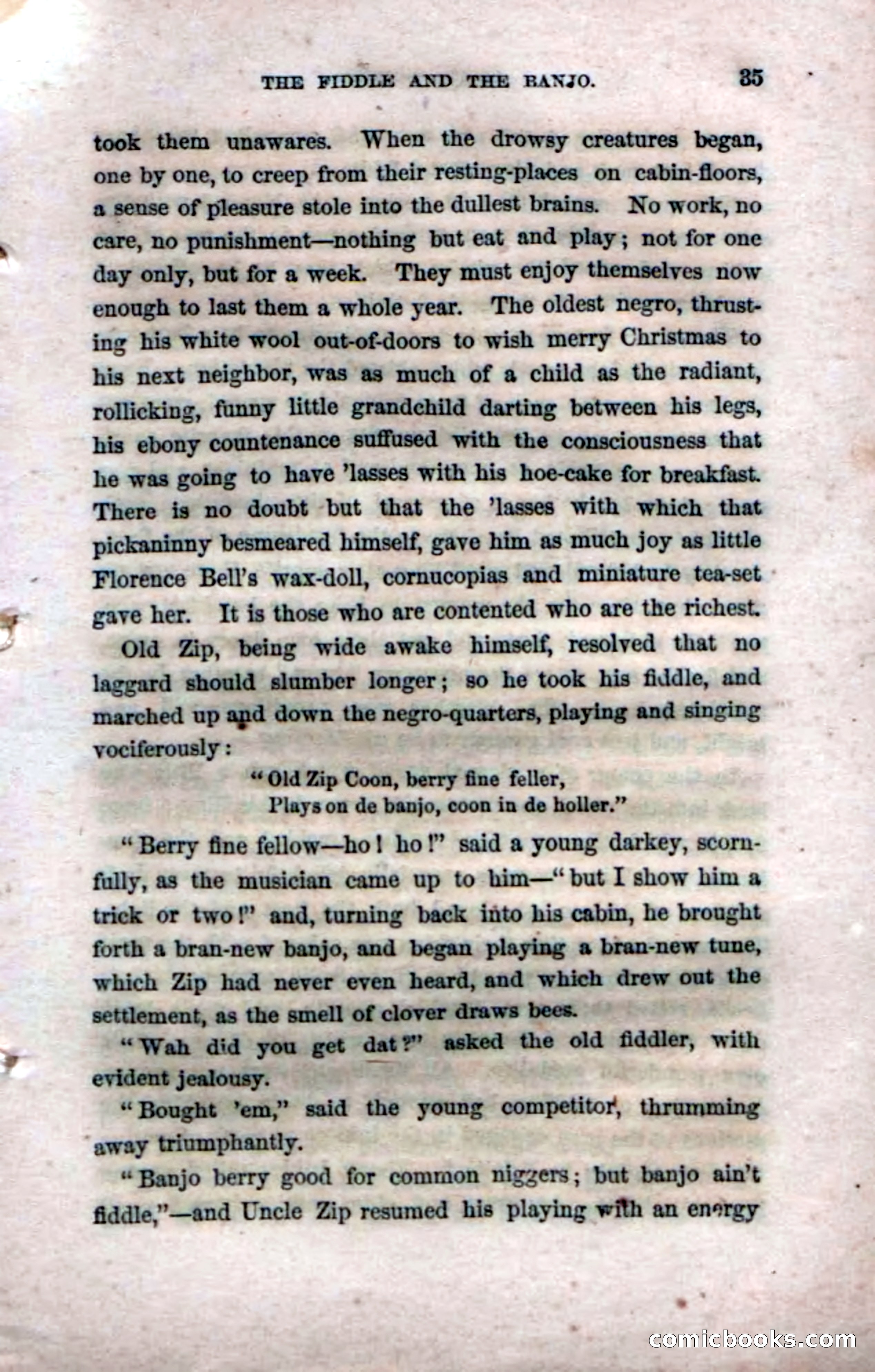
A restored page from Pulp Fiction, 1861. Page through the whole issue in the reader above.
📄 Transcribed text from this page (OCR, searchable)
Machine-transcribed from the original scan — historical spelling and the odd misread are preserved.
THE FIDDLE AND THE BANJO. 85 took them unawares. When the drowsy creatures began, one by one, to creep from their resting-places on cabin-floors, a sense of pleasure stole into the dullest brains. No work, no care, no punishment—nothing but eat and play; not for one day only, but for a week. They must enjoy themselves now enough to last them a whole year. The oldest negro, thrust- ing his white wool out-of-doors to wish merry Christmas to his next neighbor, was as much of a child as the radiant, rollicking, funny little grandchild darting between his legs, his ebony countenance suffused with the consciousness that he was going to have “lasses with his hoe-cake for breakfast. There is no doubt but that the ‘lasses with which that pickaninny besmeared himself, gave him as much joy as little Florence Bell’s wax-doll, cornucopias and miniature tea-set gave her. It is those who are contented who are the richest. Old Zip, being wide awake himself, resolved that no laggard should slumber longer; so he took his fiddle, and marched up apd down the negro-quarters, playing and singing vociferously : | “Qld Zip Coon, berry fine feller, Plays on de banjo, coon in de holler.” “Berry fine fellow—ho! ho!” said a young darkey, scorn- fully, as the musician came up to him—“ but I show him a trick or two!” and, turning back into his cabin, he brought forth a bran-new banjo, and began playing a bran-new tune, which Zip had never even heard, and which drew out the settlement, as the smell of clover draws bees. — | “Wah aa eng an” asked the old fiddler, with evident jealousy. “Bought ’em,” said the young competitor, thrumming away triumphantly. “Banjo berry good for common nigzers; but banjo ain’t fiddle,”—and Uncle Zip resumed his playing with an ensrgy cComichookscom