
Pulp Fiction, 1861 · page 26 of 228
Beadle's Dime Novels No. 33: Maum Guinea and Her Plantation Children — page 26: what you’re looking at
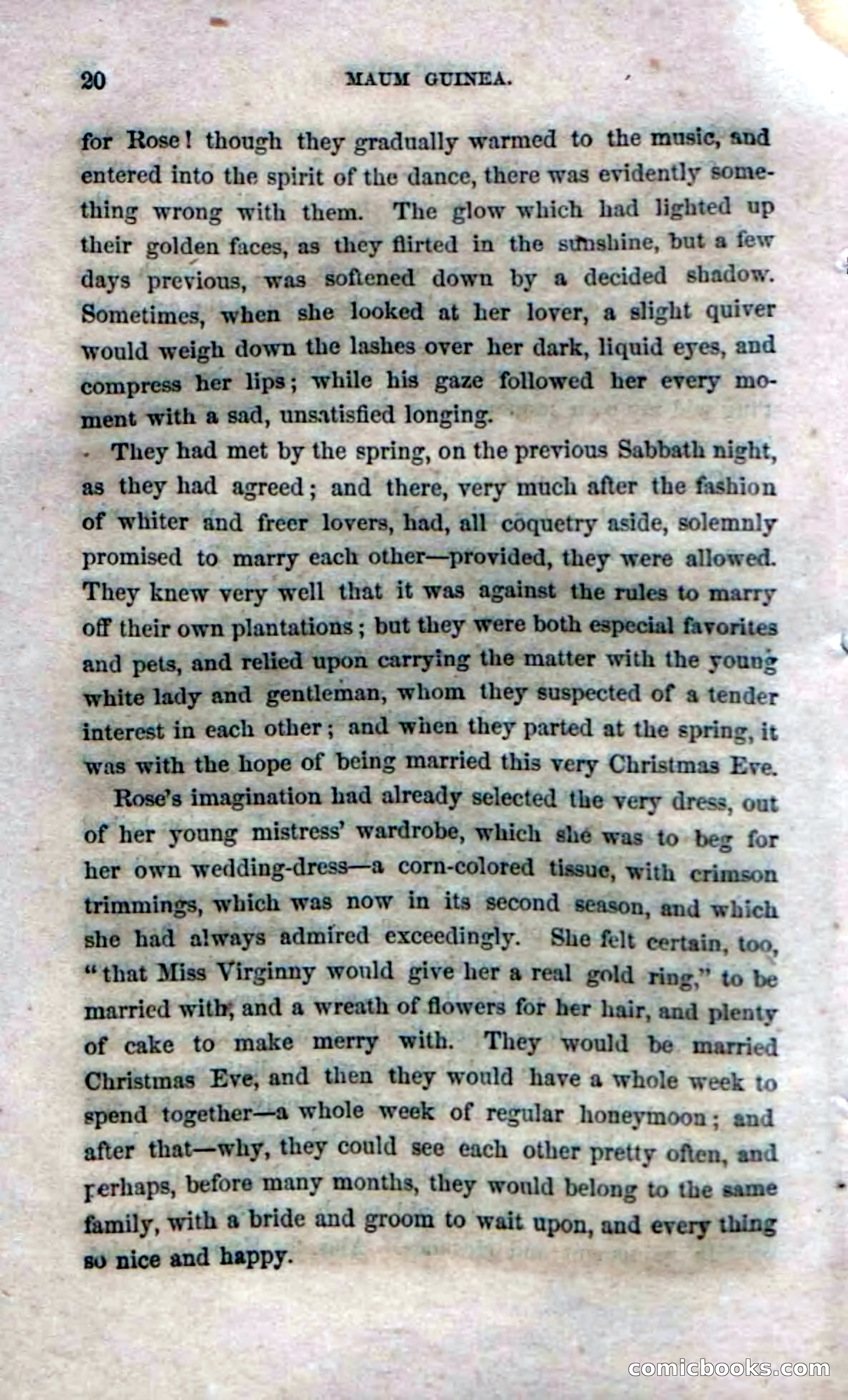
A restored page from Pulp Fiction, 1861. Page through the whole issue in the reader above.
📄 Transcribed text from this page (OCR, searchable)
Machine-transcribed from the original scan — historical spelling and the odd misread are preserved.
20 MAUM GUINEA. for Rose! though they gradually warmed to the music, and entered into the spirit of the dance, there was evidently some- thing wrong with them. The glow which had lighted up their golden faces, as they flirted in the stMshine, but a few days previous, was softened down by a decided shadow. Sometimes, when she looked at her lover, a slight quiver would weigh down the lashes over her dark, liquid eyes, and Sapa ne een ee wre Ine ment with a sad, unsatisfied longing. ~ . - They had met by the spring, on the previous Sabbath nicht, as they had agreed; and there, very much after the fashion of ‘whiter ind freer lovers, had, all coquetry aside, solemnly promised to marry each other—provided, they were allowed. They knew very well that it was. against the rules to marry off their own plantations ; but they were both especial favorites and pets, and relied upon carrying the matter with the young white lady and gentleman, whom they suspected of a tender interest in each other; -and when they parted at the spring, it ‘was with the hope of being married this very Christmas Eve. ‘Rose’s imagination had already selected the very dress, out of her young mistress’ wardrobe, which shé was-to beg for her own wedding-dress—a corn-colored tissue, with crimson trimmings, which was now in its second season, and which she had always admired exceedingly. She felt certain, too, “that Miss Virginny would give her a real gold. ring.” to be married with, and a wreath of flowers for her hair, and plenty of cake to make merry with. They would be married Christmas Eve, and then they would have a whole week to spend ‘together—a whole week of regular honeymoon; and after that—why, they could see each other pretty often, and yerhaps, before many months, they would belong to the same he ce eee sd nice and happy. GOmmicoooks.aconn