
Pulp Fiction, 1874 · page 15 of 94
Beadle's Dime Novels No. 310: Foghorn Phil — page 15: what you’re looking at
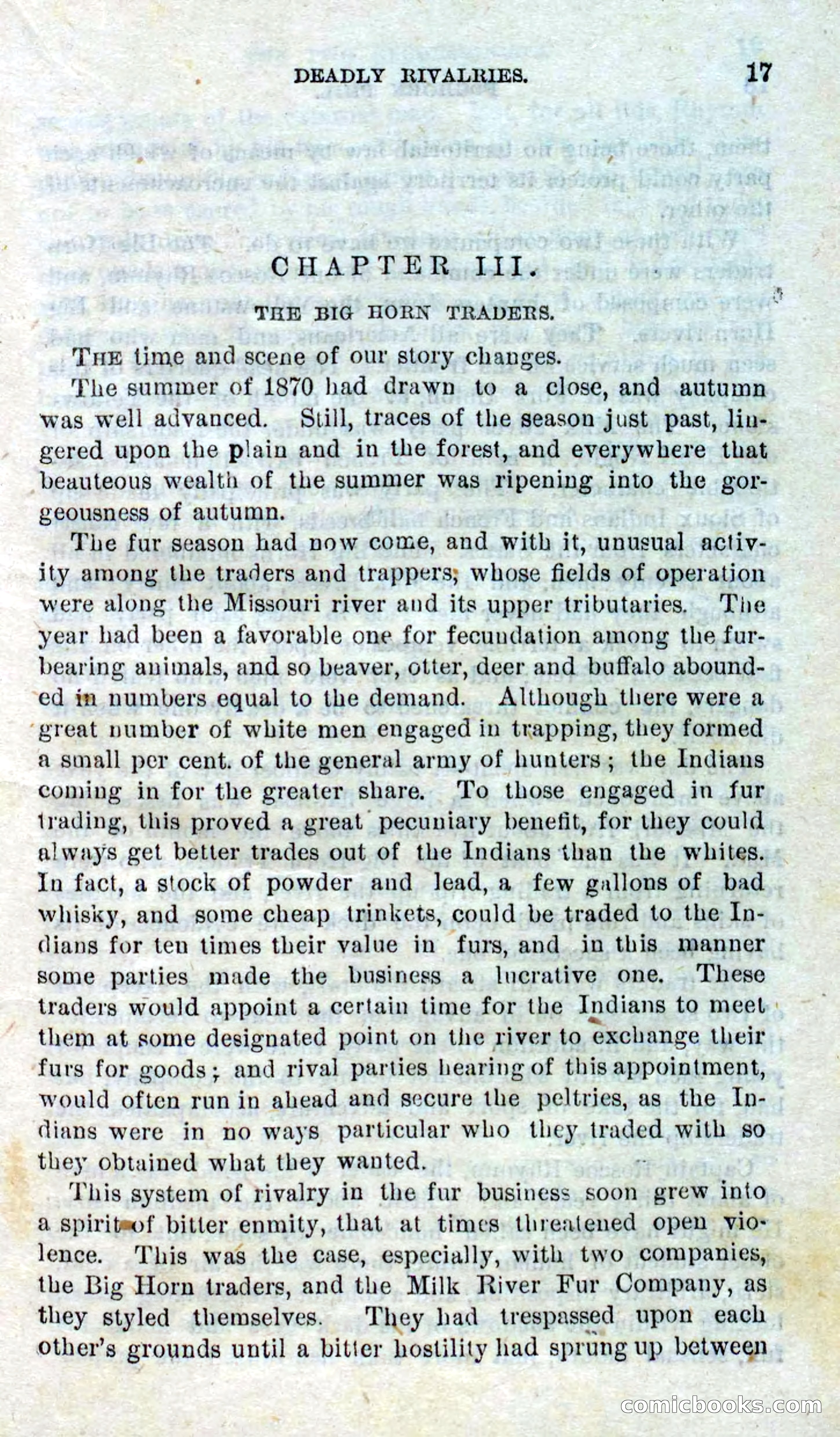
A restored page from Pulp Fiction, 1874. Page through the whole issue in the reader above.
📄 Transcribed text from this page (OCR, searchable)
Machine-transcribed from the original scan — historical spelling and the odd misread are preserved.
DEADLY RIVALRIES. 17 CHAPTER. III. THH BIG HORN TRADERS. "oa THe time and scene of our story changes. The summer of 1870 had drawn to a close, and autumn was well advanced. till, traces of the season just past, lin- gered upon the plain and in the forest, and everywhere that beauteous wealth of the summer was ripening into the gor- geousness of autumn. The fur season had now come, fad with it, unusual activ- ity among the traders and trappers; whose fielda of operation were along the Missouri river and its upper tributaries. The year had been a favorable one for fecundation among the fur- bearing animals, and so beaver, otter, deer and buffalo abound- ed in numbers equal to the demand. Although there were a ‘great number of white men engaged in trapping, they formed a small per cent. of the general army of hunters; the Indians coming in for the greater share. ‘To those engaged in fur lrading, this proved a great pecuniary benefit, for they could always get better trades out of the Indians than the whites. In fact, a stock of powder and lead, a few gallons of bad whisky, and some cheap trinkets, could be traded to the In- dians for ten times their value in furs, and in this manner some parties made the business a lucrative one, These traders would appoint a certain time for the Indians to meet. them at some designated point on the river to exchange their furs for goods; and rival parties hearing of this appointment, would often run in ahead and secure the peltries, as the In- dians were in no ways particular who they traded with so they obtained what they wanted. . This system of rivalry in the fur business soon grew into a Spiriteof bitter enmity, that at times threatened open vio- lence. This was the case, especially, with two companies, — the Big Horn traders, and the Milk River Fur Company, as _ they styled themselves. They had trespassed upon each | other’s grounds until a bitter hostility had sprung up between comiiclbooks.conn