
Pulp Fiction, 1860 · page 88 of 130
Beadle's Dime Novels No. 3: Myra, the Child of Adoption — page 88: what you’re looking at
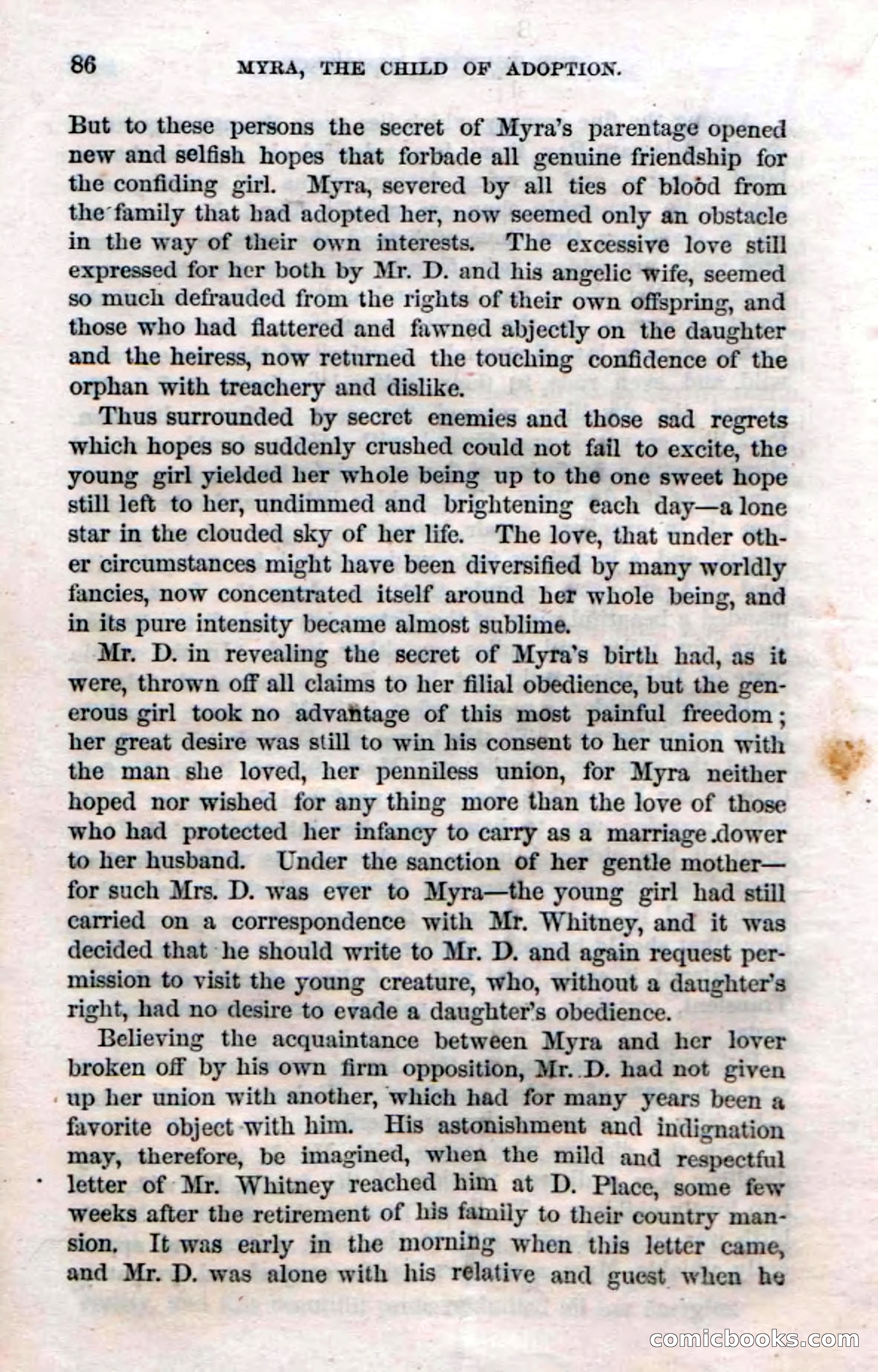
A restored page from Pulp Fiction, 1860. Page through the whole issue in the reader above.
📄 Transcribed text from this page (OCR, searchable)
Machine-transcribed from the original scan — historical spelling and the odd misread are preserved.
86 MYRA, THE CHILD OF ADOPTION. But to these persons the secret of Myra’s parentage opened new and selfish hopes that forbade all genuine friendship for the confiding girl. Myra, severed by all ties of blodd from the family that had adopted her, now seemed only an obstacle in the way of their own interests. The excessive love still expressed for her both by Mr. D. and his angelic wife, seemed so much defrauded from the rights of their own offspring, and those who had flattered and fawned abjectly on the daughter and the heiress, now returned the touching confidence of the orphan with treachery and dislike. Thus surrounded by secret enemies and those sad regrets which hopes so suddenly crushed could not fail to excite, the young girl yielded her whole being up to the one sweet hope still left to her, undimmed and brightening each day—a lone star in the clouded sky of her life. The love, that under oth- er circumstances might have been diversified by many worldly fancies, now concentrated itself around her whole being, and in its pure intensity became almost sublime. Mr. D. in revealing the secret of Myra’s birth had, as it were, thrown off all claims to her filial obedience, but the gen- erous girl took no advattage of this most painful freedom ; her great desire was still to win his consent to her union with the man she loved, her penniless union, for Myra neither hoped nor wished for any thing more than the love of those who had protected her infancy to carry as a marriage dower to her husband. Under the sanction of her gentle mother— for such Mrs. D. was ever to Myra—the young girl had still carried on a correspondence with Mr. Whitney, and it was decided that he should write to Mr. D. and again request per- mission to visit the young creature, who, without a daughter's right, had no desire to evade a daughter’s obedience. Believing the acquaintance between Myra and her lover broken off by his own firm opposition, Mr..D. had not given -up her union with another, which had for many years been a favorite object with him. His astonishment and indignation may, therefore, be imagined, when the mild and respectful letter of Mr. Whitney reached him at D. Place, some few weeks after the retirement of his family to their country man- sion, It was early in the morning when this letter came, and Mr. D. was alone with his rélative and guest when he commicloooks.conn