
Pulp Fiction, 1860 · page 65 of 130
Beadle's Dime Novels No. 3: Myra, the Child of Adoption — page 65: what you’re looking at
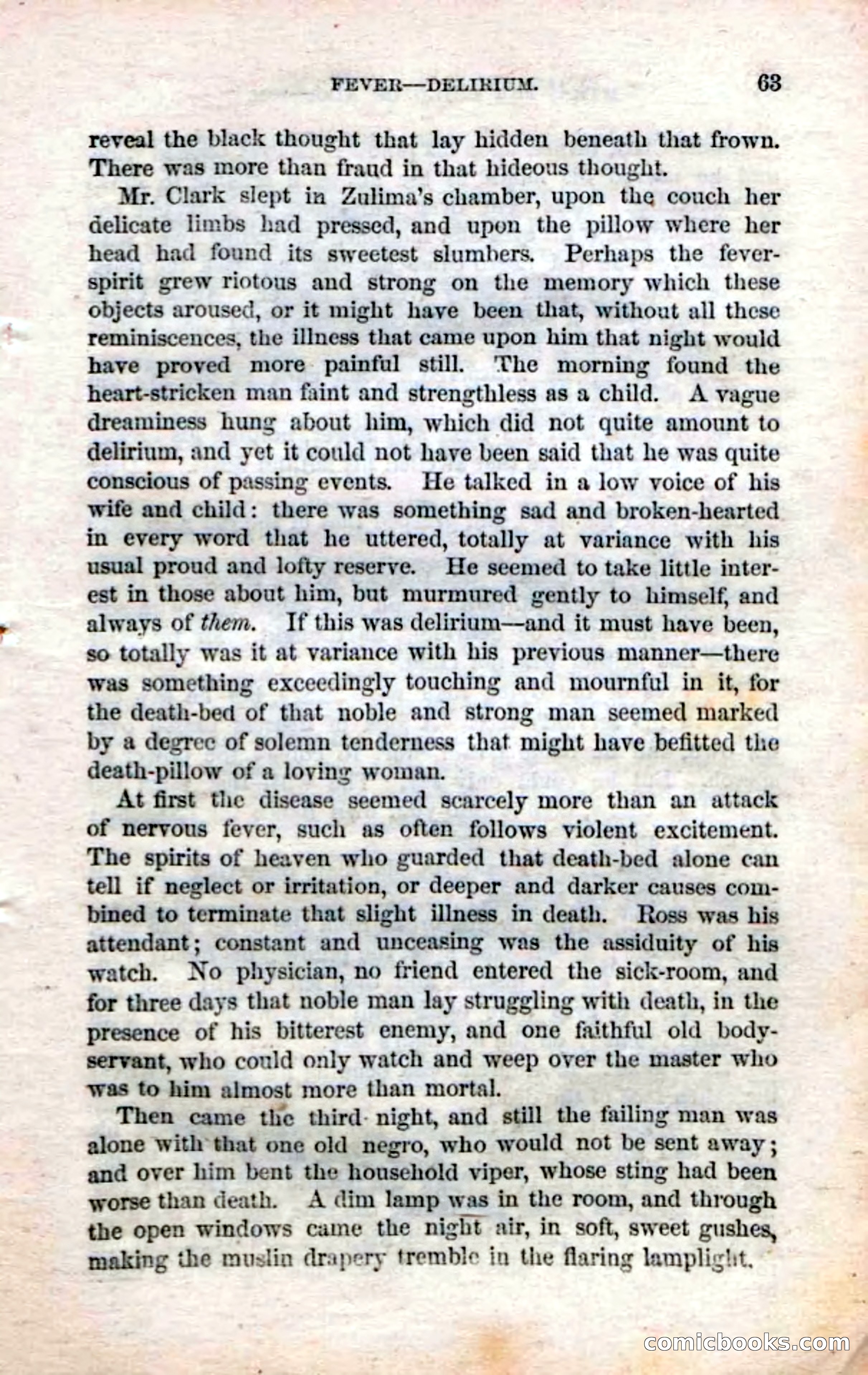
A restored page from Pulp Fiction, 1860. Page through the whole issue in the reader above.
📄 Transcribed text from this page (OCR, searchable)
Machine-transcribed from the original scan — historical spelling and the odd misread are preserved.
FEVER—DELIRIUM. 63 reveal the black thought that lay hidden beneath that frown. There was more than fraud in that hideous thought. Mr. Clark slept in Zulima’s chamber, upon the couch her delicate limbs had pressed, and upon the pillow where her head had found its sweetest slumbers. Perhaps the fever- spirit grew riotous and strong on the memory which these objects aroused, or it might have been that, without all these reminiscences, the illness that came upon him that night would have proved more painful still, ‘The morning found the heart-stricken man faint and strengthless as a child. A vague dreaminess hung about him, which did not quite amount to delirium, and yet it could not have been said that he was quite conscious of passing events. He talked in a low voice of his wife and child: there was something sad and broken-hearted in every word that he uttered, totally at variance with his usual proud and lofty reserve. He seemed to take little inter- est in those about him, but murmured gently to himself, and always of them. If this was delirium—and it must have been, so totally was it at variance with his previous manner—there was something exceedingly touching and mournful in it, for the death-bed of that noble and strong man seemed marked by a degrec of solemn tenderness that might have befitted the death-pillow of a loving woman. At first the disease seemed scarcely more than an attack of neryous fever, such as often follows violent excitement. The spirits of heaven who guarded that death-bed alone can tell if neglect or irritation, or deeper and darker causes com- bined to terminate that slight illness in death. Ross was his attendant; constant and unceasing was the assiduity of his watch. No physician, no friend entered the sick-room, and for three days that noble man lay struggling with death, in the presence of his bitterest enemy, and one faithful old body- servant, who could only watch and weep over the master who was to him almost more than mortal. Then came the third- night, and still the failing man was alone With that one old negro, who would not be sent away; = and over him bent the household viper, whose sting had been worse than death. A dim lamp was in the room, and through the open windows came the night air, in soft, sweet gushes, making the muslin drapery tremble in the flaring lamplight. oe = Coe com