
Pulp Fiction, 1860 · page 34 of 130
Beadle's Dime Novels No. 3: Myra, the Child of Adoption — page 34: what you’re looking at
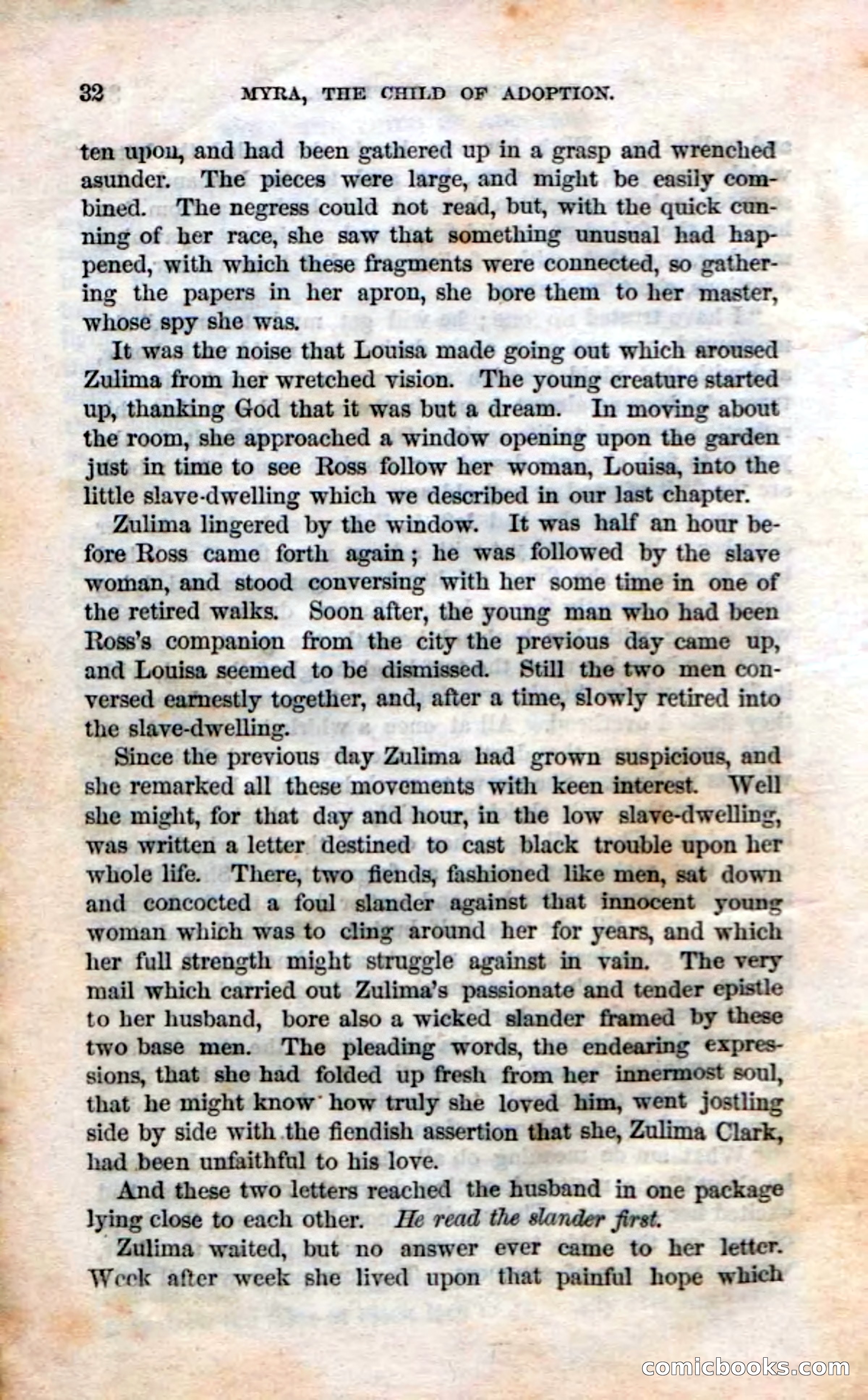
A restored page from Pulp Fiction, 1860. Page through the whole issue in the reader above.
📄 Transcribed text from this page (OCR, searchable)
Machine-transcribed from the original scan — historical spelling and the odd misread are preserved.
32 MYRA, THE CHILD OF ADOPTION. ten upon, and had been gathered up in a grasp and wrenched asunder. The pieces were large, and might be easily com- bined. The negress could not read, but, with the quick cun- ning of her race, she saw that something unusual had hap- pened, with which these fragments were connected, so gather- ing the papers in her apron, she bore them to her master, whose spy she was. It was the noise that Louisa made going out which aroused Zulima from her wretched vision. The young creature started up, thanking God that it was but a dream. In moving about the room, she approached a window opening upon the garden just in time to see Ross follow her woman, Louisa, into the little slave-dwelling which we described in our last chapter. Zulima lingered by the window. It was half an hour be- fore Ross came forth again; he was followed by the slave wornan, and stood conversing with her some time in one of the retired walks. Soon after, the young man who had been Ross’s companion from the city the previous day came up, and Louisa seemed to be dismissed. Still the two men con- versed earnestly together, and, after a time, slowly retired into the slave-dwelling. Since the previous day Zulima had grown suspicious, and she remarked all these movements with keen interest. Well she might, for that day and hour, in the low slave-dwelling, was written a letter destined to cast black trouble upon her whole life. There, two fiends, fashioned like men, sat down and concocted a foul slander against that innocent young woman which was to cling around her for years, and which her full strength might struggle against in vain. The very mail which carried out Zulima’s passionate and tender epistle to her husband, bore also a wicked slander framed by these two base men. The pleading words, the endearing €xpres- sions, that she had folded up fresh from her innermost soul, that he might know’ how truly she loyed him, went jostling side by side with the fiendish assertion that she, Zulima Clark, had been unfaithful to his love. | And these two letters reached the husband in one package — lying close to each other. He read the slander first. ; Zuilima’ waited, but no answer ever came to her letter. Week after week she lived upon that painful hope which re — -— = comliclbooks.corn