
Pulp Fiction, 1860 · page 32 of 130
Beadle's Dime Novels No. 3: Myra, the Child of Adoption — page 32: what you’re looking at
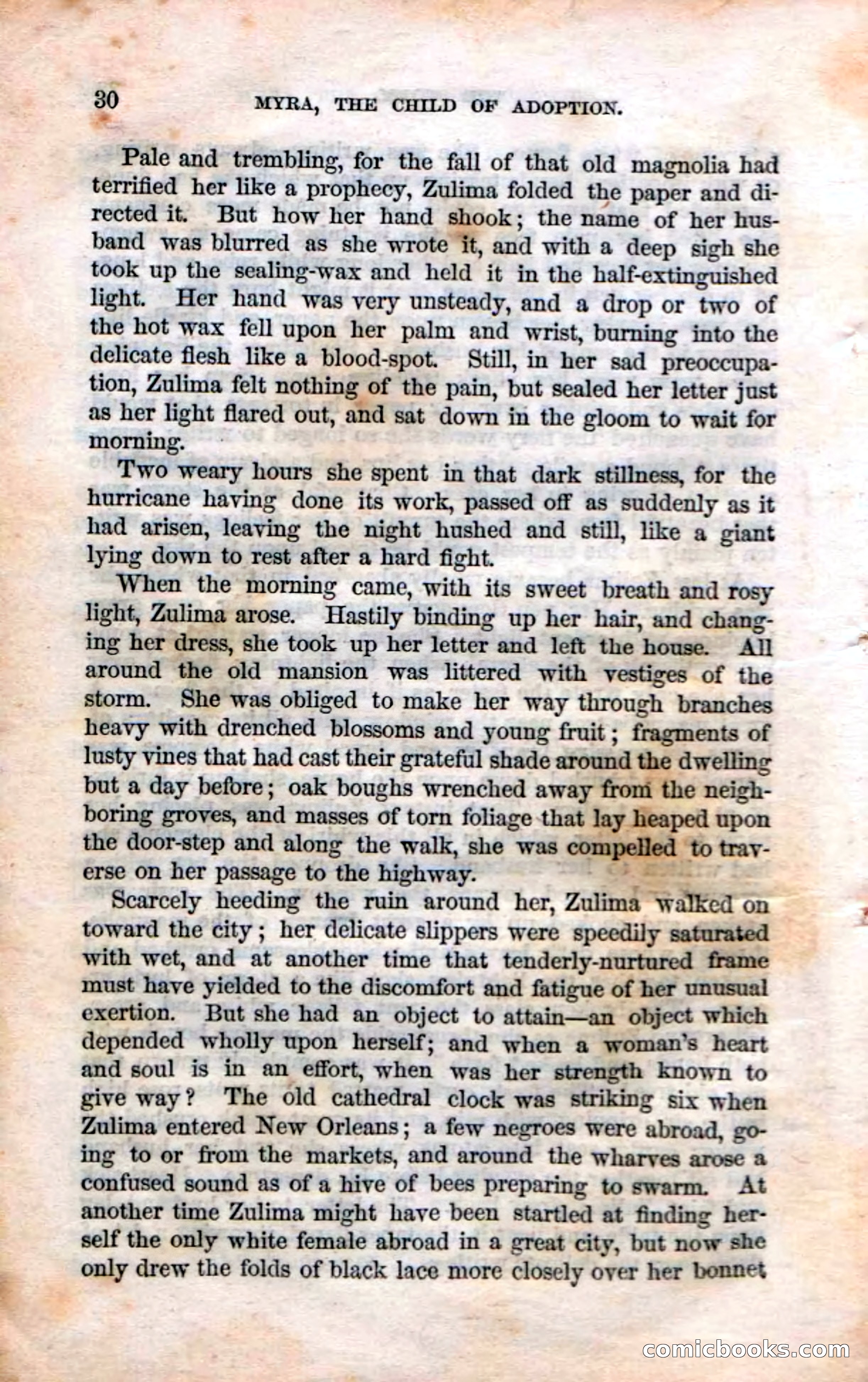
A restored page from Pulp Fiction, 1860. Page through the whole issue in the reader above.
📄 Transcribed text from this page (OCR, searchable)
Machine-transcribed from the original scan — historical spelling and the odd misread are preserved.
2 MYRA, THE CHILD OF ADOPTION. Pale and trembling, for the fall of that old magnolia had terrified her like a prophecy, Zulima folded the paper and di- rected it. But how her hand shook; the name of her hus- band was blurred as she wrote it, and with a deep sigh she took up the sealing-wax and held it in the half-extinguished light. Her hand was very unsteady, and a drop or two of the hot wax fell upon her palm and wrist, burning into the delicate flesh like a blood-spot. Still, in her sad preoccupa- tion, Zulima felt nothing of the pain, but sealed her letter just as her light flared out, and sat down in the gloom to wait for morning. Two weary hours she spent in that dark stillness, for the hurricane having done its work, passed off as suddenly as it had arisen, leaving the night hushed and still, like a giant lying down to rest after a hard fight. When the morning came, with its sweet breath and rosy light, Zulima arose. Hastily binding up her hair, and chang- ing her dress, she took up her letter and left the house. All around the old mansion was littered with vestiges of the storm. She was obliged to make her way through branches heavy with drenched blossoms and young fruit; fragments of lusty vines that had cast their grateful shade around the dwelling but a day before; oak boughs wrenched away fr neigh- boring groves, and masses of torn foliage that lay Heape the door-step and along the walk, she was comp d erse on her passage to the highway. - oes ~~ Scarcely heeding the ruin around her, Zulima walked on toward the city; her delicate slippers were speedily saturated with wet, and at another time that tenderly-nurtured frame must have yielded to the discomfort and fatigue of her unusual exertion. But she had an object to attain—an object which depended wholly upon herself; and when a woman's heart and soul is in an effort, when was her strength known to give way? The old cathedral clock was striking six when Zulima entered New Orleans; a few negroes were abroad, go- ing to or from the markets, and around the wharves arose a confused sound as of a hive of bees preparing to swarm. At another time Zulima might have been startled at finding her- self the only white female abroad in a great city, but now she only drew the folds of black lace more closely over her bonnet comlcbooks.comm