
Pulp Fiction, 1860 · page 28 of 130
Beadle's Dime Novels No. 3: Myra, the Child of Adoption — page 28: what you’re looking at
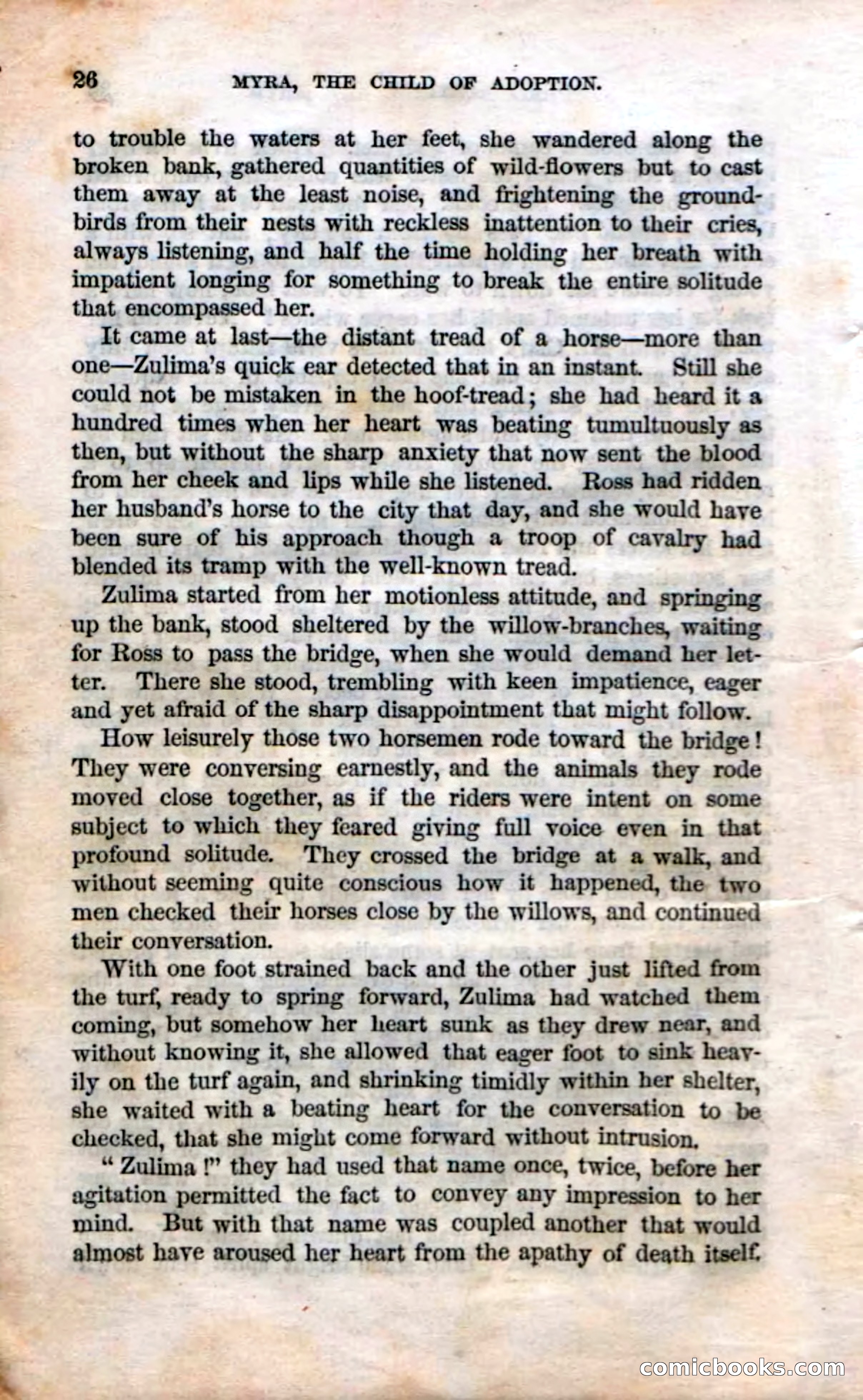
A restored page from Pulp Fiction, 1860. Page through the whole issue in the reader above.
📄 Transcribed text from this page (OCR, searchable)
Machine-transcribed from the original scan — historical spelling and the odd misread are preserved.
—_—_- 26 MYRA, THE CHILD OF ADOPTION. to trouble the waters at her feet, she wandered along the broken bank, gathered quantities of wild-flowers but to cast them away at the least noise, and frightening the ground- birds from their nests with reckless inattention to their cries, always listening, and half the time holding her breath with impatient longing for something to break the entire solitude that. encompassed her. It came at last—the distant tread of a horse—more than one—Zulima’s quick ear detected that in an instant. Still she could not be mistaken in the hoof-tread; she had heard it a hundred times when her heart was beating tumultuously as then, but without the sharp anxiety that now sent the blood from her cheek and lips while she listened. Ross had ridden her husband’s horse to the city that day, and she would have been sure of his approach though a troop of cavalry had blended its tramp with the well-known tread. Zulima started from her motionless attitude, and springing up the bank, stood sheltered by the willow-branches, waiting for Ross to pass the bridge, when she would demand her let- ter. There she stood, trembling with keen impatience, eager and yet afraid of the sharp disappointment that might follow. How leisurely those two horsemen rode toward the bridge! They were conversing earnestly, and the animals they rode moved close together, as if the riders were intent on some subject to which they feared giving full voice even in that profound solitude. They crossed the bridge at a walk, and without seeming quite conscious how it happened, the two men checked their horses close by the willows, and continued their conversation. With one foot strained back and the other just lifted from the turf, ready to spring forward, Zulima had watched them coming, but somehow her heart sunk as they drew near, and without knowing it, she allowed that eager foot to sink heay- ily on the turf again, and shrinking timidly within her shelter, she waited with a beating heart for the conversation to be that she might come forward without intrusion, “ Zulima !” they had used that name once, twice, before her agitation permitted the fact to convey any impression to her mind. But with that name was coupled another that would almost have aroused her heart from the apathy of death itself, Ccopmicloooks. conn