
Pulp Fiction, 1860 · page 16 of 130
Beadle's Dime Novels No. 3: Myra, the Child of Adoption — page 16: what you’re looking at
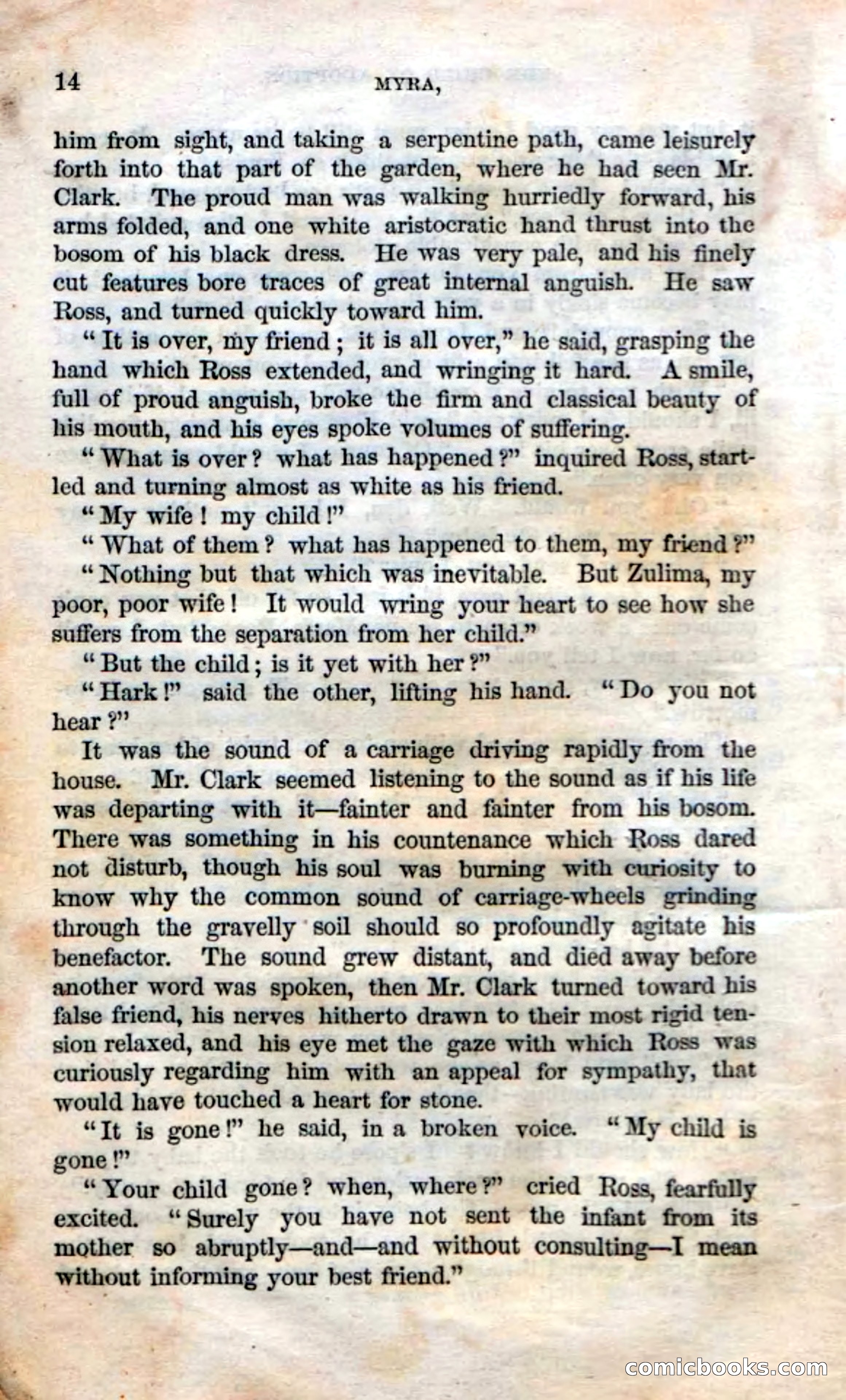
A restored page from Pulp Fiction, 1860. Page through the whole issue in the reader above.
📄 Transcribed text from this page (OCR, searchable)
Machine-transcribed from the original scan — historical spelling and the odd misread are preserved.
gt. 14 MYRA, him from sight, and taking a serpentine path, came leisurely forth into that part of the garden, where he had seen Mr. Clark. The proud man was walking hurriedly forward, his arms folded, and one white aristocratic hand thrust into the bosom of his black dress. He was very pale, and his finely cut features bore traces of great internal anguish. He saw Ross, and turned quickly toward him. “Tt is over, my friend ; it is all over,” he said, grasping the hand which Ross extended, and wringing it hard. A smile, full of proud anguish, broke the firm and classical beauty of his mouth, and his eyes spoke volumes of suffering. “What is over? what has happened ?”’ inquired Ross, start- led and turning almost as white as his friend. - Bad “My wife! my child!” , “ What of them? what has happened to them, my friend ?” “Nothing but that which was inevitable. But Zulima, my poor, poor wife! It would wring your heart to see how she suffers from the separation from her child.” “ But the child; is it yet with her?” “Hark!” said the other, lifting his hand. “Do you not hear ?” It was the sound of a carriage driving rapidly from the house. Mr. Clark seemed listening to the sound as if his life was departing with it—fainter and fainter from his bosom. There was something in his countenance which Ross dared not disturb, though his soul was burning with curiosity to know why the common sound of carriage-wheels through the gravelly soil should so profoundly agitate his benefactor. The sound grew distant, and died away before another word was spoken, then Mr. Clark turned toward his false friend, his nerves hitherto drawn to their most rigid ten- sion relaxed, and his eye met the gaze with which Ross was curiously regarding him with an appeal for sympathy, that would have touched a heart for stone. “Tt is gone!” he said, ina broken yoice. “My child is gone !” “Your child gone? when, where?” cried Ross, fearfully excited. “Surely you have not sent the infant from its mother so abruptly—and—and without consulting—I mean without informing your best friend.” comiclooks.com