
Pulp Fiction, 1871 · page 55 of 100
Black Arrow, the Avenger — page 55: what you’re looking at
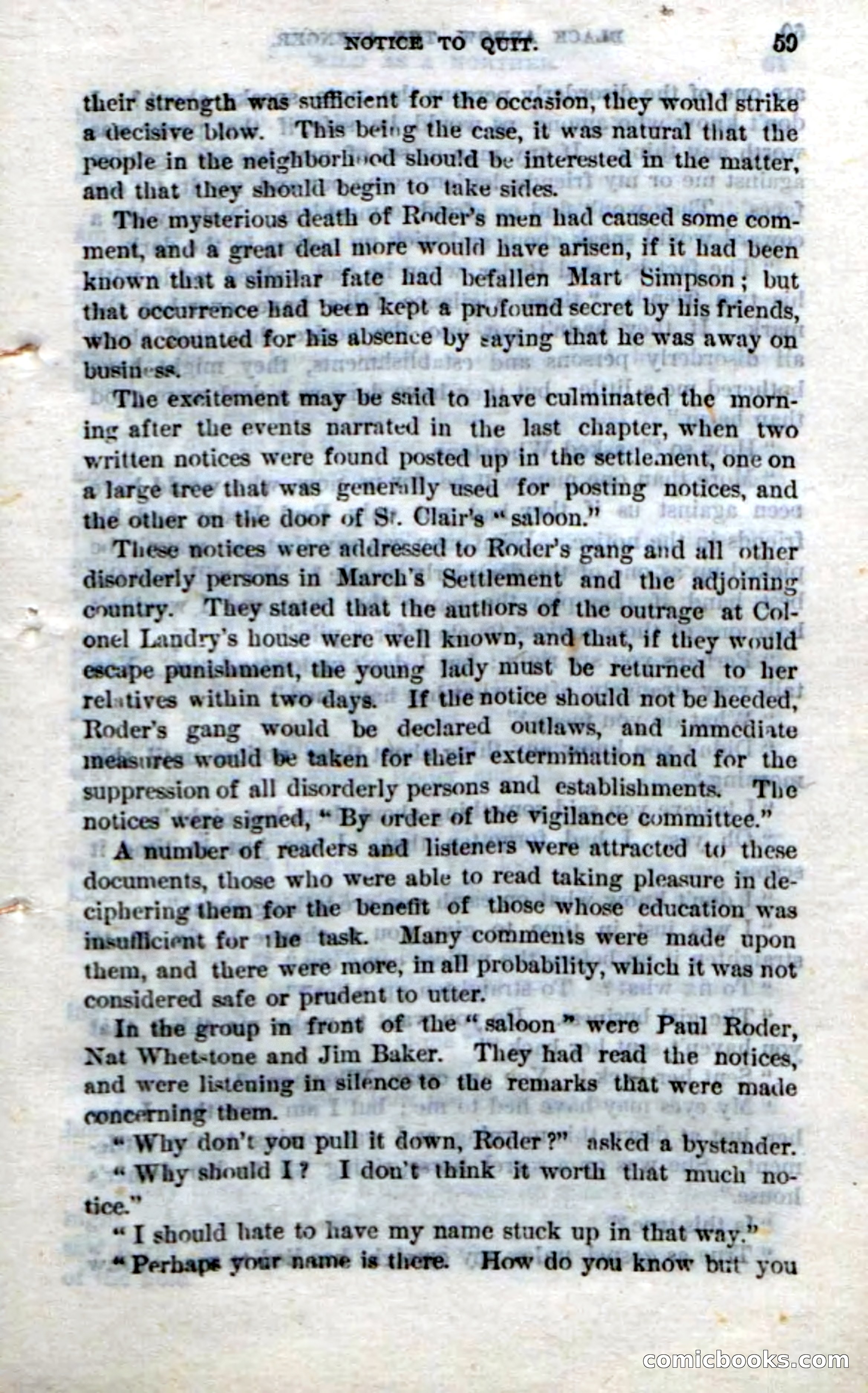
A restored page from Pulp Fiction, 1871. Page through the whole issue in the reader above.
📄 Transcribed text from this page (OCR, searchable)
Machine-transcribed from the original scan — historical spelling and the odd misread are preserved.
their’ strength was’sufficient for the occasion, they would strike a decisive blow. This being the case, it was natural that the people in the neighborlivod should be interested in the matter, and that they should begin to take-sides. _ The mysterious death of Roder’s men had caused some ¢om- esi: and a great deal niore would have arisen, if it had been kiiown that a similar fate had befallen Mart Simpson; but that occurrence had been kept @ prufourid secret by His friends, who accounted for his absence ‘by eaying that he was away on ‘The exeitement may be seid to have bulititiiatedt the morn- ing after the events narrated in the last chapter, when two written notices were found posted up in the settlement, one on a laryé tree’ that was generilly used for posting notices, and the other on the door of Sr. Clair’s “saloon.” These notices were addressed to Roder’s gang and all other disorderly persons in March’s ‘Settlement and the adjoining country. They stated that the auttiors of the outrage at Col- onel Landry's house were well known, and that, if bey would escape punishment, the young lady must be returned to her relstives within twodays. If tlie notice should not be heeded, Roder’s gang would be declared outlaws, and immediate meksuires would be taken for their extermitiation and for the suppression of all disorderly persons and establishments. The notices were signed, “ By order of the Vigilance committee.” _& mimber of readers and listeners were attracted ‘to these documents, those who were able to read taking pleasure in de- ciphering them for the benefit of tose whose ‘education was insufficient for the task. Many comments were made upon them, and there were more, in all probability, which it was not’ considered safe or prudent to utter. <In the group in front of the “saloon” were Paul Roder, Nat Whetstone and Jim Baker. They had read the notices, and were listening’ in silence to” the remarks, that were made them. “Why don’t you pull it down, heaeerr dike a Niydtek ae: “ Why should Il? I don’t’ think it worth that much ‘no- tice.” “J should hate to have my name stuck up in that way.” -“ Perbape your name is there. How do you know bit’ you comlicldooks.com