
Pulp Fiction, 1870 · page 11 of 100
Beadle's Dime Novels No. 208: The Ocean Outlaw — page 11: what you’re looking at
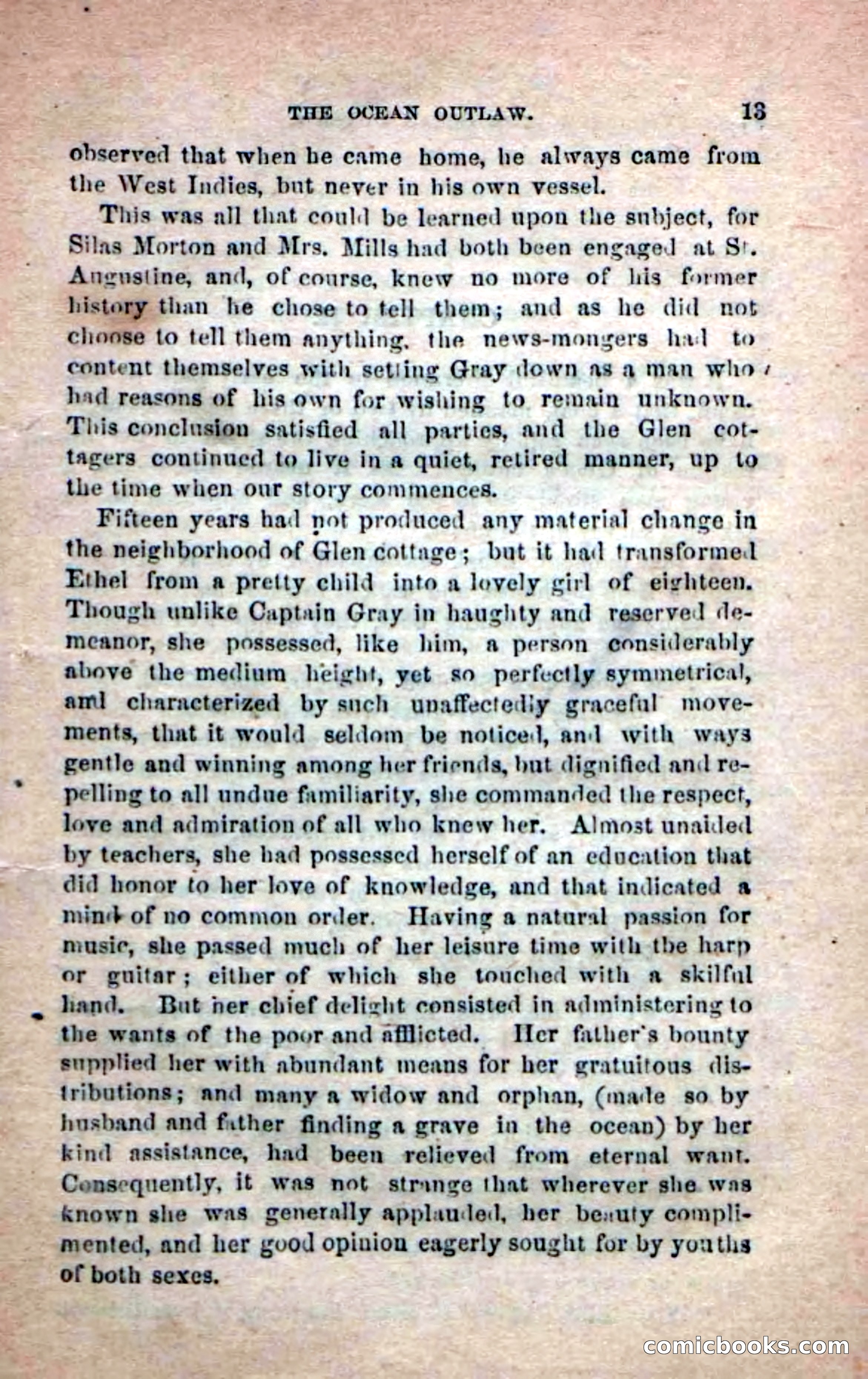
A restored page from Pulp Fiction, 1870. Page through the whole issue in the reader above.
📄 Transcribed text from this page (OCR, searchable)
Machine-transcribed from the original scan — historical spelling and the odd misread are preserved.
THE OCEAN OUTLAW. 13 observed that when he came home, he always came from the West Indies, but never in his own vessel. This was all that could be learned upon the snbject, for Silas Morton and Mrs, Mills had both been engaged at S!. Angustine, and, of course, knew no more of his former history than he chose to tell them; and as he did not choose to tell them anything, the news-mongers had to content themselves with setiing Gray down as a man whos had reasons of his own for wishing to remain unknown. This conclusion satisfied all parties, and the Glen cot- tagers continued to live in a quiet, retired manner, up to the time when our story commences. Fifteen years had not produced any material change in the neighborhood of Glen cottage; but it had transformed Ethel from a pretty child into a lovely girl of eighteen. Though unlike Captain Gray in haughty and reserved de- meanor, she possessed, like him, a person considerably above the medium height, yet so perfectly symmetrical, aml characterized by such unaffectediy graceful move- ments, that it would seldom be noticed, and with ways gentle and winning among her friends, but dignified and re- pelling to all undue familiarity, she commanded the respect, love and admiration of all who knew her. Almost unaided by teachers, she had possessed herself of an education that did honor to her love of knowledge, and that indicated a _ miné of no common order. Having a natural passion for music, she passed much of her leisure time with the harp = == * or guitar; either of which she touched with a_ skilful hand. But ner chief delizht consisted in administering to the wants of the poor and afflicted. Ier father’s bounty supplied her with abundant means for her gratuitous dis- tributions; and many a widow and orphan, (mate so by husband and father finding a grave in the ocean) by her kind assistance, had been relieved from eternal want. Consequently, it was not strange that wherever she was known she was generally applauded, her bexuty compli- : _ mented, and her good opinion eagerly sought for by youths a " x- “ ¥ Sif i <4 ae ‘ of both sexes, oe, “i cox e: comiebeoks:com) Ro