
Pulp Fiction, 1861 · page 98 of 130
Beadle's Dime Novels No. 20: Florida; or, The Iron Will — page 98: what you’re looking at
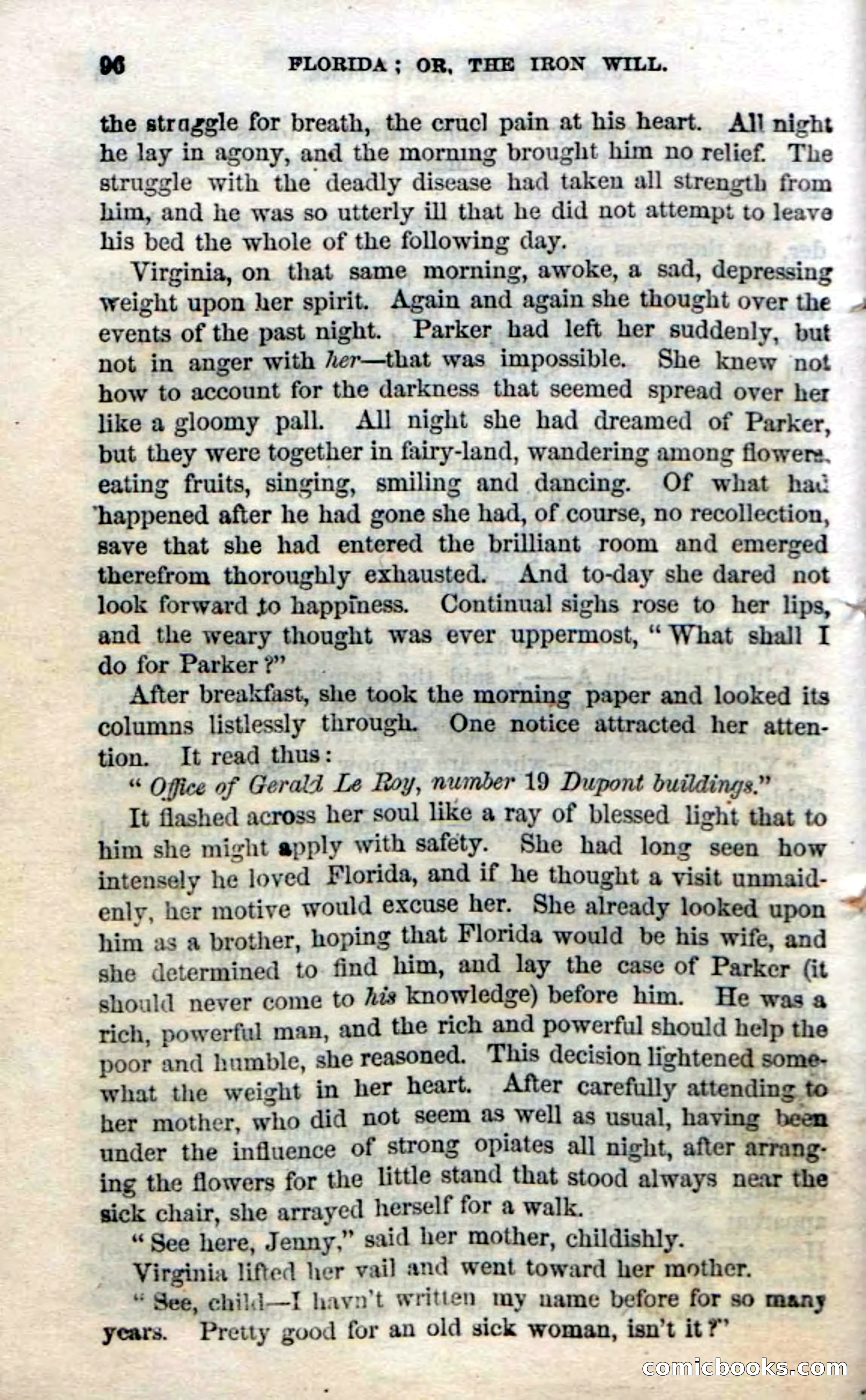
A restored page from Pulp Fiction, 1861. Page through the whole issue in the reader above.
📄 Transcribed text from this page (OCR, searchable)
Machine-transcribed from the original scan — historical spelling and the odd misread are preserved.
96 PLORIDA ; OR, THE IRON WILL. the straggle for breath, the cruc] pain at his heart. All night he lay in agony, and the morning brought him no relief. The struggle with the deadly disease had taken all strength from him, and he was so utterly ill that he did not attempt to leave his bed the whole of the following day. Virginia, on that same morning, awoke, a sad, depressing weight upon her spirit. Again and again she thought over the events of the past night. Parker had left her suddenly, but not in anger with ier—that was impossible. She knew not how to account for the darkness that seemed spread over her like a gloomy pall. All night she had dreamed of Parker, but they were together in fairy-land, wandering among flower. eating fruits, singing, smiling and dancing. Of what had ‘happened after he had gone she had, of course, no recollection, save that she had entered the brilliant room and emerged therefrom thoroughly exhausted. And to-day she dared not look forward to happiness. Continual sighs rose to her lips, - and the weary thought was ever uppermost, “ What shall I do for Parker ?” After breakfast, she took the morning paper and looked its columns listlessly through. One notice attracted her atten- tion. It read thus: “ Office of Gerald Le Roy, number 19 Dupont buildings.” It flashed across her soul like a ray of blessed light that to him she might apply with safety. She had long seen how intensely he loved Florida, and if he thought a visit unmaid- enly, her motive would excuse her. She already looked upon him as a brother, hoping that Florida would be his wife, and she determined to find him, and lay the case of Parker (it should never come to his knowledge) before him. He was a rich, powerful man, and the rich and powerful should help the poor and humble, she reasoned. This decision lightened some- what the weight in her heart. After carefully attending to her mother, who did not seem as well as usual, having been under the influence of strong opiates all night, after arrang- ing the flowers for the little stand that stood always near the sick chair, she arrayed herself for a walk. Sf “See here, Jenny,” said her mother, childishly. Virginia lifted her vail and went toward her mother. “ See, child—I havn't written my name before for so many years. Pretty good for an old sick woman, isn’t it?” conmmclbooks.comnn a