
Pulp Fiction, 1861 · page 9 of 130
Beadle's Dime Novels No. 20: Florida; or, The Iron Will — page 9: what you’re looking at
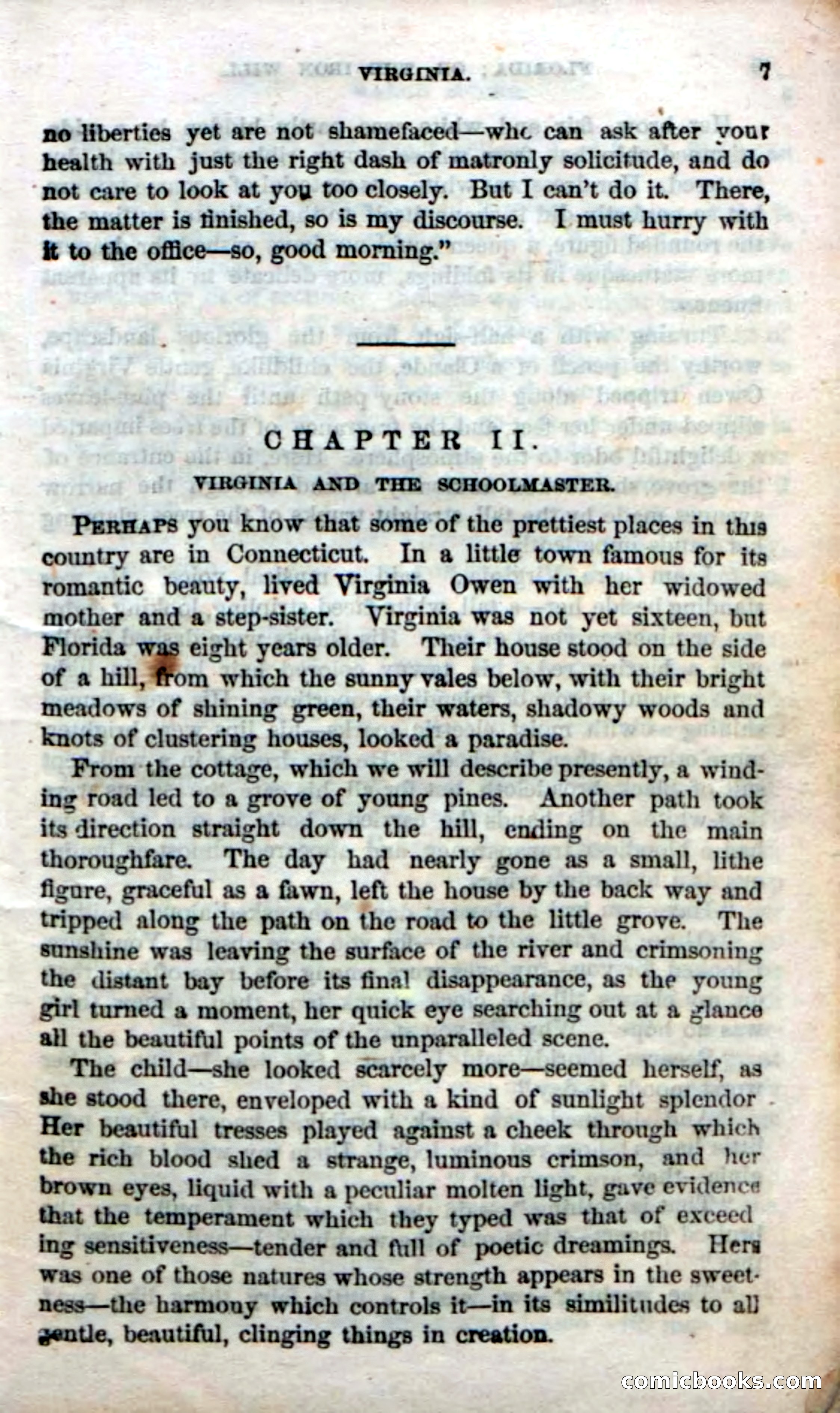
A restored page from Pulp Fiction, 1861. Page through the whole issue in the reader above.
📄 Transcribed text from this page (OCR, searchable)
Machine-transcribed from the original scan — historical spelling and the odd misread are preserved.
VIRGINTA. q no liberties yet are not shamefaced—whc can ask after vour health with just the right dash of matronly solicitude, and do ‘not care to look at yoy too closely. But I can’t do it. There, the matter is finished, so is my discourse. I must hurry with it to the office—so, good morning.” | CHAPTER Il. VIRGINIA AND THE SCHOOLMASTER. Pernars you know that some of the prettiest places in this country are in Connecticut. In a little town famous for its romantic beauty, lived Virginia Owen with her widowed mother and a step-sister. Virginia was not yet sixteen, but Florida eight years older. Their house stood on the side of a hill which the sunny vales below, with their bright meadows of shining green, their waters, shadowy woods and knots of clustering houses, looked a paradise. From the cottage, which we will describe presently, a wind- ing road led to a grove of young pines. Another path took its direction straight down the hill, ending on the main thoroughfare. The day had nearly gone as a small, lithe figure, graceful as a fawn, left the house by the back way and tripped along the path on the road to the little grove. The sunshine was leaving the surface of the river and crimsoning the distant bay before its final disappearance, as the young girl turned a moment, her quick eye searching out at a zlance all the beautiful points of the unparalleled scene. The child—she looked scarcely more—seemed herself, as she stood there, enveloped with a kind of sunlight splendor . Her beautiful tresses played against a cheek through which the rich blood shed a strange, luminous crimson, and her brown eyes, liquid with a peculiar molten light, gave evidence that the temperament which they typed was that of exceed ing sensitiveness—tender and full of poetic dreamings. Hers | was one of those natures whose strength appears in the sweet- 4 sces—thie hatuiony which control t—tit tts ‘simillitudes to al } g*ntle, beautiful, clinging things in creation. COmMicloolkxs on