
Pulp Fiction, 1861 · page 20 of 130
Beadle's Dime Novels No. 20: Florida; or, The Iron Will — page 20: what you’re looking at
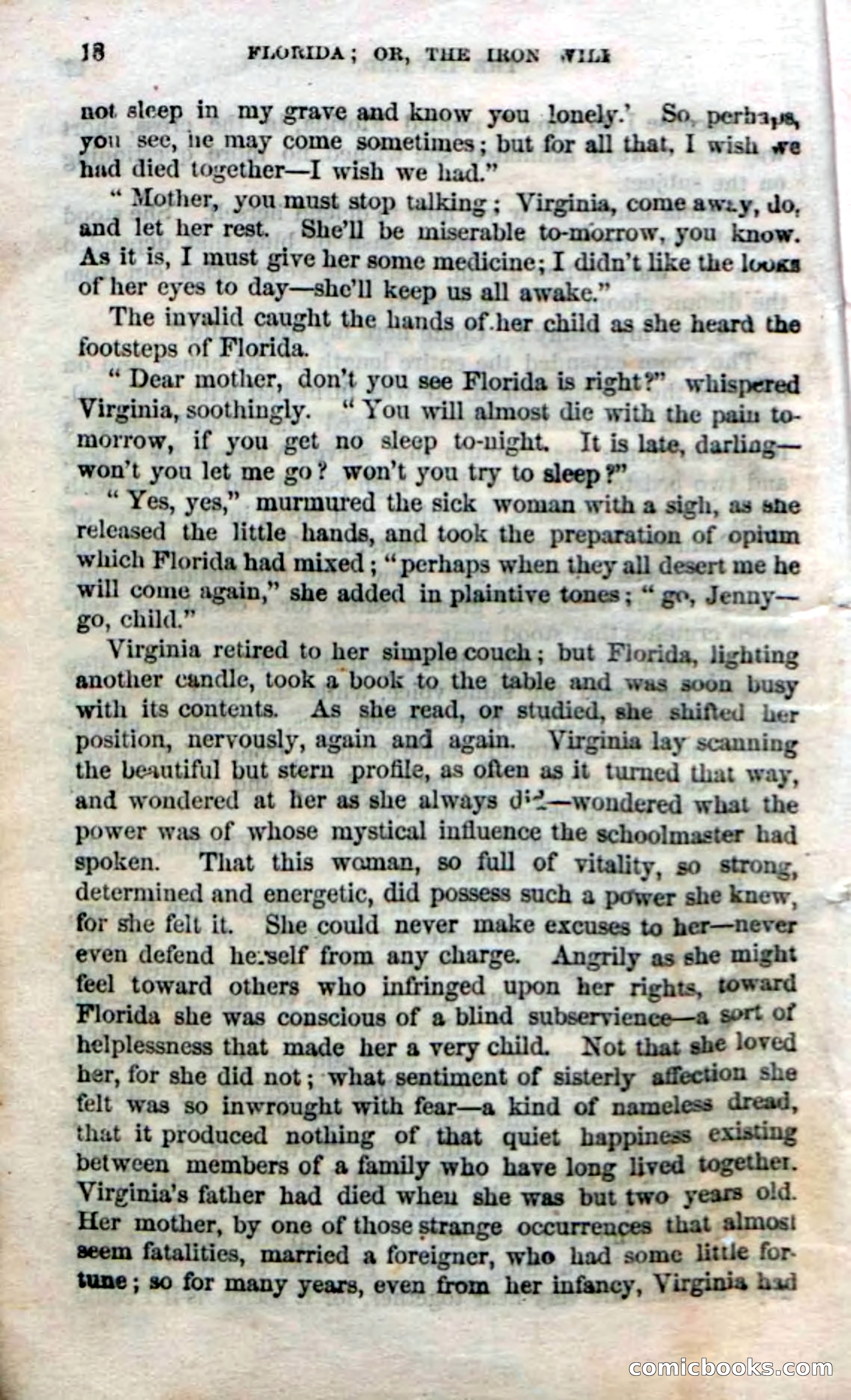
A restored page from Pulp Fiction, 1861. Page through the whole issue in the reader above.
📄 Transcribed text from this page (OCR, searchable)
Machine-transcribed from the original scan — historical spelling and the odd misread are preserved.
18 FLORIDA; OR, THE [KON WILLE not sleep in my grave and know you lonely. So, perhaps, you sec, he may come sometimes; but for all that, I wish we had died together—I wish we had.” “ Mother, you.must stop talking; Virginia, come awzy, do, and let her rest. .She’ll be miserable to-morrow, you know. As it is, I must give her some medicine; I didn’t like the lovas of her eyes to day—she’ll keep us all awake.” The inyalid caught the hands of her child as she heard the footsteps of Florida. “Dear mother, don’t you see Florida is right?” whispered Virginia, soothingly. “ You will almost die with the pain to- morrow, if you get no sleep to-night. It is late, darliag— won't you let me go? won’t you try to sleep?” “Yes, yes,” murmured the sick woman with a sigh, as she released the little hands, and took the preparation of opium which Florida had mixed ; “perhaps when they all desert me he will come again,” she added in plaintive tones; “ go, Jenny— go, child.” Virginia retired to her simple couch; but Florida, lighting another candle, took a book to the table and was soon with its contents. As she read, or studied, she shifted Ler position, nervously, again and again. Virginia lay scanning the beautiful but stern profile, as often as it turned that way, and wondered at her as she always d'2—wondered what the power was of whose mystical influence the schoolmaster had spoken. That this woman, so full of vitality, so strong, determined and energetic, did possess such a power she knew, for she felt it. She could never make excuses to her—never even defend he-self from any charge. Angrily as she might feel toward others who infringed upon her rights, toward Florida she was conscious of a blind subservience—a sort of helplessness that made her a very child. Not that she loved her, for she did not ; what sentiment of sisterly affection she felt was so inwrought with fear—a kind of nameless dread, that it produced nothing of that quiet happiness existing between members of a family who have long lived together. Virginia's father had died when she was but two years old. seem fatalities, married a foreigner, who had some little for- tune ; so for many years, even from her infancy, Virginia had Conmcloooks.conm