
Pulp Fiction, 1868 · page 7 of 116
Beadle's Dime Novels No. 153: Mohawk Nat — page 7: what you’re looking at
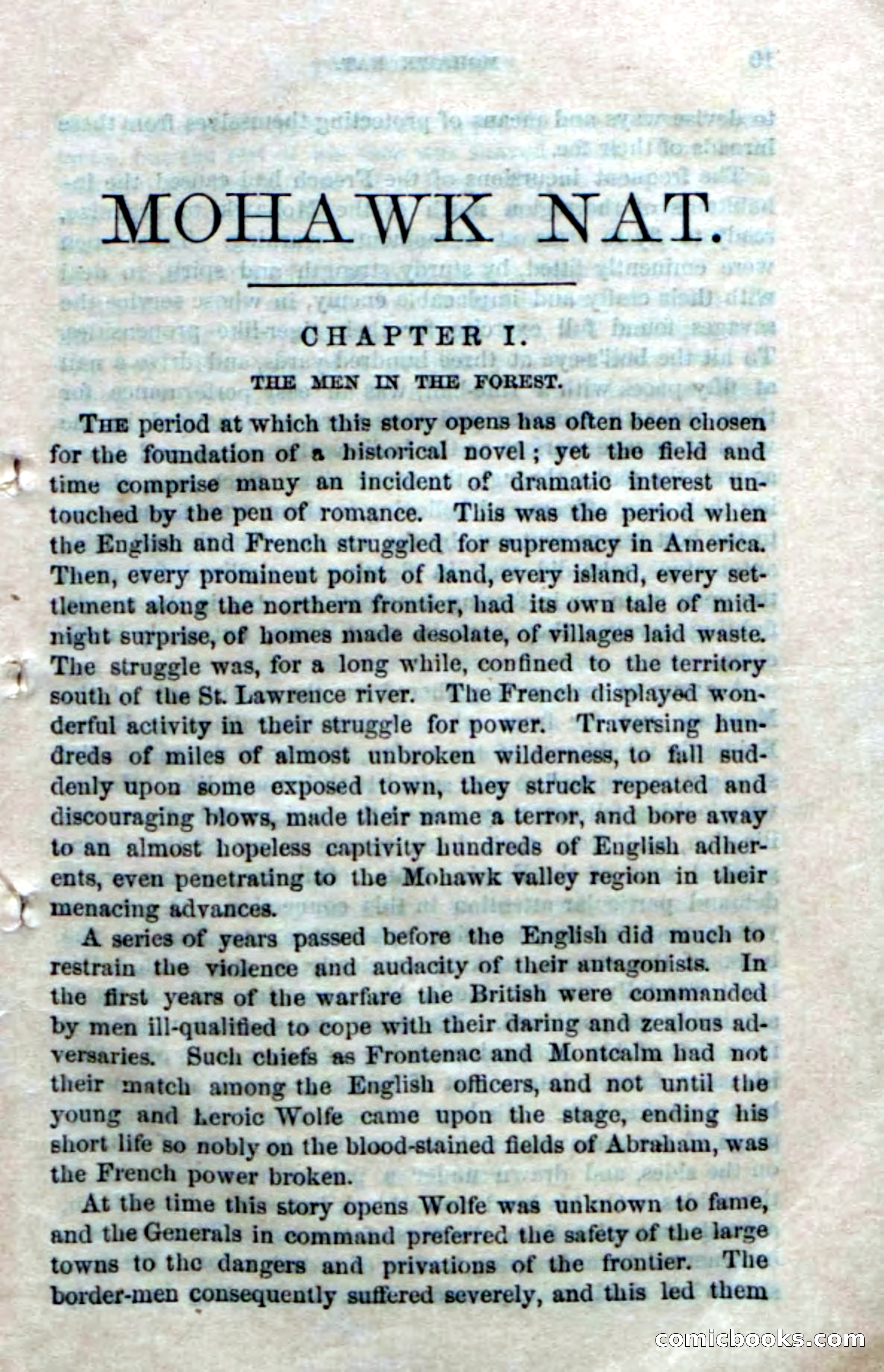
A restored page from Pulp Fiction, 1868. Page through the whole issue in the reader above.
📄 Transcribed text from this page (OCR, searchable)
Machine-transcribed from the original scan — historical spelling and the odd misread are preserved.
- «=! MOHAWK NAT. CHAPTER I. THE MEN IN THE FOREST. Tue period at which caacsietienaaigiildhas nedetouasie for the foundation of a historical novel; yet the field and time comprise many an incident of dramatic interest un- touched by the pen of romance. This was the period when the English and French struggled for supremacy in America. Then, every prominent point of land, every island, every set- tlement along the northern frontier, had its own tale of mid- night surprise, of homes made desolate, of villages laid waste. The struggle was, for a long while, confined to the territory south of the St. Lawrence river. The French displayed won- derful activity in their struggle for power. ‘Traversing hun- dreds of miles of almost unbroken wilderness, to full sud- denly upon some exposed town, they struck repeated and discouraging blows, made their name a terror, and bore away to an almost hopeless captivity hundreds of English adher- ents, even penetrating to the a in their menacing advances. A series of years passed before the English did much to restrain the violence and audacity of their antagonists. In_ the first years of the warfare the British were commanded by men ill-qualified to cope with their daring and zealous ad- versaries. Such chiefs as Frontenac and Montcalm had not their match among the English officers, and not until the young and heroic Wolfe came upon the stage, ending his ohne Sere ebly ae the bieod-ctained fields of: Abtahsmn,-wes the French power broken. At the time this story opens Wolfe was unknown to fame, and the Generals in command preferred the safety of the large towns to the dangers and privations of the frontier. The border-men consequently suffered severely, and this led them Connicbookxs.conn - — 2 —?