
Pulp Fiction, 1868 · page 54 of 116
Beadle's Dime Novels No. 142: The Sagamore of Saco — page 54: what you’re looking at
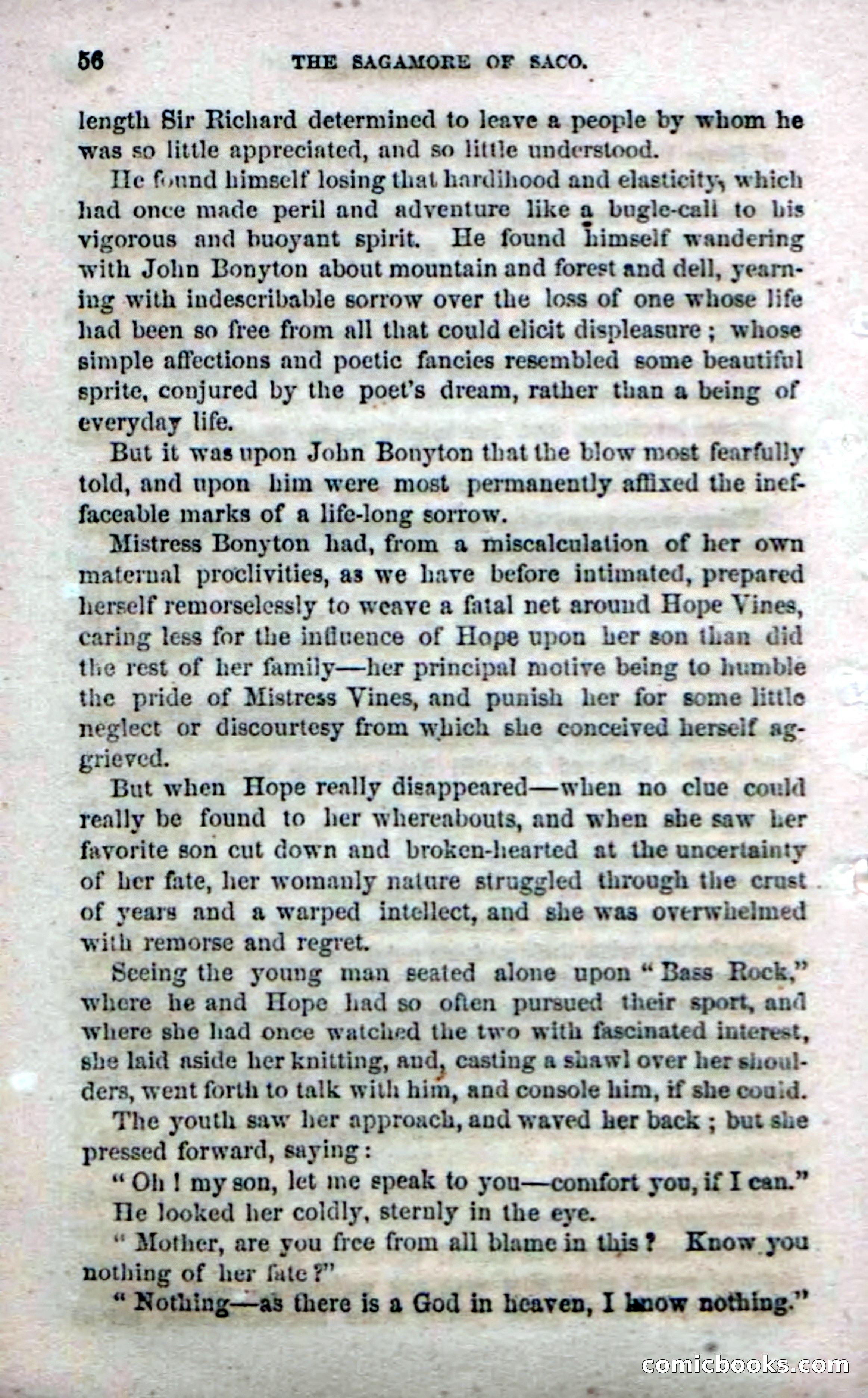
A restored page from Pulp Fiction, 1868. Page through the whole issue in the reader above.
📄 Transcribed text from this page (OCR, searchable)
Machine-transcribed from the original scan — historical spelling and the odd misread are preserved.
56 THE SAGAMORE OF SACO. length Sir Richard determined to leave a people by whom he was so little appreciated, and so little understood. He found himself losing that hardihood and elasticity, which had once made peril and adventure like a bugle-call to bis vigorous and buoyant spirit. He found himself wandering with John Bonyton about mountain and forest and dell, yearn- ing with indescribable sorrow over the loss of one whose life had been so free from all that could elicit displeasure ; whose simple affections and poetic fancies resembled some beautiful sprite, conjured by the poet’s dream, rather than a being of everyday life. But it was upon Jobn Bonyton that the blow most fearfully told, and upon him were most permanently affixed the inef faceable marks of a life-long sorrow. Mistress Bonyton had, from a miscalculation of her own maternal proclivities, as we have before intimated, prepared herself remorselessly to weave a fatal net around Hope Vines, caring less for the influence of Hope upon her son than did the rest of her family—her principal motive being to humble the pride of Mistress Vines, and punish her for some little neglect or discourtesy from which she conceived herself ag- grieved. But when Hope really disappeared—when no clue could really be found to her whereabouts, and when she saw her favorite son cut down and broken-hearted at the uncertainty of her fate, her womanly nature struggled through the crast of years and a warped intellect, and she was overwhelmed with remorse and regret. Seeing the young man seated alone upon “ Bass Rock,” where he and Hope had so often pursued their sport, and where she had once watched the two with fascinated interest, she laid aside her knitting, and, casting a shaw] over her shou!l- ders, went forth to talk with him, and console him, if she could. The youth saw her approach, and waved her back ; but she pressed forward, saying: “Oh ! my son, let me speak to you—comfort you, if I can.” He Jooked her coldly, sternly in the eye. “ Mother, are you free from all blame in this? Know you ng of her fate ?” Ps g—a8 there is a God in heaven, I lnow nothing.” = comichooks:;com = a . TT a =.