
Pulp Fiction, 1868 · page 31 of 116
Beadle's Dime Novels No. 142: The Sagamore of Saco — page 31: what you’re looking at
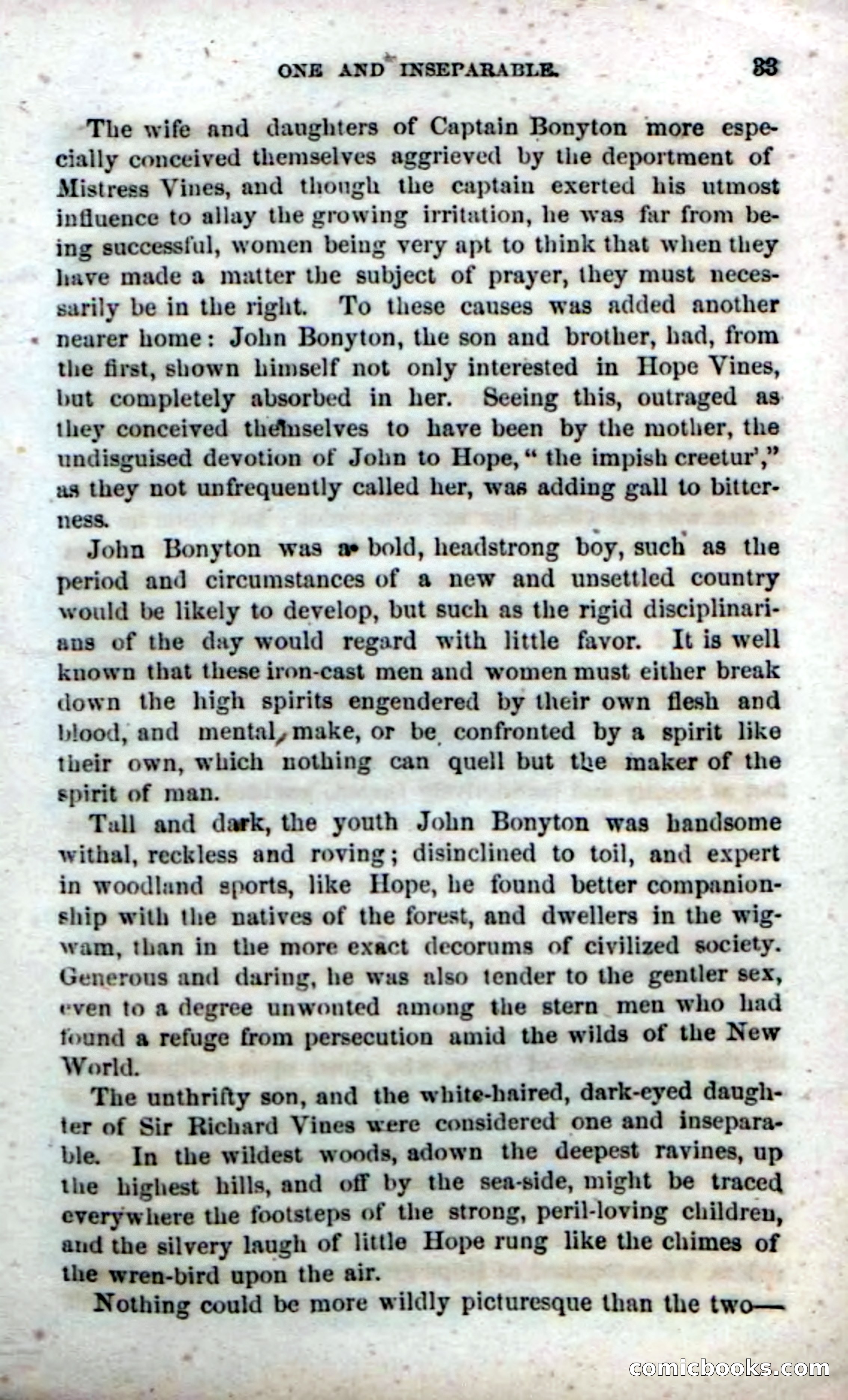
A restored page from Pulp Fiction, 1868. Page through the whole issue in the reader above.
📄 Transcribed text from this page (OCR, searchable)
Machine-transcribed from the original scan — historical spelling and the odd misread are preserved.
o ONE AND INSEPARABLE. 83 The wife and daughters of Captain Bonyton more espe- cially conceived themselves aggrieved by the deportment of Mistress Vines, and thongh the captain exerted his utmost influence to allay the growing irritation, he was far from be- ing successful, women being very apt to think that when they have made a matter the subject of prayer, they must neces- sarily be in the right. To these causes was added another « nearer home: John Bonyton, the son and brother, bad, from the first, shown himself not only interested in Hope Vines, but completely absorbed in her. Seeing this, outraged as they conceived themselves to have been by the mother, the undisguised devotion of John to Hope, “ the impish creetur’,” as they not unfrequently called her, was adding gall to bitter- ness. John Bonyton was a bold, headstrong boy, such as the period and circumstances of a new and unsettled country would be likely to develop, but such as the rigid disciplinari- ans of the day would regard with little favor. It is well known that these iron-cast men and women must either break down the high spirits engendered by their own flesh and blood, and mental,make, or be confronted by a spirit like their own, which nothing can quell but the maker of the spirit of man. Tall and dark, the youth John Bonyton was handsome withal, reckless and roving; disinclined to toil, and expert in woodland sports, like Hope, he found better companion- ship with the natives of the forest, and dwellers in the wig- wam, than in the more exact decorums of civilized society. Generous and daring, he wus also tender to the gentler sex, even to a degree unwonted among the stern men who had found a refuge from persecution amid the wilds of the New World. The unthrifty son, and the white-haired, dark-eyed daugh- ter of Sir Richard Vines were considered one and insepara- ‘ble. In the wildest woods, adown the deepest ravines, up the highest hills, and off by the sea-side, might be traced everywhere the footsteps of the strong, peril-loving children, and the silvery laugh of little Hope rung like the chimes of the wren-bird upon the air. Nothing could be more wildly picturesque than the two— ate - — ad conmicldookks.comn