
Pulp Fiction, 1868 · page 21 of 116
Beadle's Dime Novels No. 142: The Sagamore of Saco — page 21: what you’re looking at
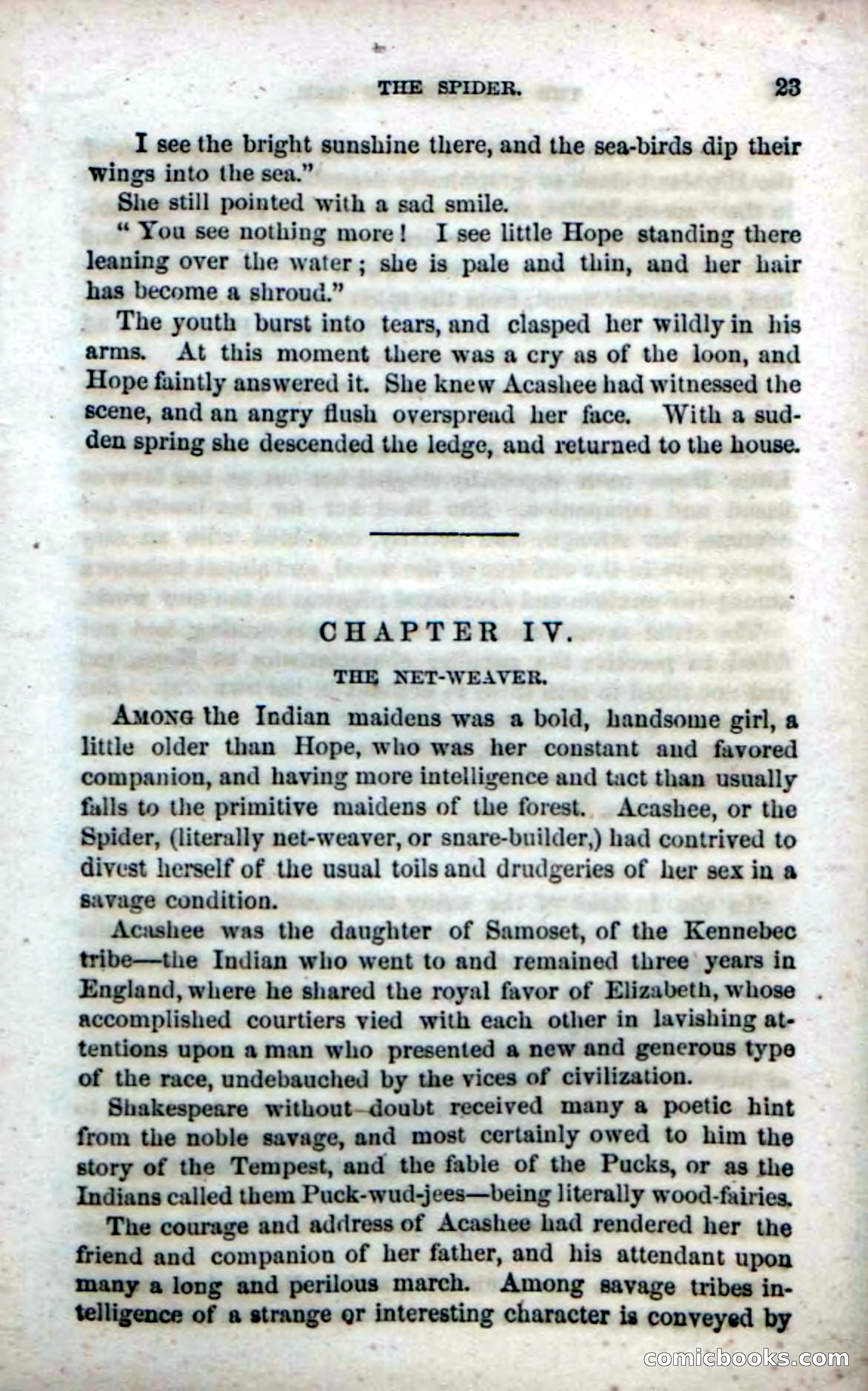
A restored page from Pulp Fiction, 1868. Page through the whole issue in the reader above.
📄 Transcribed text from this page (OCR, searchable)
Machine-transcribed from the original scan — historical spelling and the odd misread are preserved.
- THE SPIDER. 23 I see the bright sunshine there, and the sea-birds dip their Wings into the sea.” She still pointed with a sad smile. “ You see nothing more! I see little Hope standing there leaning over the water; she is pale and thin, and her hair has become a shroud.” The youth burst into tears,and clasped her wildly in his arms. At this moment there was a cry as of the loon, and Hope faintly answered it. She knew Acashee had witnessed the scene, and an angry flush overspread her face. With a sud- den spring she descended the ledge, and returned to the house. CHAPTER IV. THE NET-WEAVER. Amone the Indian maidens was a bold, handsome girl, a little older than Hope, who was her constant and favored companion, and having more intelligence and tact than usually falls to the primitive maidens of the forest. Acashee, or the Spider, (literally net-weaver, or snare-builder,) had contrived to divest herself of the usual toils and drudgeries of her sex in a savage Condition. Acashee was the daughter of Samoset, of the Kennebec tribe—the Indian who went to and remained three years in England, where he shared the royal favor of Elizabeth, whose . accomplished courtiers vied with each other in lavishing at- tentions upon a man who presented a new and generous type of the race, undebauched by the vices of civilization. Shakespeare without—doubt received many a poetic hint from the noble savage, and most certainly owed to him the story of the Tempest, and the fable of the Pucks, or as the Indians called them Puck-wud-jees—being literally wood-fairies, The courage and address of Acashee had rendered her the friend and companion of her father, and his attendant upon telligence of a strange or interesting character is conveyed by P comicboeksicom