
Pulp Fiction, 1861 · page 77 of 116
Beadle's Dime Novels No. 14 — page 77: what you’re looking at
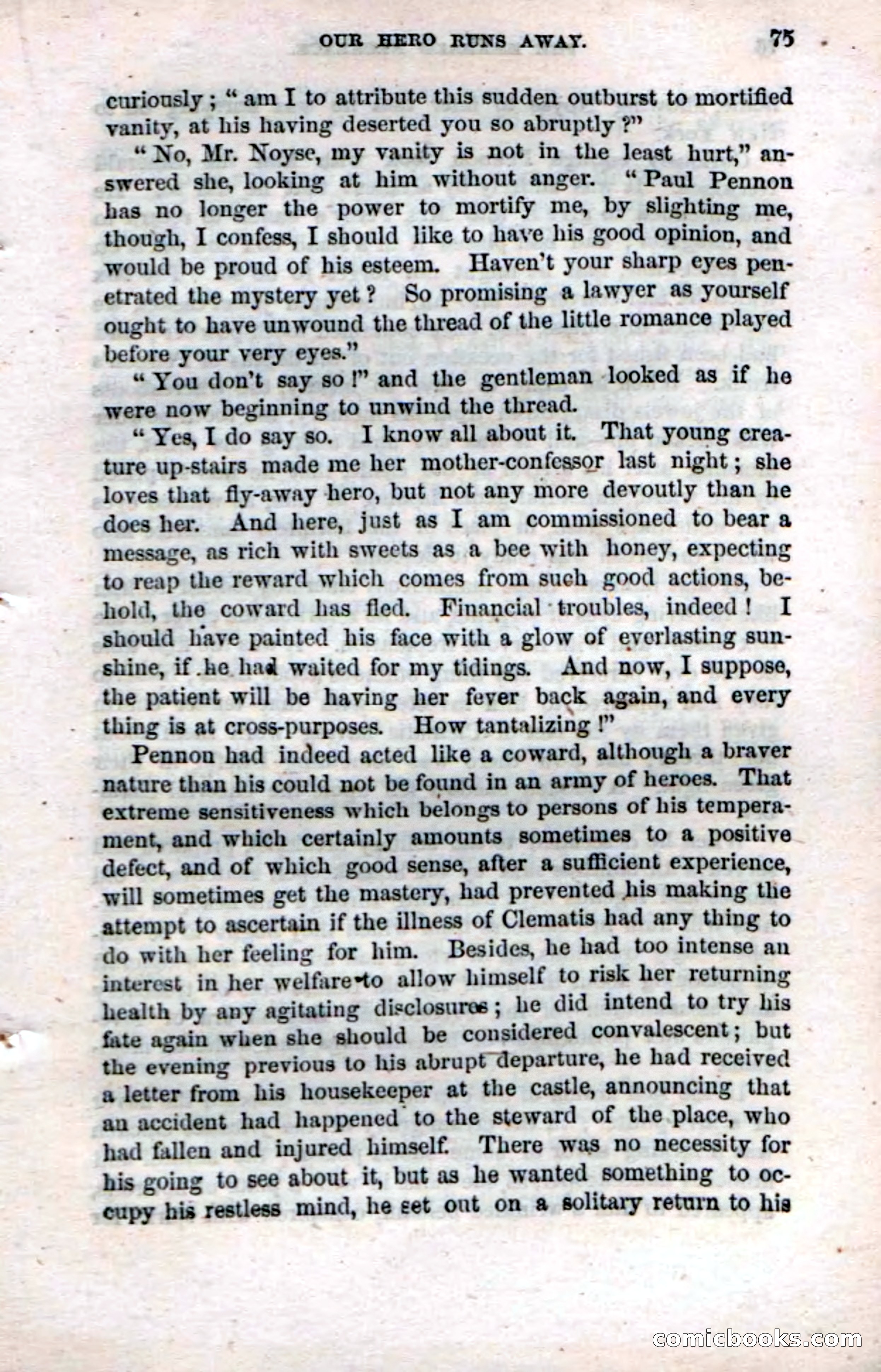
A restored page from Pulp Fiction, 1861. Page through the whole issue in the reader above.
📄 Transcribed text from this page (OCR, searchable)
Machine-transcribed from the original scan — historical spelling and the odd misread are preserved.
OUR HERO RUNS AWAY. 7 . curiously ; “am I to attribute this sudden outburst to mortified yanity, at his having deserted you so abruptly ” “ No, Mr. Noyse, my vanity is not in the least hurt,” an- swered she, looking at him without anger. “Paul Pennon has no longer the power to mortify me, by slighting me, though, I confess, I should like to have his good opinion, and would be proud of his esteem. Haven't your sharp eyes pen- etrated the mystery yet? So promising a lawyer as yourself ought to have unwound the thread of the little romance played before your very eyes.” “You don’t say so!” and the gentleman looked as if he were now beginning to unwind the thread. “Yes, I do say so. I knowall about it. That young crea- ture up-stairs made me her mother-confessor last night; she loves that fly-away hero, but not any more devoutly than he does her. And here, just as I am commissioned to bear a message, as rich with sweets as a bee with honey, expecting to reap the reward which comes from such good actions, be- hold, the coward has fled. Financial troubles, indeed! I should have painted his face with a glow of everlasting sun- shine, if .he had waited for my tidings. And now, I suppose, the patient will be having her fever back again, and every thing is at cross-purposes. How tantalizing !” Pennon had indeed acted like a coward, although a braver nature than his could not be found in an army of heroes. That extreme sensitiveness which belongs to persons of his tempera- ment, and which certainly amounts sometimes to a positive defect, and of which good sense, after a sufficient experience, will sometimes get the mastery, had prevented his making the attempt to ascertain if the illness of Clematis had any thing to do with her feeling for him. Besides, he had too intense an interest in her welfare*to allow himself to risk her returning health by any agitating disclosures ; he did intend to try his fate again when she should be considered convalescent; but the evening previous to his abrupt departure, he had received a letter from his housekeeper at the castle, announcing that an accident had happened to the steward of the place, who had fallen and injured himself. There was no necessity for his going to see about it, but as he wanted something to oc- cupy his restless mind, he eet out on a solitary return to his comiclbooks-com