
Pulp Fiction, 1867 · page 73 of 100
Beadle's Dime Novels No. 138: Tim, the Scout — page 73: what you’re looking at
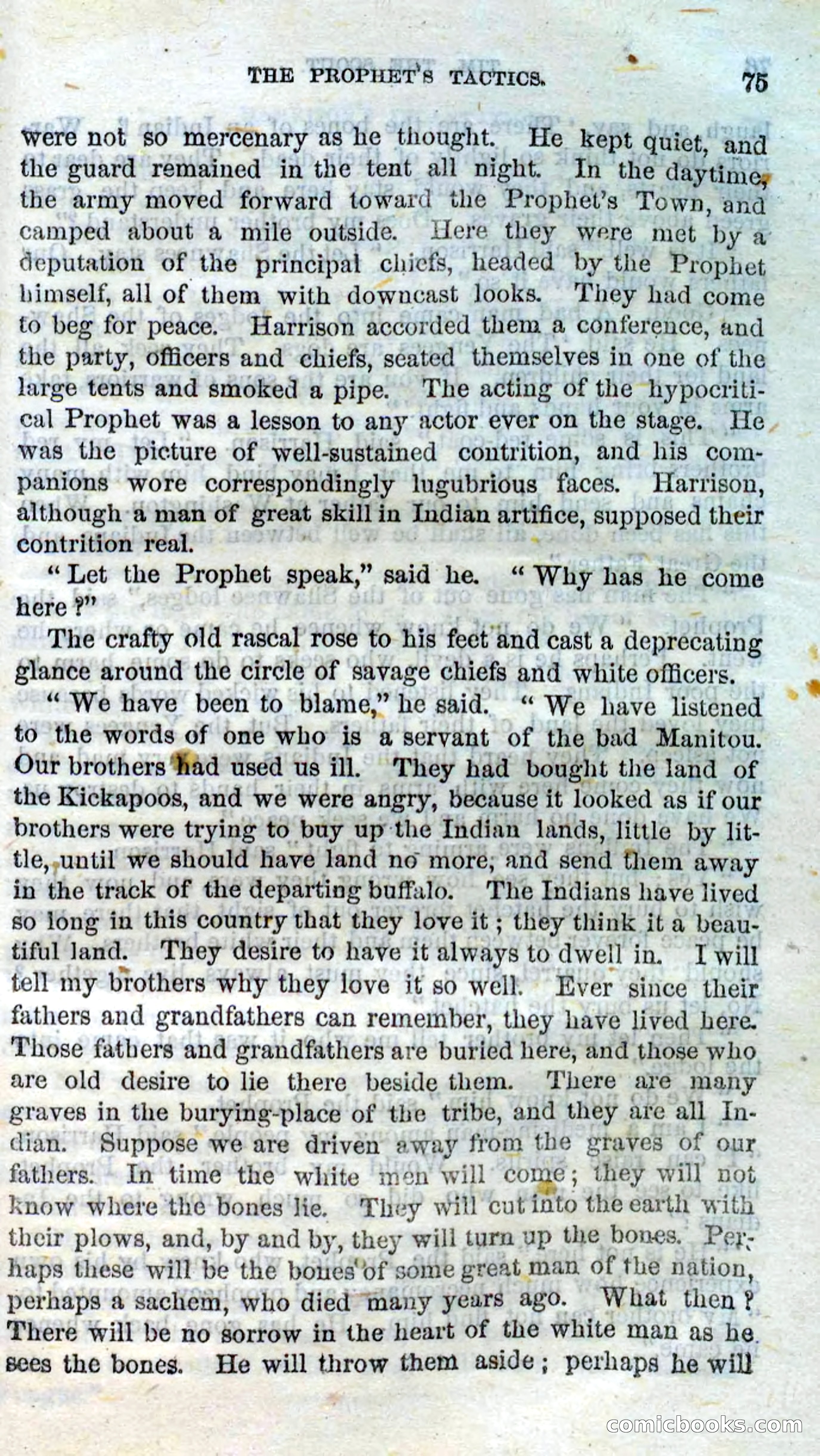
A restored page from Pulp Fiction, 1867. Page through the whole issue in the reader above.
📄 Transcribed text from this page (OCR, searchable)
Machine-transcribed from the original scan — historical spelling and the odd misread are preserved.
THE PROPHETS TACTICS, : "5 were not $0 mercenary as he thought. He kept quiet, ‘and the guard remained in the tent all night. In the daytimey the army moved forward toward the Prophet’s Town, and camped about a mile outside. ere they were met by a deputation of the principal chiets, headed by the Prophet himself, all of them with downcast looks. They had come to beg for peace. Harrison accorded them a conference, and the party, officers and chiefs, seated themselves in one of the large tents and smoked a pipe. The acting of the hypocriti- cal Prophet was a lesson to any actor ever on the stage. He. was the picture of well-sustained contrition, and his com- panions wore correspondingly lugubrious faces. Harrison, although a man of great skill in Indian artifice, supposed their contrition real. “Let the Prophet speak,” said he. “ Why has he come here ?” - The crafty old rascal’ rose to his fect’and cast a deprecating glance around the circle of savage chiefs and white officers, “We have been to blame,” he said. “ We have listened to the words of one who is a servant of the bad Manitou. Our brothers had used us ill. ‘They had bought the land of the Kickapoos, and we were angry, because it looked as if our brothers were trying to buy up the Indian lands, little by lit- tle, until we should have land no more; and send them away in the track of the departing buffalo. The Indians have lived so long in this country that they love it ; they think it a beau- tiful Jand. They desire to have it always to dwell in. I will tell my brothers why they love it so well. Ever since their fathers and grandfathers can remember, they have lived here. Those fathers and grandfathers are butted here, and those who. are old desire to lie there beside them. ‘There are many graves in the burying-place of the tribe, and they are all In- dian. Suppose we are driven away from the gtaves of our fathers. - In time the white men will come; they will not know where the bones lie. They will cut into the earth with their plows, and, by and by, they will turn up the bones. Pey- haps these will be the boues°of some great man of the nation, perhaps a sachem, who died “many years ago. What then ? There Will be no sorrow in the heart of the white man as he. sees the bones. He will throw them aside; perhaps he will comiicbooks.conm