
Pulp Fiction, 1867 · page 70 of 100
Beadle's Dime Novels No. 138: Tim, the Scout — page 70: what you’re looking at
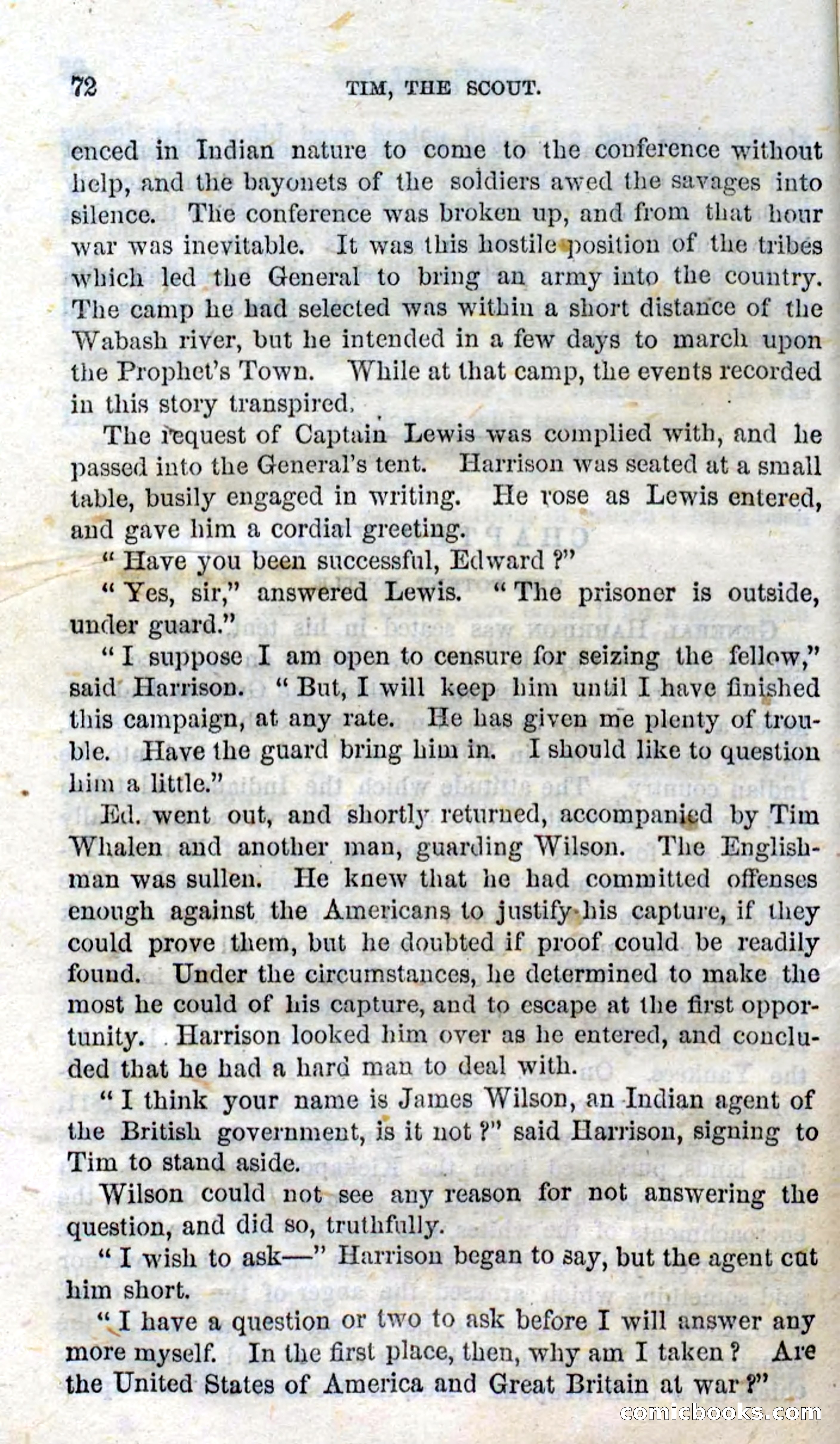
A restored page from Pulp Fiction, 1867. Page through the whole issue in the reader above.
📄 Transcribed text from this page (OCR, searchable)
Machine-transcribed from the original scan — historical spelling and the odd misread are preserved.
72 TIM, THE SCOUT. enced in Indian nature to come to the conference without help, and the bayonets of the soldiers awed the savages into silence. The conference was broken up, and from that hour war was inevitable. It was this hostileqosition of the tribés which led the General to bring an army into the country. The camp he had selected was within a short distatice of the Wabash river, but he intended in a few days to march upon the Prophet’s Town. While at that camp, the events recorded in this story transpired, The request of Captain Lewis was donmptied with, on he passed into the General’s tent. Harrison was seated at a small table, busily engaged in writing. He rose as Lewis entered, and gave him a cordial greeting. “ Have you been successful, Edward ?” “Yes, sir)’ answered Lewis. “The prisoner is outside, under guard. » “T suppose I am open to censure for seizing the fellow,” said’ Harrison. “ But, I will keep him until I have finished this campaign, at any rate, Ue has given me plenty of trou- ble. Have the guard bring himin. I should like to question him a little.” Ed. went out, and shortly returned, accompanied by Tim Whalen and another man, guarding Wilson. The English- . man was sullen. He knew that he had committed offenses enough against the Americans to justify-his capture, if they could prove them, but he doubted if proof could. be readily found. Under the circumstances, he determined to make the most he could of his capture, and to escape at the first oppor- tunity. . Harrison looked him over as he entered, and conclu- ded that he had a hard man to deal with. “J think your name is James Wilson, an Indian agent of the British government, is it not ?” said Harrison, signing to Tim to stand aside. } Wilson could not-see any reason for not answering the question, and did so, truthfully. “TI wish to ask—” Harrison began to say, but the agent cat him short. | “I have a question or two to ask before I will answer any more myself. In the first place, then, why am I taken? Are the United States of America and G¥ént Britain at war?” — COMMMNEOOOKSaCOMn)