
Pulp Fiction, 1867 · page 48 of 92
Beadle's Dime Novels No. 135: The Cherokee Chief — page 48: what you’re looking at
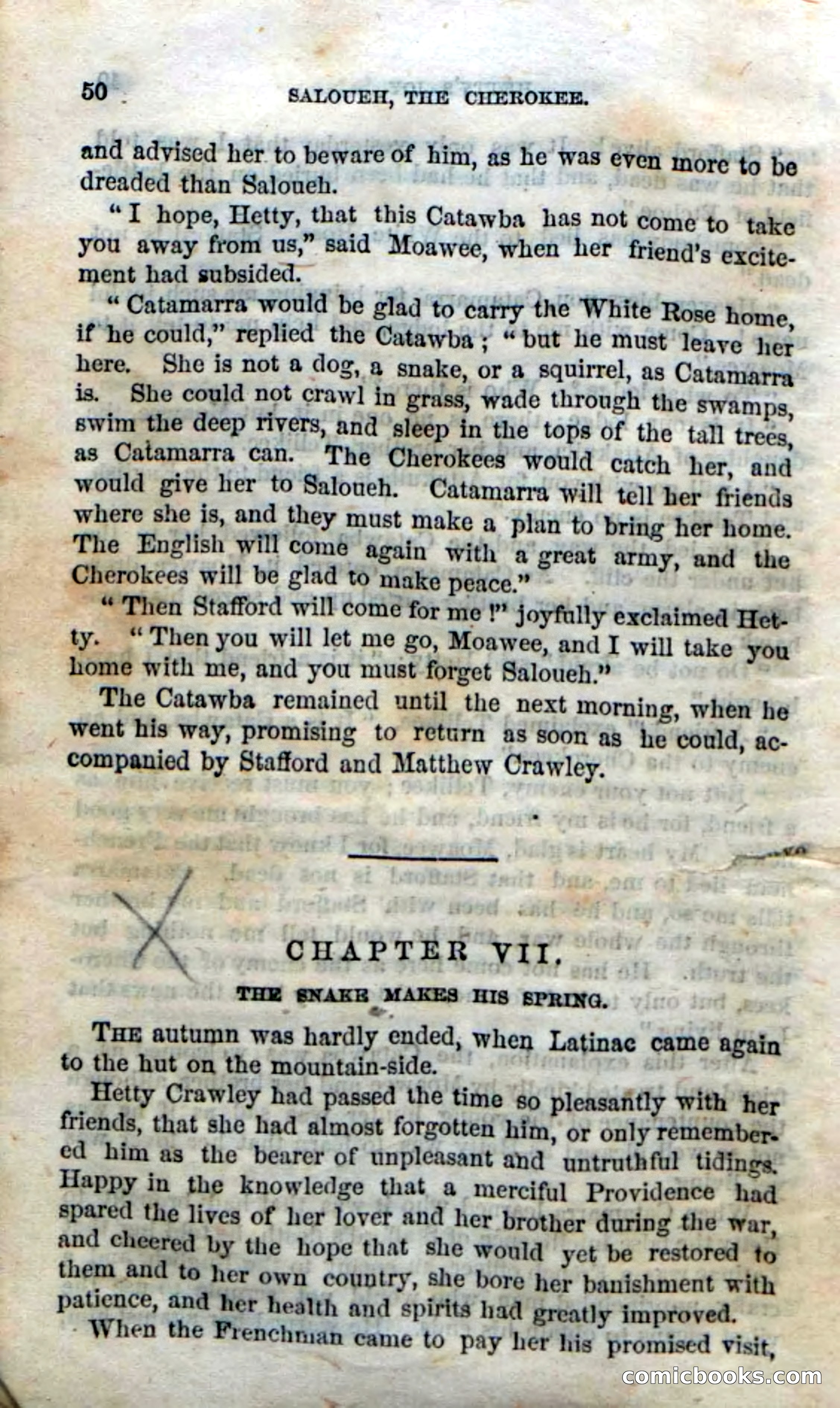
A restored page from Pulp Fiction, 1867. Page through the whole issue in the reader above.
📄 Transcribed text from this page (OCR, searchable)
Machine-transcribed from the original scan — historical spelling and the odd misread are preserved.
50 SALOUEH, THE CHEROKEE. and advised her to beware of him, as he was even more'to he dreaded than Saloueh. ‘ “I hope, Hetty, that this Catawba has not come to take you away from us,” said Moawee, when her friend's excite- ment had subsided. | “ Catamarra would be glad to catry the White Rose home if he could,” replied the Catawba ; “but he must leaye her here, She is not a dog, a snake, or a squirrel, as Catamarra is. She could not crawl in grass, wade through the swamps, swim the deep rivers, and ‘sleep in the tops of the tall trees, as Catamarra can. The Cherokees would catch her, and would a her BS ating Catamarra will tell her friends where she is, and they must make a ‘plin to bring her home. ‘The English will comé again with ie giees army, and the Cherokees will be glad to make peace.” | . _ “Then Stafford will come for me !* joyfully exclaimed Het- ty. “Then you will let me go, Moawee, and I will take you home with me, and you must forget Saloueh.” The Catawba remained until the next morning, when he _ Went his way, promising to return as 80on as he could, ac- companied by Stafford and Matthew Crawley. : rem ' -_ a os CHAPTER VII, THE SNAKE MAKES HIS SPRING. la THE autumn was hardly ended, When Latinae came again to the hut on the mountain-side. _ Hetty Crawley had passed the time so pleasafitly with her friends, that she had almost forgotten him, or only remember. ed him as the bearer of unpleasant and untruthful tidings: Happy in the knowledge that a merciful Providence had spared the lives of her lover and her brother during the war, and cheered by the hope that she would yet be restored to them and to her own country, she bore her banishment with patience, and her health and spirits had greatly improved. — "When the Frenchman came to pay her his promised visit, EComichooksicom — . > os a oo