
Pulp Fiction, 1867 · page 27 of 96
Beadle's Dime Novels No. 131 — page 27: what you’re looking at
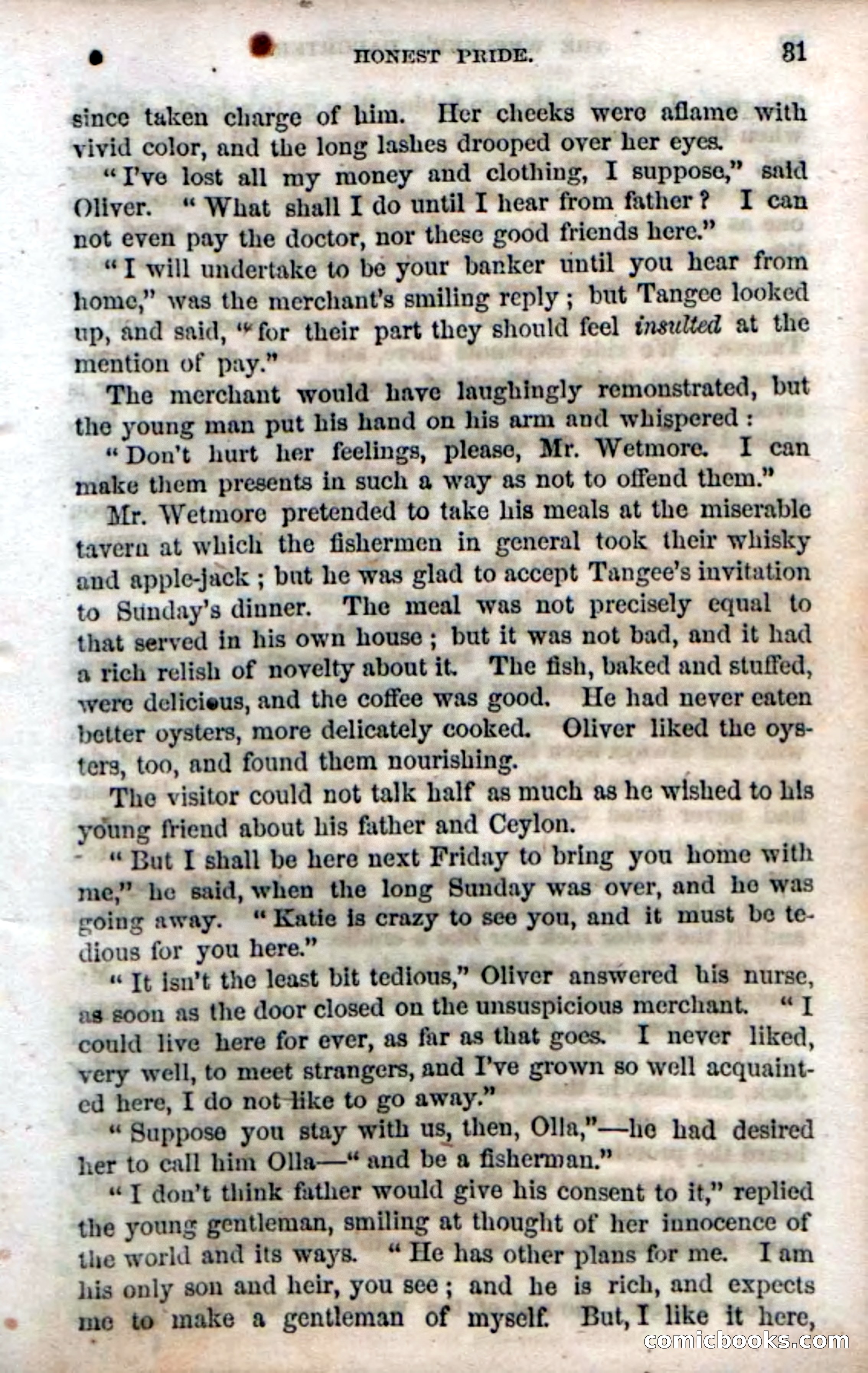
A restored page from Pulp Fiction, 1867. Page through the whole issue in the reader above.
📄 Transcribed text from this page (OCR, searchable)
Machine-transcribed from the original scan — historical spelling and the odd misread are preserved.
e : e HONEST “PRIDE. 81 since taken charge of him. Her cheeks were aflame with vivid color, and the long lashes drooped over her eyes. “T’ve lost all my money and clothing, I suppose,” said Oliver. “What shall I do until I hear from father? I can not even pay the doctor, nor these good friends here.” “T will undertake to be your banker until you hear from home,” was the merchant’s smiling reply ; but Tangee looked up, and said, for their part they should feel insulted at the mention of pay.” The merchant would have laughingly remonstrated, but the young man put his hand on his arm and whispered : “Don't hurt her feelings, please, Mr. Wetmore. I can make them presents in such a way as not to offend them.” Mr. Wetmore pretended to take his meals at the miserable tavern at which the fishermen in general took their whisky and apple-jack ; but he was glad to accept Tangee’s invitation to Sunday’s dinner. The meal was not precisely equal to that served in his own house ; but it was not bad, and it had a Yich relish of novelty about it. The fish, baked and stuffed, were delicieus, and the coffee was good. He had never eaten better oysters, more delicately cooked. Oliver liked the oys- ters, too, and found them nourishing. The visitor could not talk half as much as he wished to his young friend about his father and Ceylon. “ But I shall be here next Friday to bring you home with me” he said, when the long Sunday was over, and he was coing away. “ Katie is crazy to see you, and it must be te- dious for you here.” . «“ Tt isn’t the least bit tedious,” Oliver answered his nurse, ag don as the door closed on the unsuspicious merchant. “T could live here for ever, as far as that goes. T never liked, very well, to meet strangers, and I’ve grown so well acquaint- ed here, I do not-Hike to go away.” “Suppose you stay with us, then, Olla,”—he had desired her to call him Olla—* and be a fisherman.” | “J don’t think father would give his consent to it,” replied the young gentleman, smiling at thought of her innocence of the world and its ways. “ He has other plans for me. Tam his only son and heir, you see; and he is rich, and expects me to make a gentleman of myself. But,T like it here, COMmichooks.Conn