
Pulp Fiction, 1867 · page 22 of 96
Beadle's Dime Novels No. 131 — page 22: what you’re looking at
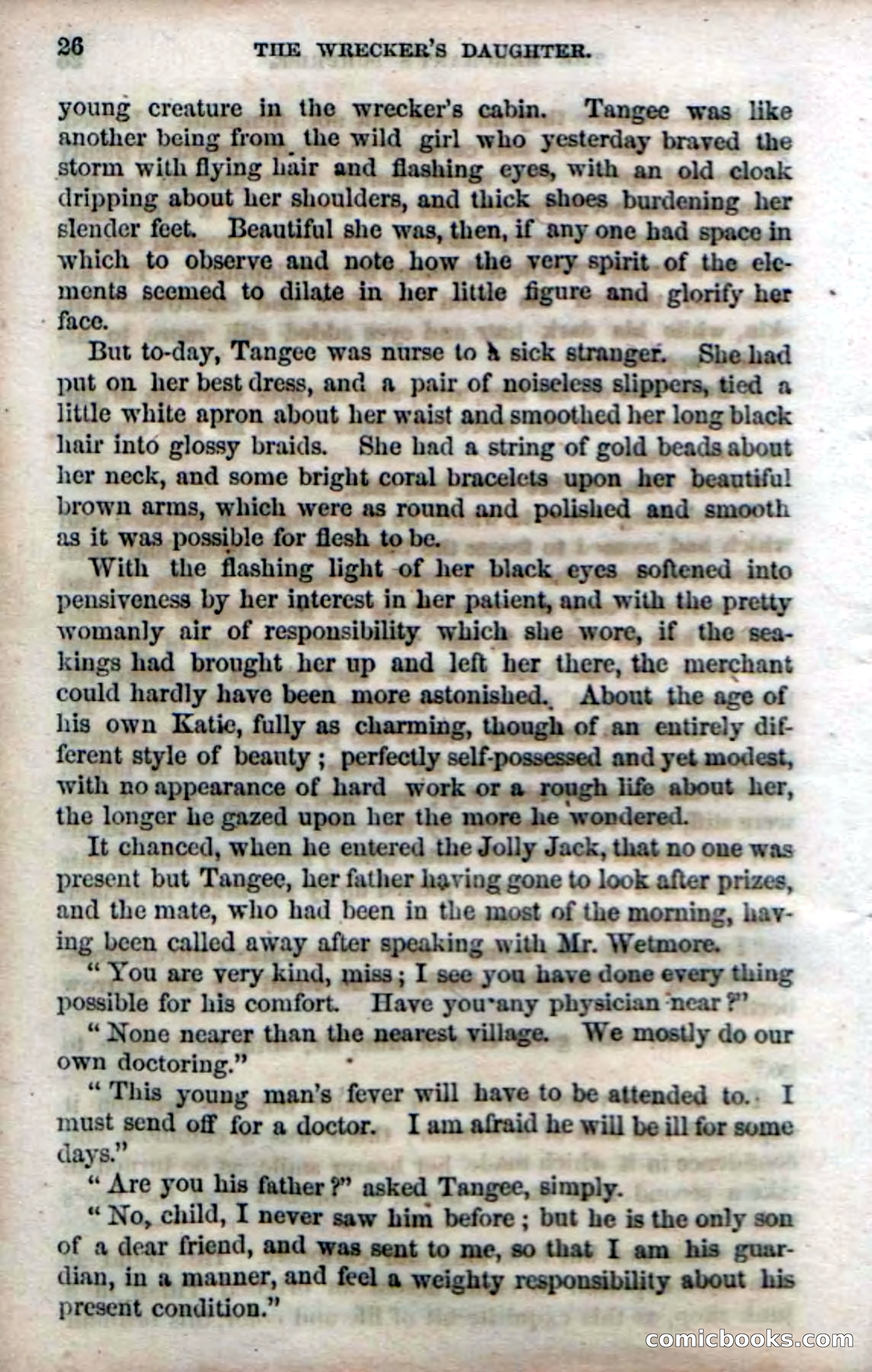
A restored page from Pulp Fiction, 1867. Page through the whole issue in the reader above.
📄 Transcribed text from this page (OCR, searchable)
Machine-transcribed from the original scan — historical spelling and the odd misread are preserved.
26 THE WRECKER’S DAUGHTER. young creature in the wrecker’s cabin. Tangee was like another being from the wild girl who yesterday brayed the storm with flying hair and flashing eyes, with an old cloak dripping about her shoulders, and thick shoes burdening her slender feet. Beautiful she was, then, if any one had space in which to observe and note how the very spirit.of the ele- ments soomnesh. 4, dilala in, hor Jie Agusan glorify her - face. But to-day, Tangee 1 was ‘nurse to 4 sick stranger. She. had put on her best dress, and a pair of noiseless slippers, tied a little white apron about her waist and smoothed her long black hair into glossy braids. She had a string of gold beads about her neck, and some bright coral bracelets upon her beautifu! brown arms, which were as round and polished and smooth as it was possible for flesh to be. With the flashing light of her black eyes softened. into pensiveness by her interest in her patient, and with the pretty womanly air of responsibility which she wore, if the sea- kings had brought her up and left her there, the merchant could hardly have been more astonished. About. the age of his own Katie, fully as charming, though.of an entirely dif- ferent style of beauty ;_ perfectly self-possessed and yet modest, with no appearance of hard work or a rough life about her, the longer he gazed upon her the more he wondered. It chanced, when he entered the Jolly Jack, that no one was present but Tangee, her father having gone to look after prizes, and the mate, who had been in the most of the morning, hav- ing been called away after speaking with Mr. Wetmore. “You are yery kind, miss; I see you have done every thing possible for his comfort. Have you*any physician ‘near ?”’ _“ None nearer than, the nearest, village, We mostly do our own doctoring.” “This young man’s fever will have to be attended to.. I must send off for a doctor. I am afraid he will be ill for some days.” “ Are you his father ?” asked Tangee, simply. “ No, child, I never saw him before ; but he is the only son of a dear friend, and. was sent to me, so that I am his guar- dian, in 4 manner, and feel a weighty responsibility about his presenit condition.” CORME DOO K<S.COM)