
Pulp Fiction, 1860 · page 28 of 108
Beadle's Dime Novels No. 13 — page 28: what you’re looking at
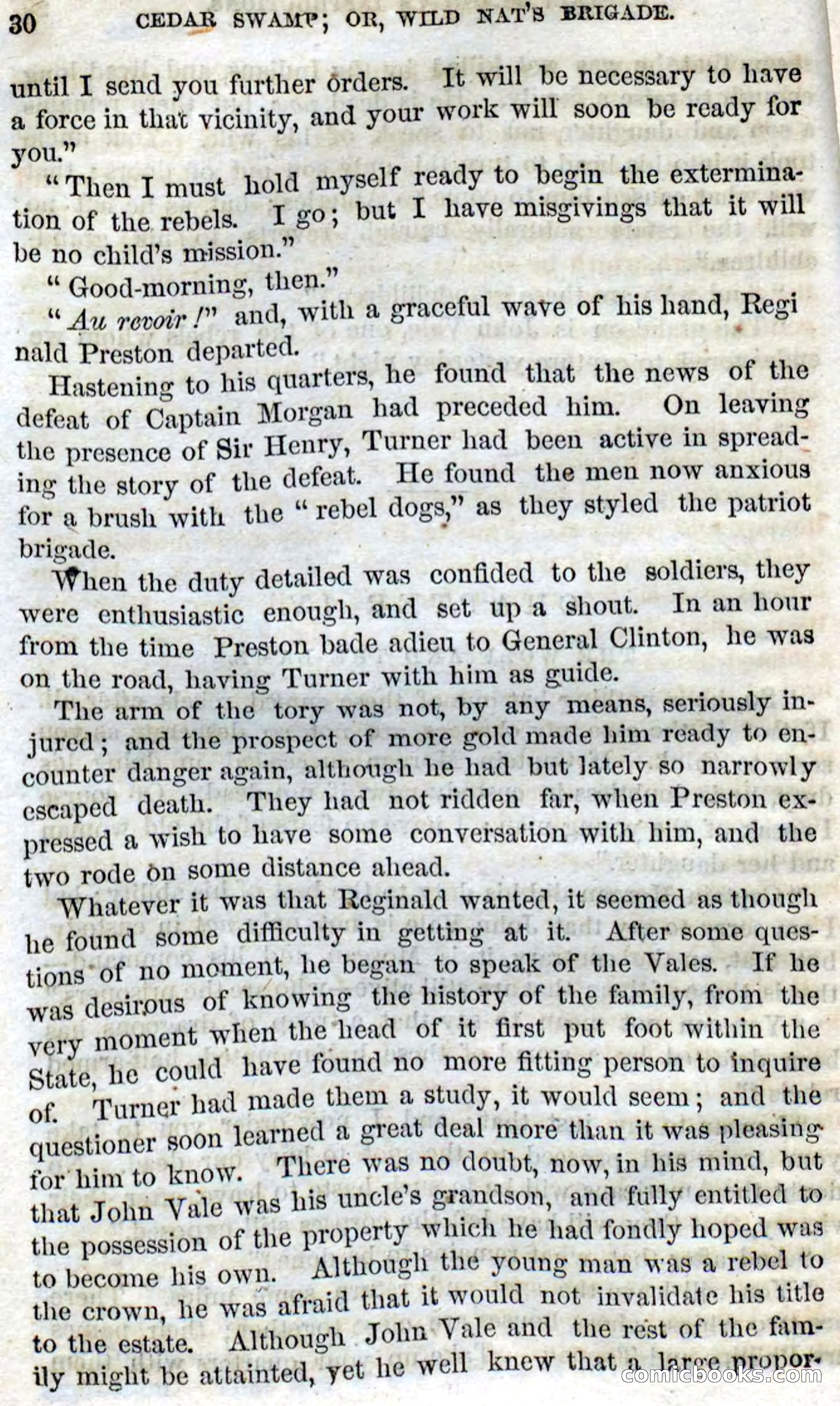
A restored page from Pulp Fiction, 1860. Page through the whole issue in the reader above.
📄 Transcribed text from this page (OCR, searchable)
Machine-transcribed from the original scan — historical spelling and the odd misread are preserved.
30 CEDAR SWAM?; OR, WILD NAT'S BRIGADE. until I send you further drders. It will be necessary to have a force in that vicinity, and your work will soon be ready for you.” “Then I must bold myself ready to begin the extermina- tion of the rebels. I go; but I have misgivings that it will be no child’s mission.” : | “ Good-morning, then.” “ Au revoir /” and, with a graceful wave of his hand, Regi nald Preston departed. . Hastening to his quarters, he found that the news of the defeat of Captain Morgan had preceded him. On leaving the presence of Sir Henry, Turner had been active in spread- ing the story of the defeat. He found the men now anxious for a brush with the “ rebel dogs,” as they styled the patriot brigade. When the duty detailed was confided to the soldiers, they were enthusiastic enough, and set up a shout. In an hour from the time Preston bade adieu to General Clinton, he was on the road, having Turner with him as euide. The arm of the tory was not, by any means, seriously in- jured; and the prospect of more gold made him ready to en- counter danger again, although he had but lately so narrowly escaped death. They had not ridden far, when Preston ex- pressed a wish to have some conversation with him, and the two rode on some distance ahead. Whatever it was that Reginald wanted, it seemed as though he found some difficulty in getting at it. After some ques- tions of no moment, he began to speak of the Vales. If he was desirous of knowing the history of the family, from the very moment when the ‘head of it first put foot within the State, he could have found no more fitting person to inquire of. Turner had made them a study, it would seem; and the- questioner s00n Jearned a great deal more than it was pleasing for him to know. There was no doubt, now, in his mind, but that John Vale was his uncle’s grandson, and ‘fully entitled to’ the possession of the property which he had fondly hoped was to become his own. Although the young man was a rebel to the crown, he was afraid that it would not invalidate his title to the estate. Although John Vale and the rest of the fam- ily might be attainted, yet he well knew that 9. large propor: