
Pulp Fiction, 1860 · page 17 of 108
Beadle's Dime Novels No. 13 — page 17: what you’re looking at
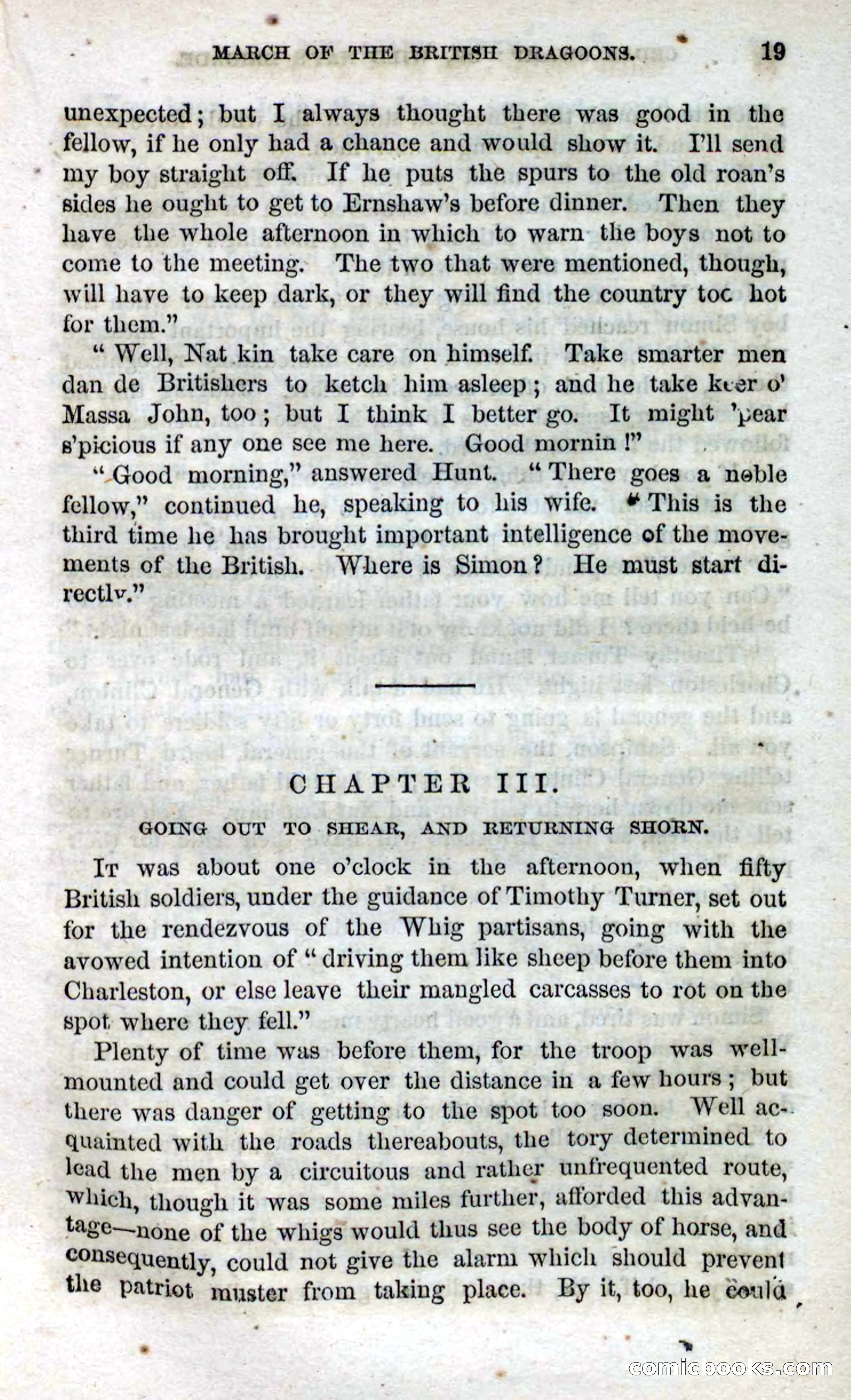
A restored page from Pulp Fiction, 1860. Page through the whole issue in the reader above.
📄 Transcribed text from this page (OCR, searchable)
Machine-transcribed from the original scan — historical spelling and the odd misread are preserved.
_MARCH OF THE BRITISH DRAGOONS. ~ 19 unexpected; but I always thought there was good in the fellow, if he only had a chance and would show it. Ill send my boy straight off. If he puts the spurs to the old roan’s sides he ought to get to Ernshaw’s before dinner. Then they have the whole afternoon in which to warn the boys not to come to the meeting. The two that were mentioned, though, will have to keep dark, or they will find the country toc hot for them.” Ore “ Well, Nat kin take care on himself. Take smarter men dan de Britishers to ketch him asleep; and he take keer o’ Massa John, too; but I think I better go. It might ’pear s’picious if any one see me here. Good mornin !” ; “Good morning,” answered Hunt. “There goes a neble fellow,” continued he, speaking to his wife. This is the third time he has brought important intelligence of the move- ments of the British, Where is Simon? He must start di- rectlv,” CHAPTER III. | GOING OUT TO SHEAR, AND RETURNING SHORN. Ir was about one o’clock in the afternoon, when fifty British soldiers, under the guidance of Timothy Turner, set out for the rendezvous of the Whig partisans, going with the avowed intention of “driving them like sheep before them into Charleston, or else leave their mangled carcasses to rot on the spot where they fell.” se: Plenty of time was before them, for the troop was well- mounted and could get over the distance in a few hours; but there was danger of getting to the spot too soon. Well ac-. quainted with the roads thereabouts, the tory determined to lead the men by a circuitous and rather unfrequented route, Which, though it was some miles further, afforded this advan- tage—none of the whigs would thus see the body of horse, and consequently, could not give the alarm which should prevent the patriot muster from taking place. By it, too, he éeula . . ‘ * CoOnnicloOokS.cGom