
Pulp Fiction, 1867 · page 18 of 100
Beadle's Dime Novels No. 127: Bald Eagle — page 18: what you’re looking at
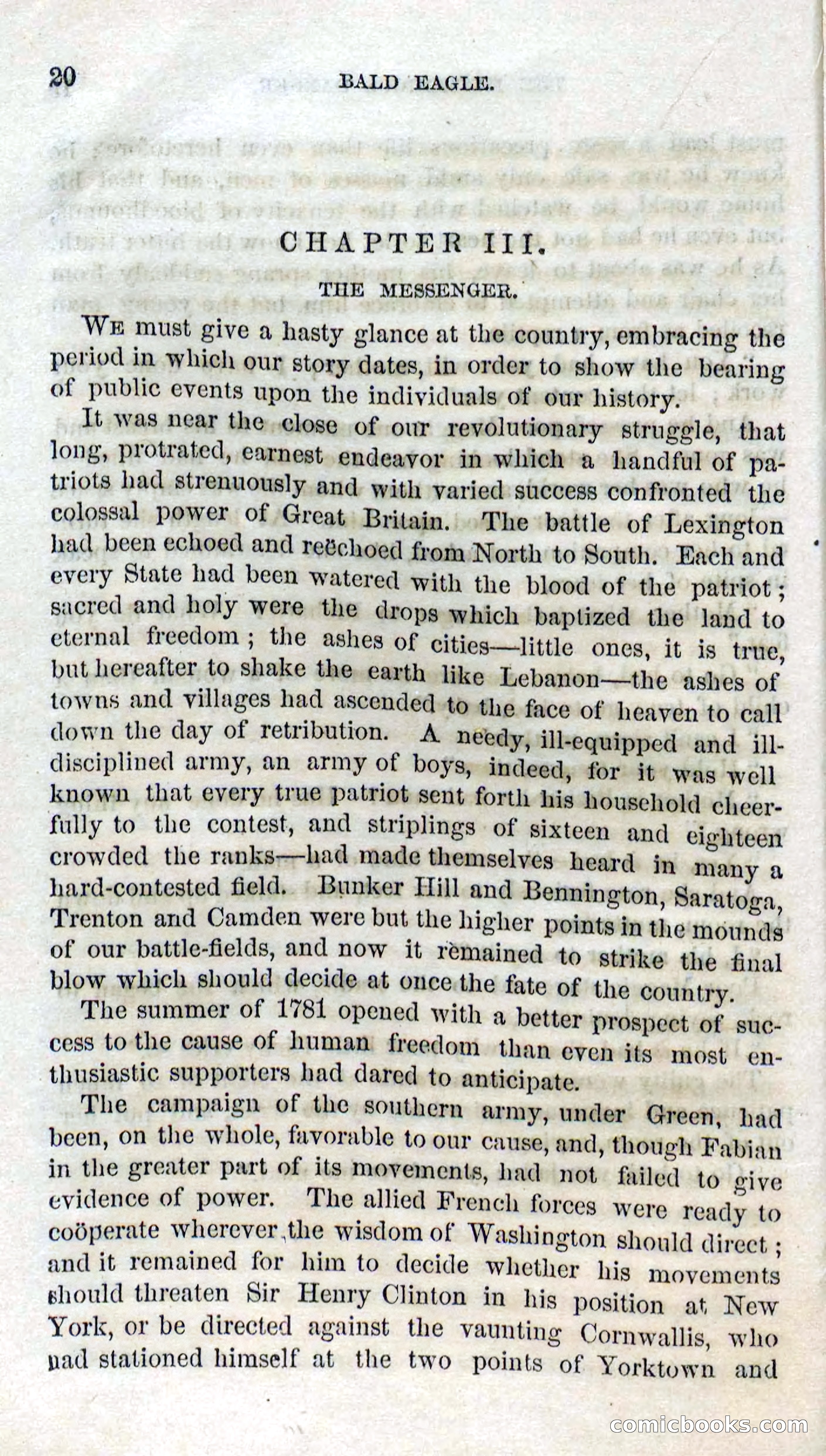
A restored page from Pulp Fiction, 1867. Page through the whole issue in the reader above.
📄 Transcribed text from this page (OCR, searchable)
Machine-transcribed from the original scan — historical spelling and the odd misread are preserved.
20 BALD BAGLE. CHAPTER III. THE MESSENGER, WE must give a hasty glance at the country, embracing the period in which our story dates, in order to show the bearing of public events upon the individuals of our history. It was near the close of our revolutionary struggle, that long, protrated, earnest endeavor in which a handful of pa- triots had strenuously and with varied success confronted the colossal power of Great Britain. The battle of Lexington had been echoed and retchoed from North to South. Each and every State had been watered with the blood of the patriot ; sacred and holy were the drops which baptized the land to eternal freedom ; the ashes of cities—little ones, it is true, but hereafter to shake the earth like Lebanon—the ashes of towns and villages had ascended to the face of heaven to call down the day of retribution. A needy, ill-equipped and _ ill- disciplined army, an army of boys, indeed, for it was well known that every true patriot sent forth his household cheer- fully to the contest, and striplings of sixteen and eighteen crowded the ranks—-had made themselves heard jn many a hard-contested field.. Bunker Hill and Bennington, Saratoga, Trenton and Camden were but the higher points in the mounds of our battle-fields, and now it remained to Strike the final blow which should decide at once the fate of the country. The summer of 1781 opened with a better prospect of suc- cess to the cause of human freedom than eyen its most en- thusiastic supporters had dared to anticipate. The campaign of the southern army, under Green, had been, on the whole, favorable to our cause, and, though Fabian in the greater part of its movements, had not failed to give evidence of power. The allied French forces wer cooperate Wherever the wisdom of Washington should direct . and it remained for him to decide whether his movements should threaten Sir Henry Clinton in his position at New York, or be directed against the vaunting Cornwallis, who nad stationed himself at the two points of Yorktown and e ready to connmicloooks.com