
Pulp Fiction, 1867 · page 70 of 100
Beadle's Dime Novels No. 126: Old Jupe — page 70: what you’re looking at
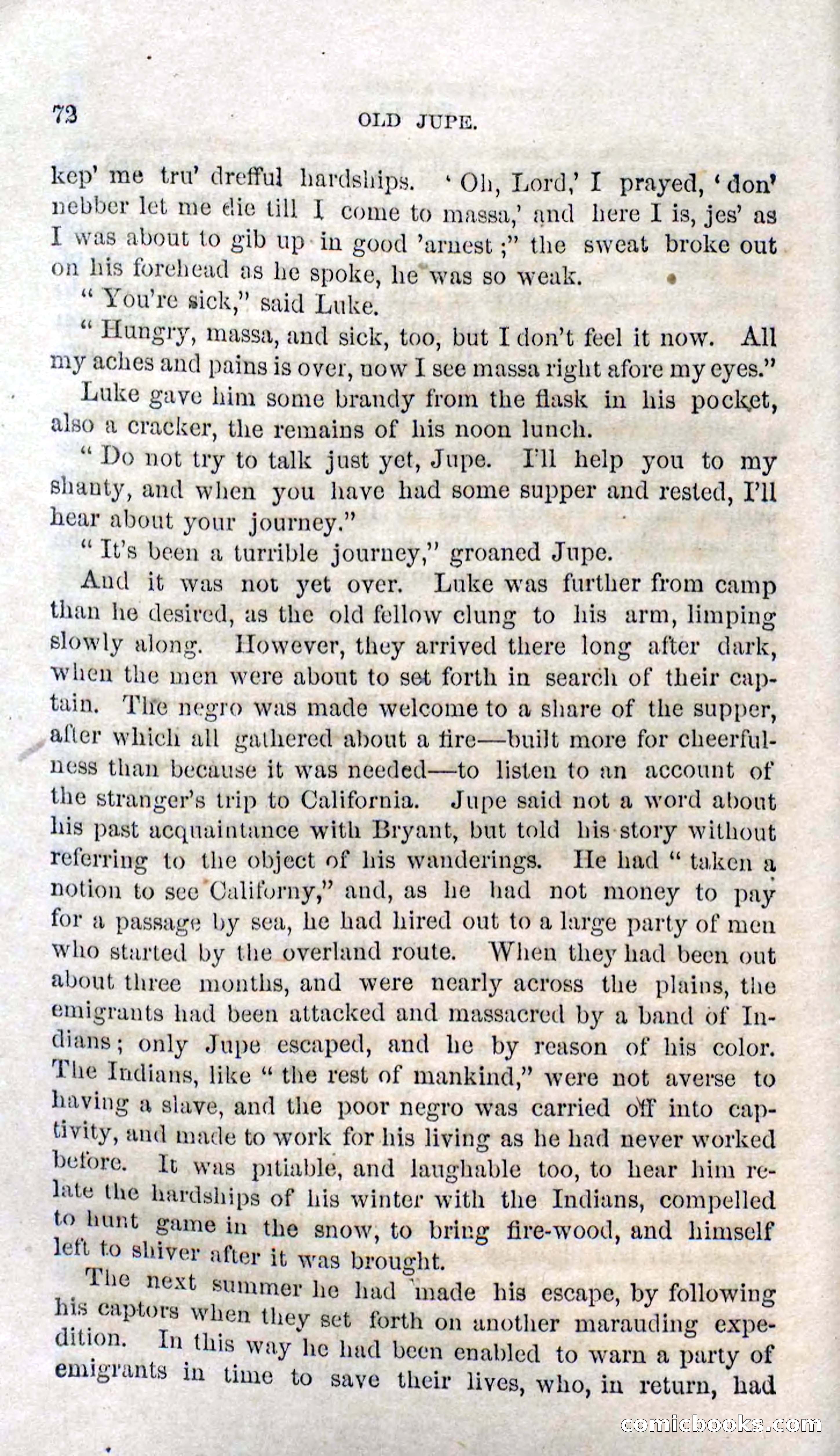
A restored page from Pulp Fiction, 1867. Page through the whole issue in the reader above.
📄 Transcribed text from this page (OCR, searchable)
Machine-transcribed from the original scan — historical spelling and the odd misread are preserved.
73 OLD JUPR. kep’ me tru’ drefful hardships. + Oh, Lord,” I prayed, ‘don! nebber let me die till I come to massa,’ and here I is, jes’ ag I was about to gib up’ in good ’arnest ;” the sweat broke out. on his forehead ag he spoke, he was so weak. e “You're sick,” said Luke, “ Hungry, massa, and sick, too, but I don’t feel it now. All my aches and pains is over, uow I see massa right afore my eyes.” Luke gave him some brandy from the flask in his pocket, also a cracker, the remains of his noon lunch. “ Do not try to talk just yet, Jupe. Ill help you to my shanty, and when you have had some supper and rested, V’ll hear about your journey.” “It’s been a turrible journey,” groaned Jupe. And it was not yet over. Luke was further from camp than he desired, as the old fellow clung to his arm, limping slowly along. However, they arrived there long after dark, When the men were about to set forth in search of their cap- tain, Tlie negro was made welcome to a share of the supper, afler which all gathered about a tire—built more for cheerful- ness than because it was needed—to listen to an account of the stranger’s trip to California. Jupe said not a word about his past acquaintance with Bryant, but told his-story without referring to the object of his wanderings. He had “ taken a notion to see Califurny,” and, as he had not money to pay for a passage by sea, he had hired out to a large party of men who started by the overland route. When they had been out about three months, and were nearly across the plains, the emigrants had been attacked and massacred by a band of In- dians; only Jupe escaped, and he by reason of his color. The Indians, like “ the rest of mankind,” were not averse to having a slave, and the poor negro was carried off into cap- tivity, and made to work for his living as he had never worked before. It was pitiable, and laughable too, to hear him re- late the hardships of his winter with the Indians, compelled to hunt game in the snow, to bring fire-wood, and himself left to shiver after it was brought. The next summer he had inade his escape, by following his captors when they set forth on another marauding expe- dition, In this way he had been enabled to warn a party of emigrants In time to save their lives, who, in return, had CoOnmmicoooks.conn