
Pulp Fiction, 1867 · page 43 of 100
Beadle's Dime Novels No. 126: Old Jupe — page 43: what you’re looking at
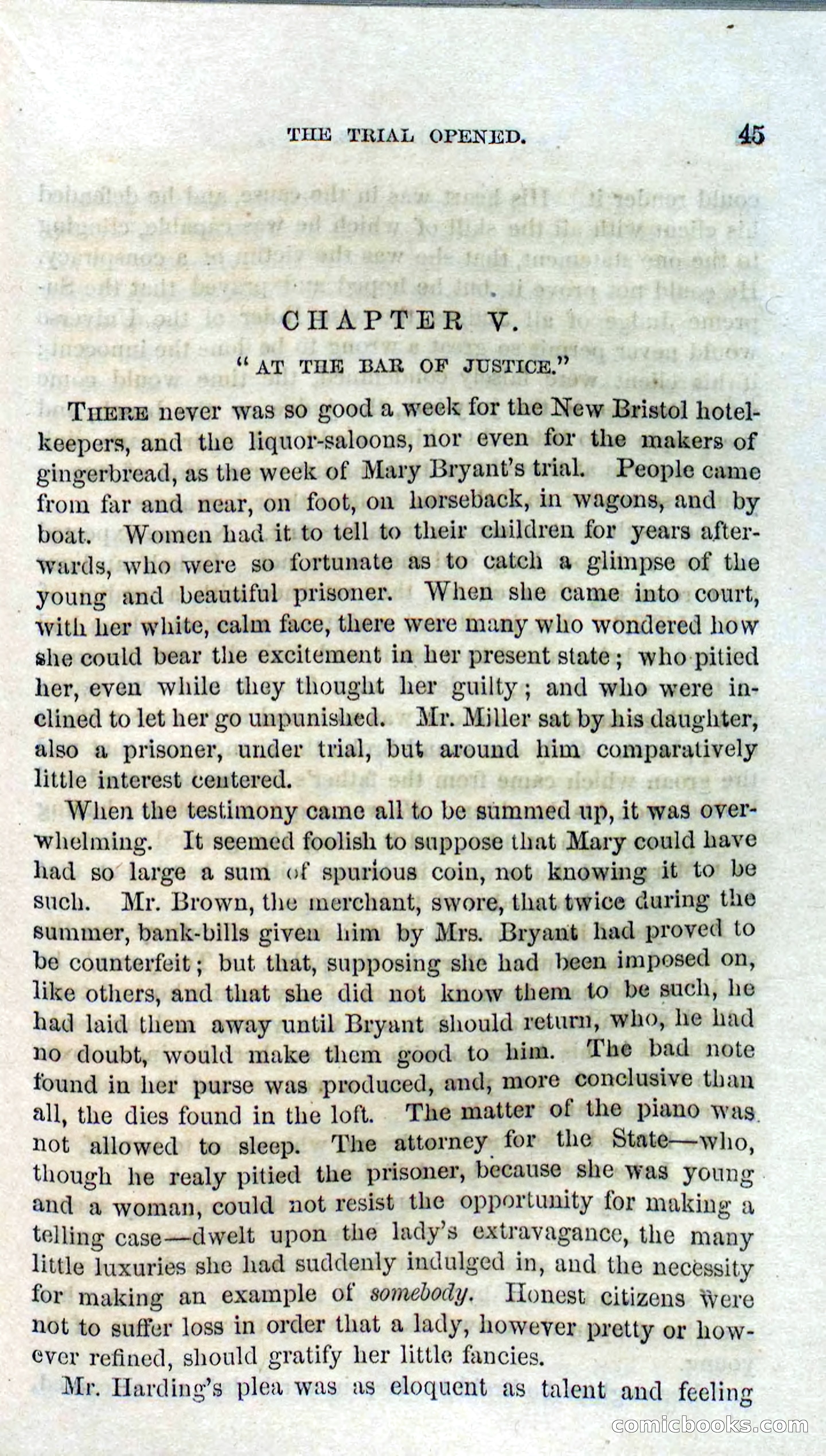
A restored page from Pulp Fiction, 1867. Page through the whole issue in the reader above.
📄 Transcribed text from this page (OCR, searchable)
Machine-transcribed from the original scan — historical spelling and the odd misread are preserved.
THE TRIAL OPENED. 45 CHAPTER VY. “AT THER ‘BAR OF JUSTICE,” THERE neyer was so good a week for the New Bristol hotel- keepers, and the liquor-saloons, nor even for the makers of gingerbread, as the week of Mary Bryant's trial. People came from far and near, on foot, on horseback, in wagons, and by boat. Women had it: to tell to their children for years after- wards, who were so fortunate as to catch a glimpse of the young and beautiful prisoner. When she came into court, With her white, calm face, there were many who wondered how she could bear the excitement in her present state; who pitied her, even while they thought her guilty; and who were in- clined to let her go unpunished. Mr. Miller sat by his daughter, also a prisoner, under trial, but around him comparatively little interest ceutered. | ftps When the testimony came all to be summed up, it was over- Whelming. It seemed foolish to suppose that Mary could have had so large a sum of spurious coin, not knowing it to be such. Mr. Brown, the merchant, swore, that twice during the summer, bank-bills given him by Mrs. Bryant had proved to be counterfeit; but that, supposing she had been imposed on, like others, and that she did not know them to be such, he had laid them away until Bryant should return, who, he had no doubt, would make them good. to him. The bad note found in her purse was produced, and; more conclusive than all, the dies found in the loft. The matter of the piano was. not allowed to sleep. The attorney for the State—who, though he realy pitied the prisoner, because she Was young and a woman, could not resist the opportunity for making a telling case—dwelt upon the lady’s extravagance, the many little luxuries she had suddenly indulged in, and the necessity for making an example of somebody. Honest citizens were not to suffer loss in order that a lady, however pretty or how- ever refined, should gratify her little fancies, Mr. Harding’s plea was as eloquent as talent and feeling Comiclooks.conn