
Pulp Fiction, 1867 · page 37 of 100
Beadle's Dime Novels No. 126: Old Jupe — page 37: what you’re looking at
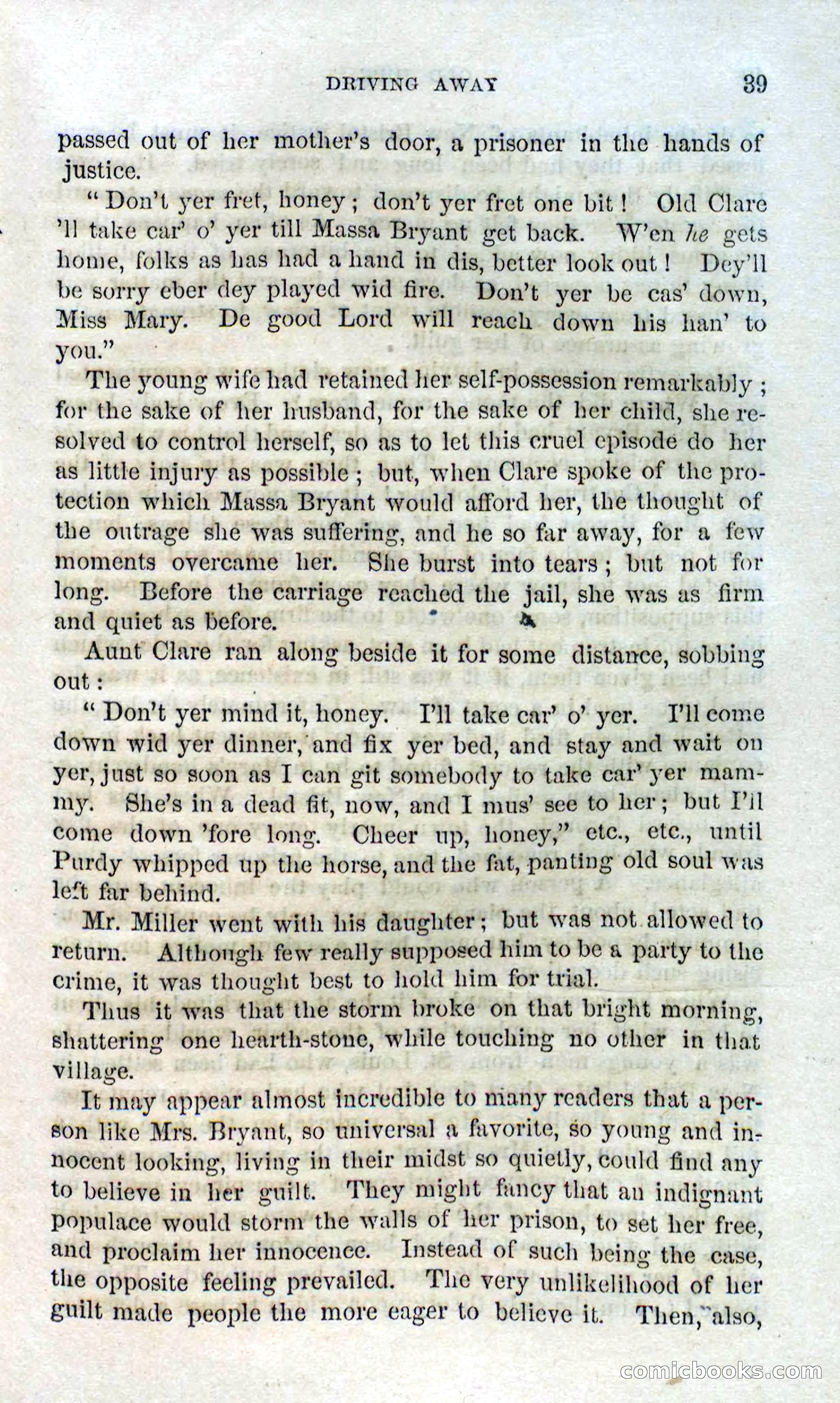
A restored page from Pulp Fiction, 1867. Page through the whole issue in the reader above.
📄 Transcribed text from this page (OCR, searchable)
Machine-transcribed from the original scan — historical spelling and the odd misread are preserved.
DRIVING AWAY 39 passed out of her mother’s door, a prisoner in the hands of justice. “Don’t yer fret, honey; don’t yer fret one bit! Old Clare ll take car’ o’ yer till Massa Bryant get back. W’en de gets home, folks as has had a hand in dis, better look out! Dey’ll be sorry eber dey played wid fire. Don’t yer be cas’ down, — Mary. De good Lord will reach down oe han’ to you.” The young wife had retained her EL Retesain remarkably ; for the sake of her husband, for the sake of her child, she re- solved to control herself, so as to let this cruel episode do her as little injury as possible; but, when Clare spoke of the pro- tection which Massa Bryant would afford her, the thought of the outrage she was suffering, and he so far away, for a few moments overcame her. She burst into tears; but not for long. Before the carriage reached the jail, shi was as firm and quiet as before. a Aunt Clare ran along beside it for some distance, sobbing out : “Don’t yer mind it, honey. T'll take car’ o’ yer. T’ll come down wid yer dinner, and fix yer bed, and stay and wait on yer, just so soon as I can git somebody to take car’ yer mam- my. She’s ina dead fit, now, and I mus’ see to her; but Pil come down ’fore lone. Cheer up, honey,” etc., ete. until Purdy whipped up the ee and ee fat, panting old soul was left far behind. Mr. Miller went with his daughter; but was not. allowed to return. Althongh few really supposed him to be & party to the crime, it was thought best to hold him for trial. Thus it was that the storm broke on that bright morning, shattering one hearth-stone, pee touching no other in that Village. It may appear almost incredible to many readers that a per- son like Mrs. Bryant, so universal a favorite, $0 young and in- nocent looking, living in their midst so quietly, could find any to believe in her guilt. They might fancy that an indignant populace would stormy the walls of her prison, to set her fr ee, and proclaim her innocence. Instead of such being the case, the opposite feeling prevailed. The very unlikelihood of her guilt made people the more eager to believe it. Then,“also, COMniclOolkkS.Conn