
Pulp Fiction, 1867 · page 41 of 100
Beadle's Dime Novels No. 115: The Sons of Liberty — page 41: what you’re looking at
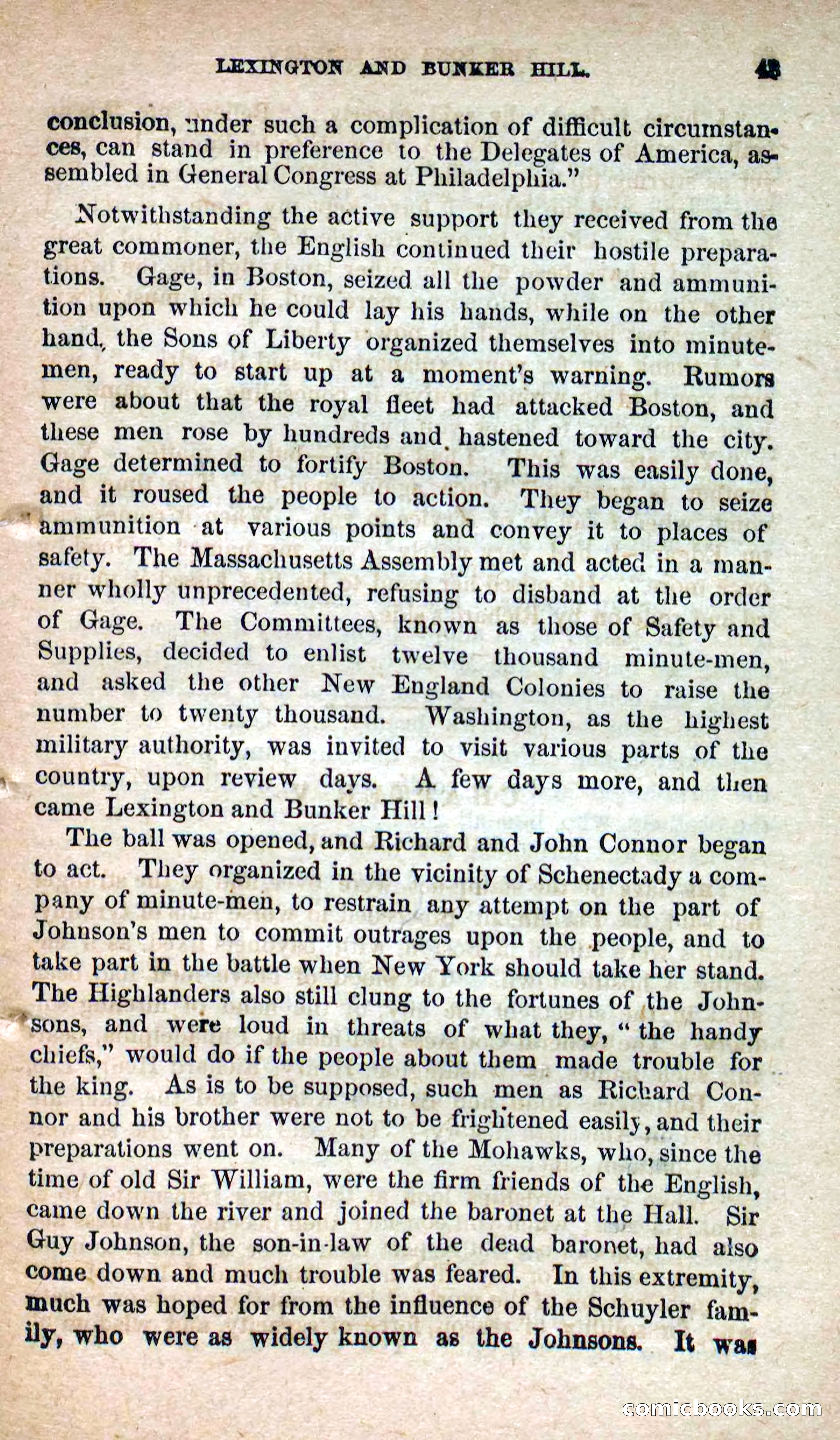
A restored page from Pulp Fiction, 1867. Page through the whole issue in the reader above.
📄 Transcribed text from this page (OCR, searchable)
Machine-transcribed from the original scan — historical spelling and the odd misread are preserved.
LEXINGTON AND BUNKER HILL. 48 conclusion, under such a complication of difficult circumstans- ces, can stand in preference to the Delegates of America, as sembled in General Congress at Philadelphia.” Notwithstanding the active support they received from the great commoner, the English continued their hostile prepara- tions. Gage, in Boston, seized all the powder and ammuni- tion upon which he could lay his hands, while on the other hand, the Sons of Liberty organized themselves into minute- men, ready to start up at a moment’s warning. Rumors were about that the royal fleet had attacked Boston, and these men rose by hundreds and. hastened toward the city. Gage determined to fortify Boston. This was easily done, _and it roused the people to action. They began to seize ~ “ammunition -at various points and convey it to places of safety. The Massachusetts Assembly met and acted in a man- ner wholly unprecedented, refusing to disband at the order of Gage. The Committees, known as those of Safety and Supplies, decided to enlist twelve thousand minute-men, and asked the other New England Colonies to raise the number to twenty thousand. Washington, as the highest military authority, was invited to visit various parts of the », Country, upon review days. A few days more, and tlien came Lexington and Bunker Hill! The ball was opened, and Richard and John Connor began to act. They organized in the vicinity of Schenectady a com- pany of minute-men, to restrain any attempt on the part of Johnson’s men to commit outrages upon the people, and to take part in the battle when New York should take her stand. The Highlanders also still clung to the fortunes of the John- “sons, and were loud in threats of what they, “ the handy chiefs,” would do if the people about them made trouble for the king. As is to be supposed, such men as Rickard Con- nor and his brother were not to be frightened easily, and their preparations went on. Many of the Mohawks, who, since the time of old Sir William, were the firm friends of the English, came down the river and joined the baronet at the Hall. Sir Guy Johnson, the son-in-law of the dead baronet, had also Come. down and much trouble was feared. In this extremity, much was hoped for from the influence of the Schuyler fam- ily, who were as widely known as the Johnsons. It wag conniclooolks.comn