
Pulp Fiction, 1860 · page 76 of 134
Beadle's Dime Novels, No. 11 — page 76: what you’re looking at
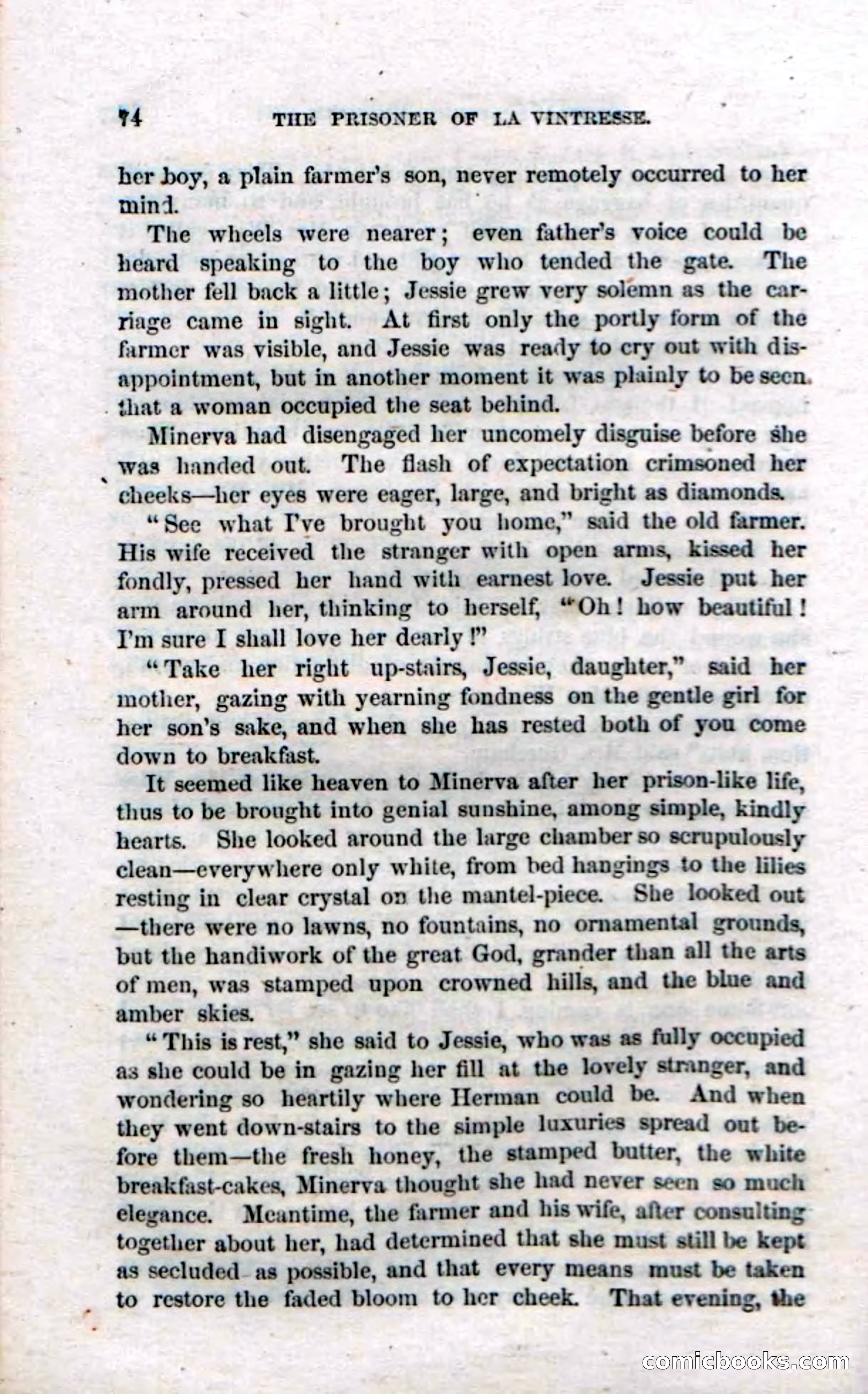
A restored page from Pulp Fiction, 1860. Page through the whole issue in the reader above.
📄 Transcribed text from this page (OCR, searchable)
Machine-transcribed from the original scan — historical spelling and the odd misread are preserved.
¥4 THE PRISONER OF LA VINTRESSE. her boy, a plain farmer’s son, never remotely occurred to her mind. The wheels were nearer; even father’s voice could be heard speaking to the boy who tended the gate. The mother fell back a little; Jessie grew very solemn as the car- riage came in sight. At first only the portly form of the farmer was visible, and Jessie was ready to cry out with dis- appointment, but in another moment it was plainly to be seen. _ that a woman occupied the seat behind. Minerva had disengaged her uncomely disguise before she _ Was handed out. The flash of expectation crimsoned her cheeks—her eyes were eager, large, and bright as diamonds, “See what I've brought you home,” said the old farmer. His wife received the stranger with open arms, kissed her fondly, pressed her hand with earnest love. Jessie put her arm around her, thinking to herself, “Oh! how beautiful! I’m sure I shall love her dearly !” “Take her right up-stairs, Jessie, daughter,” said her mother, gazing with yearning fondness on the gentle girl for her son’s sake, and when she has rested both of you come down to breakfast. It seemed like heaven to Minerva after her prison-like life, thus to be brought into genial sunshine, among simple, kindly hearts. She looked around the large chamber so scrupulously clean—everywhere only white, from bed hangings to the lilies resting in clear crystal on the mantel-piece. She looked out —there were no lawns, no fountains, no ornamental grounds, but the handiwork of the great God, grander than all the arts of men, was stamped upon crowned hills, and the blue and amber skies. “ This is rest,” she said to Jessie, who was as fully occupied as she could be in gazing her fill at the lovely stranger, and wondering so heartily where Herman could be. And when they went down-stairs to the simple luxuries spread out be- fore them—the fresh honey, the stamped butter, the white breakfast-cakes, Minerva thought she had never seen so much elegance. Meantime, the farmer and his wife, afer consulting together about her, had determined that she must still be kept as secluded. as possible, and that every means must be taken to restore the faded bloom to her cheek. That evening, the comlclbooks.com