
Pulp Fiction, 1860 · page 127 of 134
Beadle's Dime Novels, No. 11 — page 127: what you’re looking at
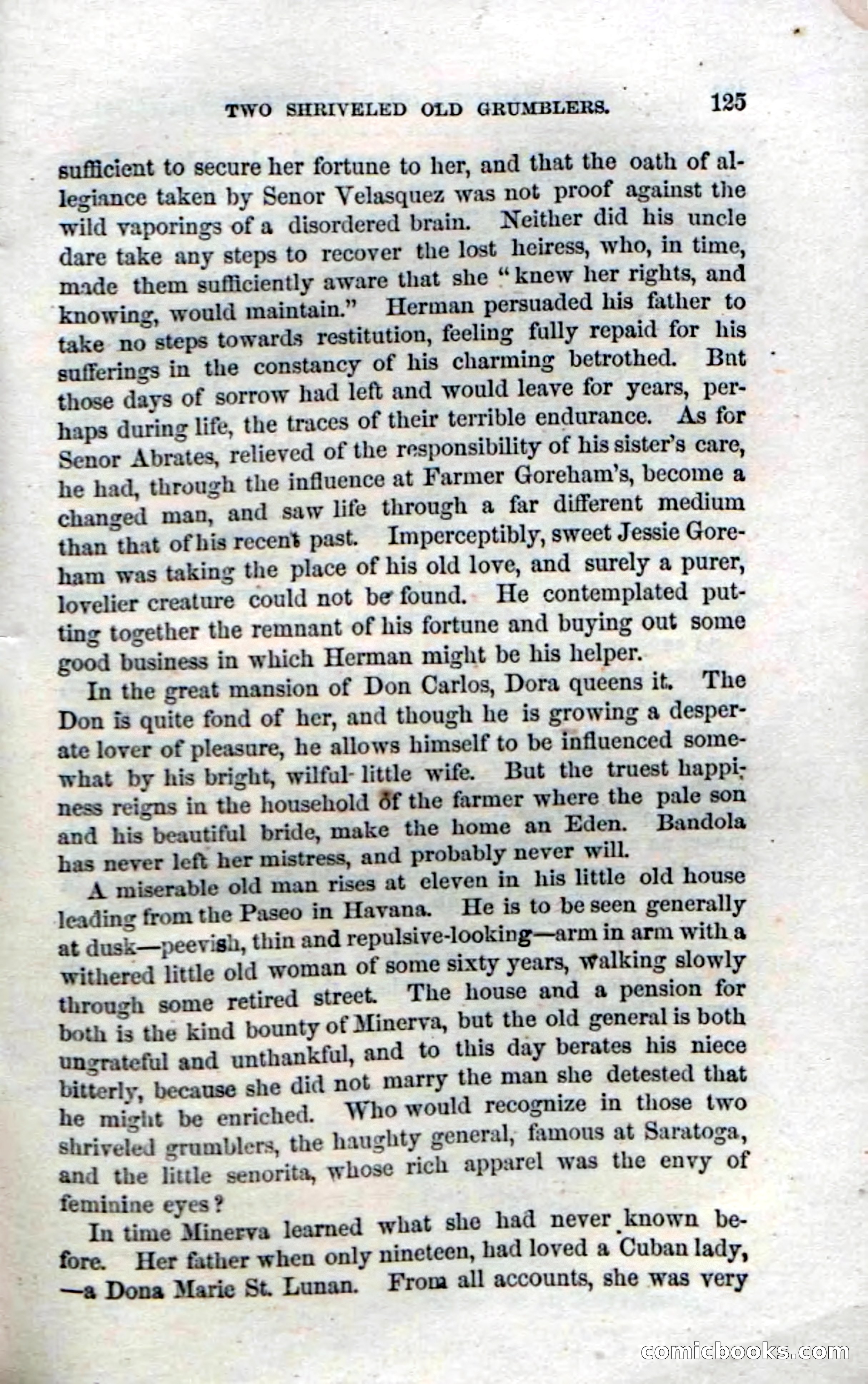
A restored page from Pulp Fiction, 1860. Page through the whole issue in the reader above.
📄 Transcribed text from this page (OCR, searchable)
Machine-transcribed from the original scan — historical spelling and the odd misread are preserved.
TWO SHRIVELED OLD GRUMBLERS. 125 sufficient to secure her fortune to her, and that the oath of al- legiance taken by Senor Velasquez was not proof against the wild vaporings of a disordered brain. Neither did his uncle dare take any steps to recover the lost heiress, who, in time, made them sufficiently aware that she “knew her rights, and knowing, would maintai » Herman persuaded his father to take no steps towards restitution, feeling fully repaid for his sufferings in the constancy of his charming betrothed. Bnt those days of sorrow had left and would leave for years, per- haps during life, the traces of their terrible endurance. As for Senor Abrates, relieved of the responsibility of his sister’s care, he had, through the influence at Farmer Goreham’s, become a man, and saw life through a far different medium than that of his recen’ past. Imperceptibly, sweet Jessie Gore- ham was taking the place of his old love, and surely a purer, lovelier creature could not be found. He contemplated put- ting together the remnant of his fortune and buying out some good business in which Herman might be his helper. In the great mansion of Don Carlos, Dora queens it, The Don is quite fond of her, and though he is growing a desper- ate lover of pleasure, he allows himself to be influenced some- what by his bright, wilful- little wife. But the truest happi-; ness reigns in the household 8f the farmer where the pale son and his beautiful bride, make the home an Eden. Bandola has never left her mistress, and probably never will. A miserable old man rises at eleven in his little old house leading from the Paseo in Havana. He is to be seen generally at dusk—peevish, thin and repulsive-looking—arm in arm with a withered little old woman of some sixty years, walking slowly through some retired street. The house and a pension for both is the kind bounty of Minerva, but the old general is both ungrateful and unthankful, and to this day berates his niece bitterly, because she did not marry the man she detested that he might be enriched. Who would recognize in those two shriveled grumblers, the haughty general, famous at Saratoga, and the little senorita, whose rich apparel was the envy of feminine eyes ? In time Minerva learned what she had never known be- fore. Her father when only nineteen, had loved a Cuban lady, —a Dona Marie St. Lunan. From all accounts, she was very comlclbooks.com