
Pulp Fiction, 1947 · page 99 of 132
Avon Modern Short Story Monthly #36 — page 99: what you’re looking at
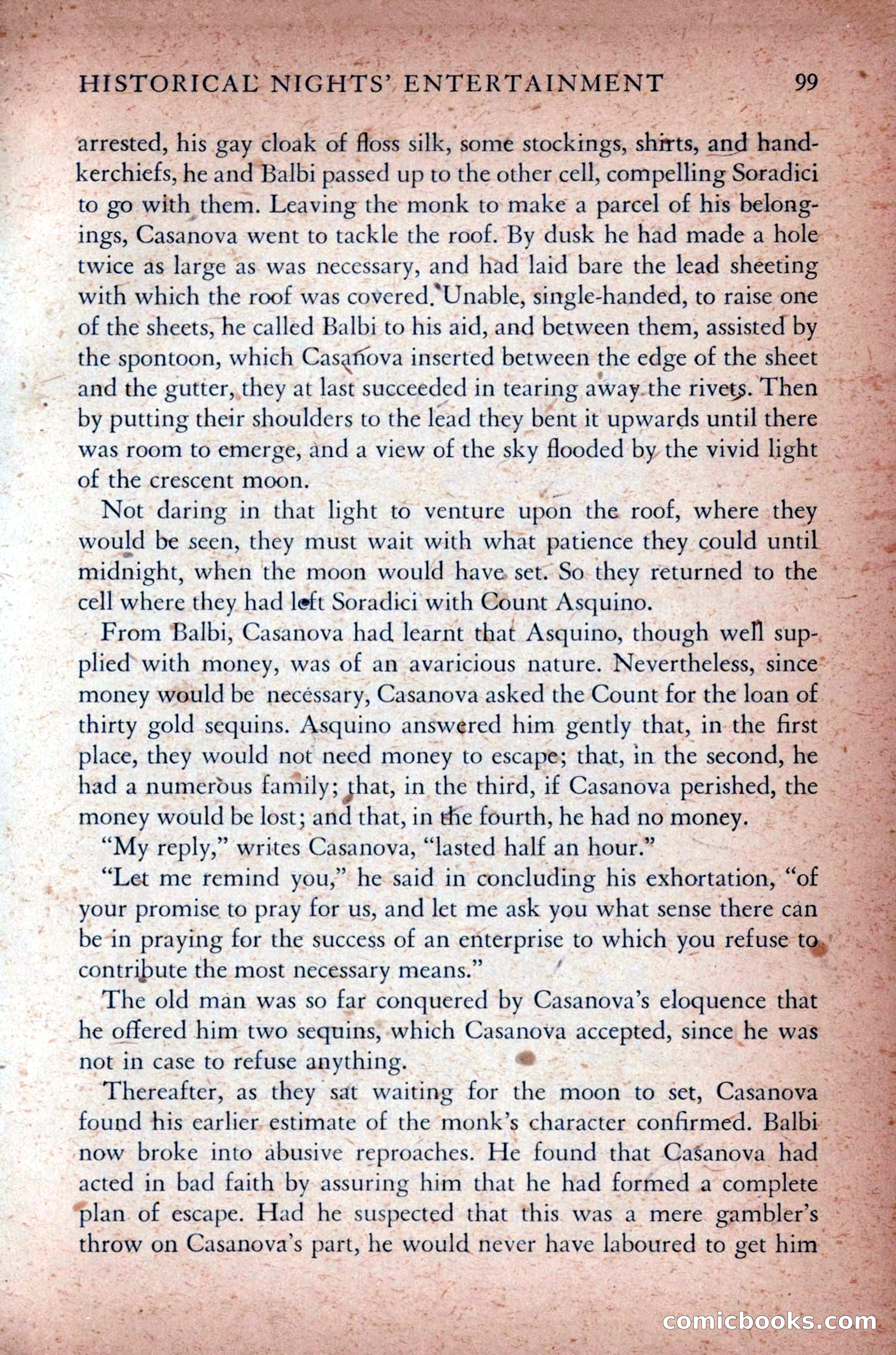
A restored page from Pulp Fiction, 1947. Page through the whole issue in the reader above.
📄 Transcribed text from this page (OCR, searchable)
Machine-transcribed from the original scan — historical spelling and the odd misread are preserved.
‘ ‘ ¥;, “*% ; ns ~ : Pr; ie oO i ~# = _ at 5 .. ~~” ce =~ ae ~< iy ESF = 3 : “5 - f » . r ae ~ ¥s. - a os za “ : | = 4 a? : * i? oo hee. Sit 3 RM! a er Sp ahs. Pi or ede . :— “eo *. .* as <= as ; at Pas Maa? , x “ a aed set ratte in ee “4 ary eUs are 3 me SoG : Piet aed “ ea Ng 45 % ext ae *, ps Y: i ee FS v2 as *, ma ten 4 , ‘s: => ee n ee AY - Yon ae See, 5 RS, Sis ray “ ££ = . b ame gk lee * ne ee i were 4 cs oy 2 bot: ak ri 4 y ~ 2s os a 7 E . aS. ‘ = ‘3 . 4c e a oe . 7-e. # ns a mes ng Ef + at os ; SS oa areaee his gay * tosk of ea silk, Sara pe, dria and =) and-— 2 kerchiefs, he and Balbi passed up to the other cell, compelling Soradici poe to go with them. Leaving the monk to make a parcel of his belong- - « ings, Casanova went to tackle the roof. By dusk he had made a hole. a: | twice as large as was necessary, and had laid bare the lead oe 2S with which the roof was covered,“Unable, single-handed, to raiseone of the sheets, he called Balbi to his aid, and between them, assisted by — ee the spontoon, which Casafiova inserted between the edge of the sheet 4 a and the gutter, they at last succeeded in tearing away.the rivets. Then * ~ by putting their shoulders to the lead they bent it upwards until there was room to emerge, and a view of the sky flooded by the vivid light < 4 of the crescent moon. . 7 oe Not daring in that light to venture upon the roof, whiies shey 5 - would be seen, they must wait with what patience they could until — ‘: a midnight, when the moon would have set. So. they returned to the © # ‘ cell where they had left Soradici with Count Asquino. eae E - From Balbi, Casanova had learnt that Asquino, though well sup- ee plied with money, was of an avaricious nature. Nevertheless, since’ money would be necéssary, Casanova asked the Count for the loan oh a thirty gold sequins. Asquino answered him gently that, in the first io . place, they would not need money to escape; that, in the second, he ~ a had a numerbus family; that, in the third, if Casanova See oie eg money would be lost; and that, in the fourth, he had no money. ~ a . “My reply,” writes Casanova, * ‘lasted half an hour.” | 2 = “Let me remind you,” he said in concluding his cklortatione “of your promise to pray for us, and let me ask you what sense there can Bs: be-in praying for the success of an efiterprise to which you refuse | toy Ce contribute the most necessary means.’ 2a =p The old man was so far conquered by Casanova’s eloquence that _ ate he offered him two sequins, which Casanova accepted, since he was © not in case to refuse anything. @.-. i i Thereafter, as they sat waiting for the moon to set, a found his earlier. estimate of the monk’s character confirmed. pe now broke into abusive reproaches. He found that Casanova had ~ acted in bad faith by assuring him that he had formed a “compleaena ‘plan of escape. Had he suspected that this was a mere gambler’s — Se throw on Casanova S part, he would never have laboured | to > get him ~ ee = i ~ x, RE a ; = 2S) #4 . e - ~ = A » 7 , - > eke “ 4; _ a m4 ‘ 7 > 4 si ‘> wt : » - 4 >. f ve ’ > oe > ° oe aS 5 = : ; a mae . bs ie ‘ 2 : ba yc % o. Oy ee, a oo : Saree >» < = oe