
Pulp Fiction, 1947 · page 8 of 132
Avon Modern Short Story Monthly #36 — page 8: what you’re looking at
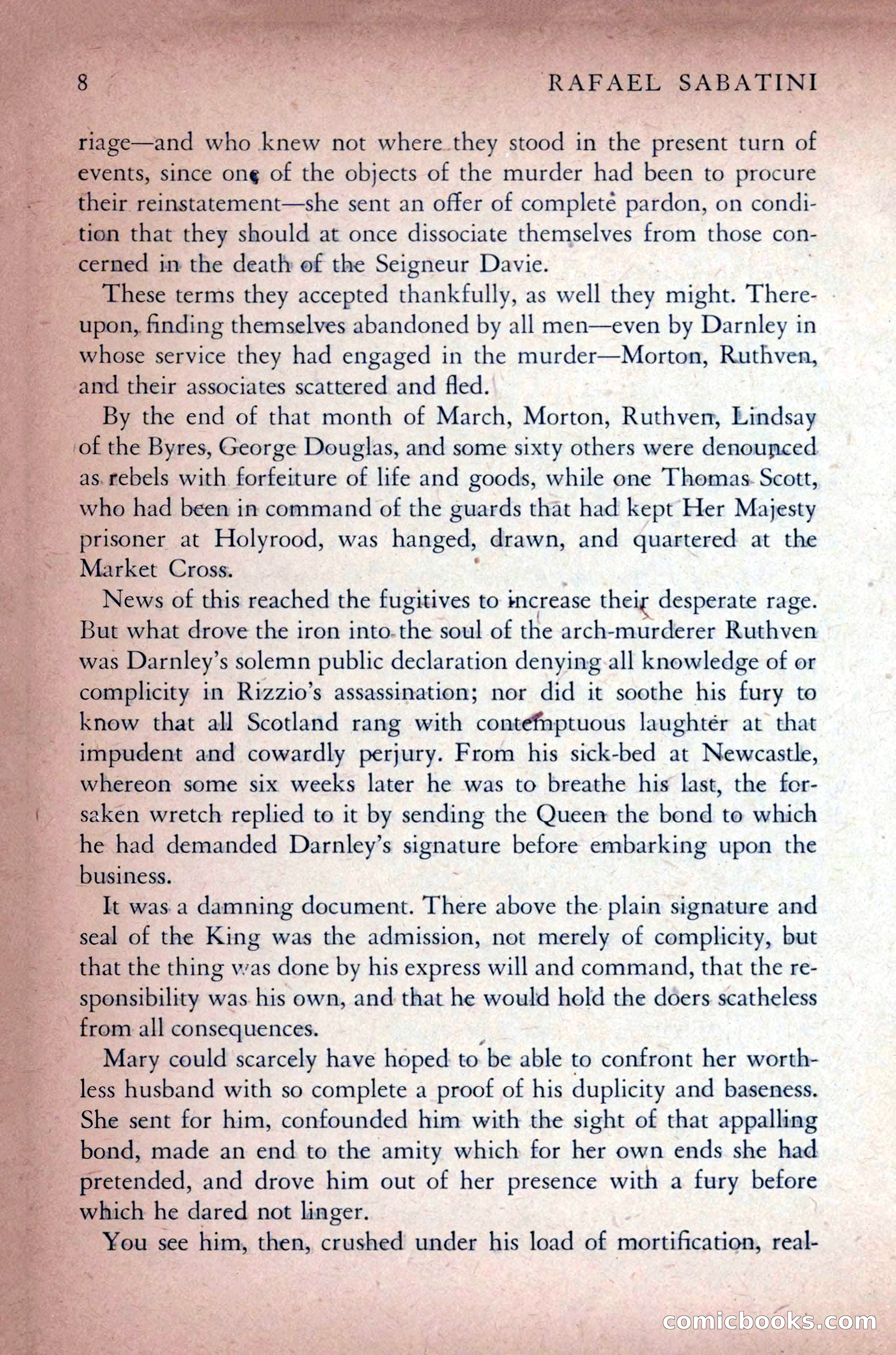
A restored page from Pulp Fiction, 1947. Page through the whole issue in the reader above.
📄 Transcribed text from this page (OCR, searchable)
Machine-transcribed from the original scan — historical spelling and the odd misread are preserved.
8 RAFAEL SABATINI riage—and who knew not where they stood in the present turn of events, since ong of the objects of the murder had been to procure their reinstatement—she sent an offer of complete pardon, on condi- _tion that they should at once dissociate themselves from those con- cerned in the death of the Seigneur Davie. These terms they accepted thankfully, as well they might. There- upon, finding themselves abandoned by all men—even by Darnley in whose service they had engaged in the murder—Morton, Ruthven, and their associates scattered and fled. By the end of that month of March, Morton, Ruthven, Lindsay ‘of the Byres, George Douglas, and some sixty others were denounced as. rebels with forfeiture of life and goods, while one Thomas. Scott, who had been in command of the guards that had kept Her Majesty prisoner at Holyrood, was hanged, drawn, and quartered at the Market Cross. News of this reached the fugitives to increase theig desperate rage. But what drove the iron into.the soul of the arch-murderer Ruthven was Darnley’s solemn public declaration denying all knowledge of or complicity in Rizzio’s assassination; nor did it soothe his fury to know that all Scotland rang with contefmptuous laughtér at that impudent and cowardly perjury. From his sick-bed at Newcastle, whereon some six weeks later he was to breathe his last, the for- saken wretch replied to it by sending the Queen the bond to which he had demanded Darnley’s signature before embarking upon the business. It was a damning document. There above the plain signature and seal of the King was the admission, not merely of complicity, but that the thing was done by his express will and command, that the re- sponsibility was. his own, and that he would hold the doers scatheless from all consequences. Mary could scarcely have hoped to be able to confront her worth- less husband with so complete a proof of his duplicity and baseness. She sent for him, confounded him with the sight of that appalling bond, made an end to the amity which for her own ends she had pretended, and drove him out of her presence with a fury before which he dared not linger. You see him, then, crushed under his load of mortification, real- Gomicbooks (S@)