
Pulp Fiction, 1947 · page 66 of 132
Avon Modern Short Story Monthly #36 — page 66: what you’re looking at
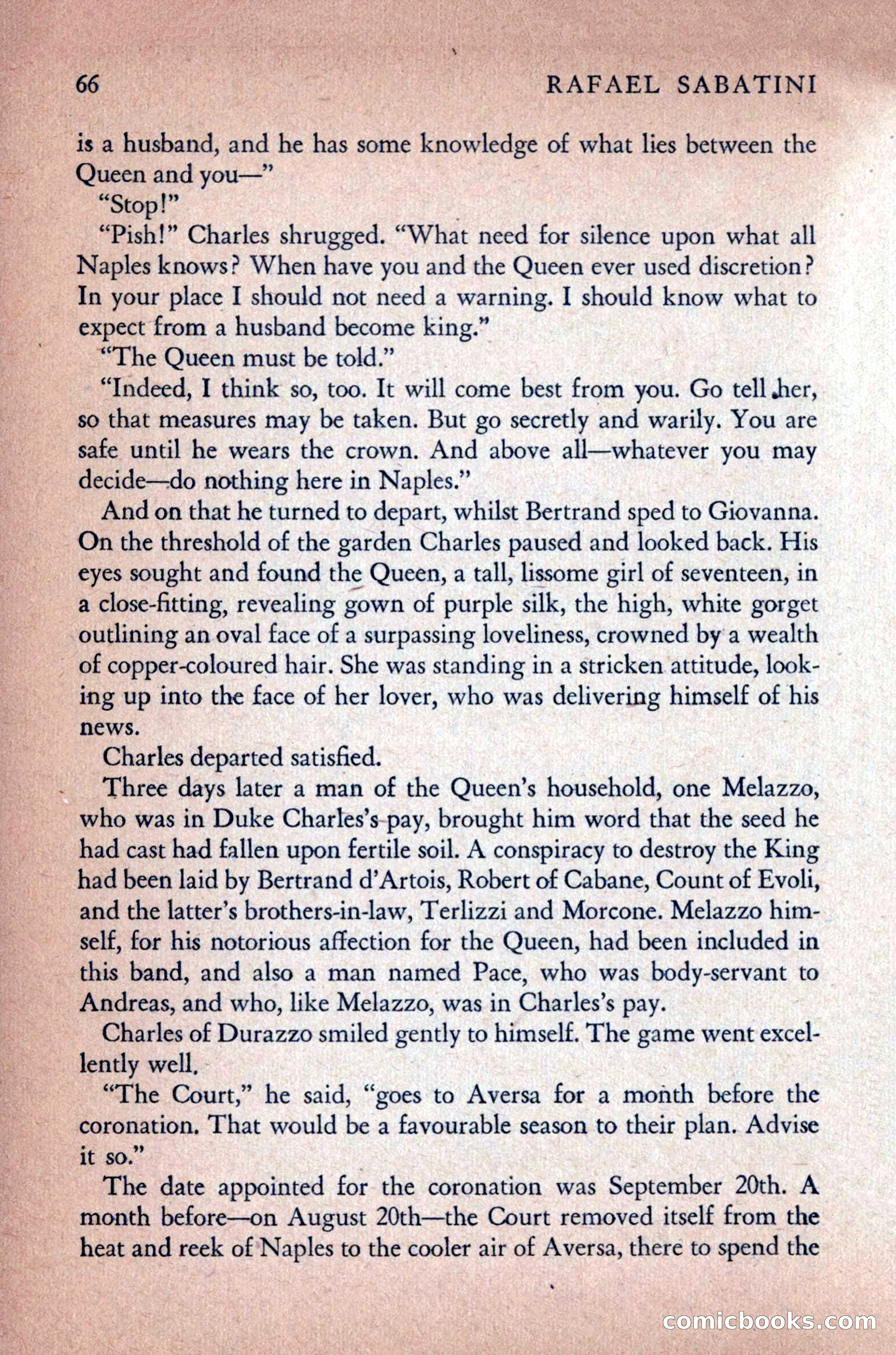
A restored page from Pulp Fiction, 1947. Page through the whole issue in the reader above.
📄 Transcribed text from this page (OCR, searchable)
Machine-transcribed from the original scan — historical spelling and the odd misread are preserved.
2 ~ is a husband, and he has some knowledge of what lies between the Queen and you—” “Stop!” : “Pish!” Charles shrugged. “What need for silence upon what all Naples knows? When have you and the Queen ever used discretion? In your place I should not need a warning. I should know what to expect from a husband become king.” “The Queen must be told.” “Indeed, I think so, too. It will come best from you. Go tell her, so that measures may be taken. But go secretly and warily. You are safe until he wears the crown. And above all—whatever you may decide—do nothing here in Naples.” And on that he turned to depart, whilst Bertrand sped to Giovanna. On the threshold of the garden Charles paused and looked back. His eyes sought and found the Queen, a tall, lissome girl of seventeen, in a close-fitting, revealing gown of purple silk, the high, white gorget outlining an oval face of a surpassing loveliness, crowned by a wealth _ of copper-coloured hair. She was standing in a stricken attitude, look- ing up into the face of her lover, who was delivering himself of his news. Charles departed satisfied. Three days later a man of the Queen’s household, one Melazzo, who was in Duke Charles’s-pay, brought him word that the seed he had cast had fallen upon fertile soil. A conspiracy to destroy the King had been laid by Bertrand d’Artois, Robert of Cabane, Count of Evoli, and the latter’s brothers-in-law, Terlizzi and Morcone. Melazzo him- self, for his notorious affection for the Queen, had been included in this band, and also a man named Pace, who was body-servant to Andreas, and who, like Melazzo, was in Charles’s pay. Charles of Durazzo smiled gently to himself. The game went excel- lently well, “The Court,” he said, “goes to Aversa for a month before the coronation, That would be a favourable season to their plan. Advise it so.” The date appointed for the coronation was September 20th. A month before—on August 20th—the Court removed itself from the _ heat and reek of Naples to the cooler air of Aversa, there to spend the . (ECO) AMINE <S) pr o* 000) ad a Ln (EO)