
Pulp Fiction, 1947 · page 49 of 132
Avon Modern Short Story Monthly #36 — page 49: what you’re looking at
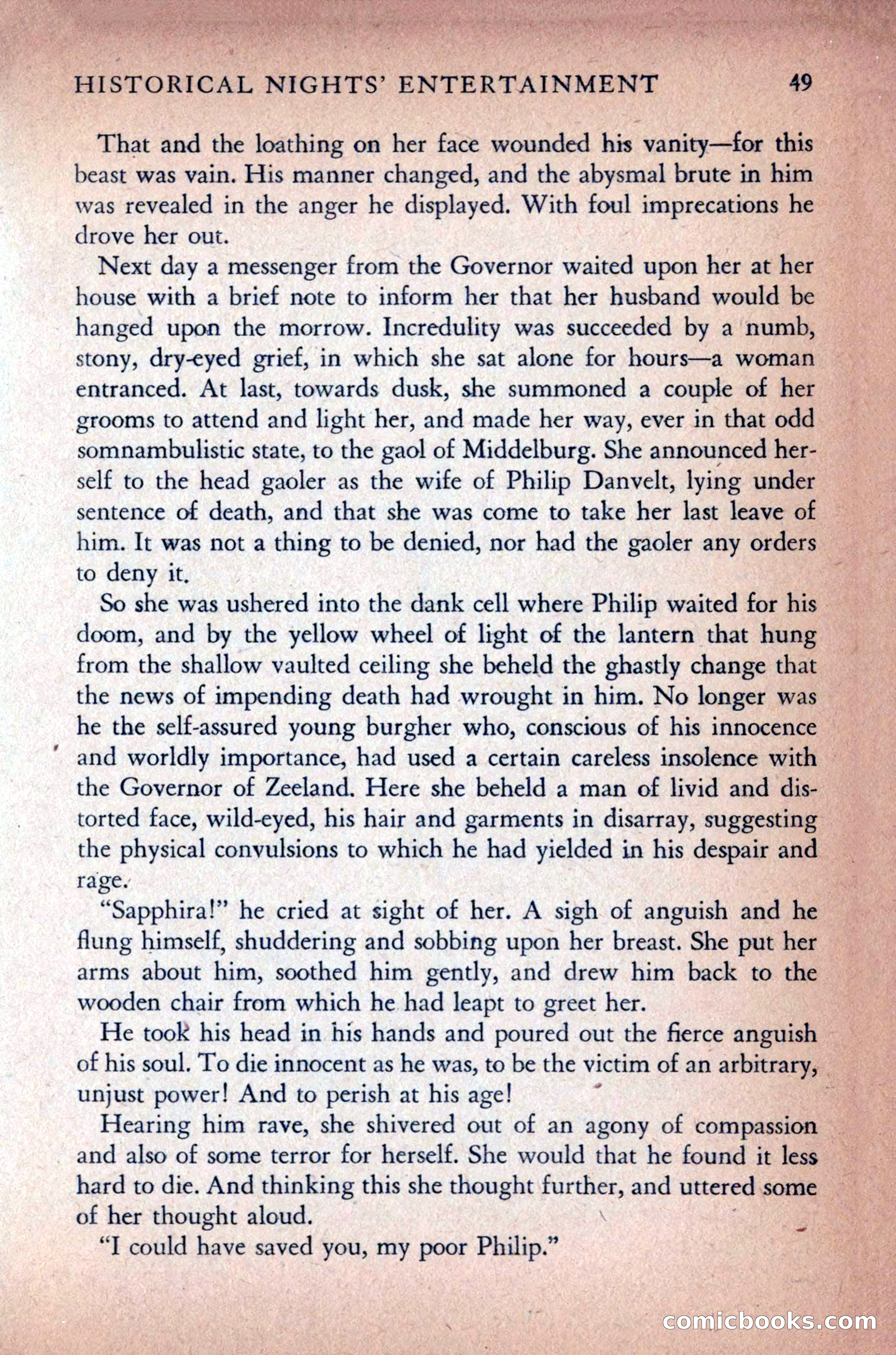
A restored page from Pulp Fiction, 1947. Page through the whole issue in the reader above.
📄 Transcribed text from this page (OCR, searchable)
Machine-transcribed from the original scan — historical spelling and the odd misread are preserved.
PO be ~~ AE «_ EO OR ee “es DO, | 1 A AA) tel ee Bh Ge OE ee re ee Oe el A eee eT, feed | A eee Oe A 2 ee ok -_— - 9 sii wo oe A, Fl Hi oie LU, AP! a mes beh oe aaa ADAP ae LPS ROR RL GS ON Be ad AT ot ele toe Ane ee BS ; Rt 4 phy Re ee aa Cite wey: me ae ce TY, APnaee te ; ae Wi Whee 2rY, Pea PAP id | J < “Ay gt fe Geet rete ae oe ne Ve Noh = ' - > se, es A HISTORICAL NIGHTS’ ENTERTAINMENT 49 That and the loathing on her face wounded his vanity—for this beast was vain. His manner changed, and the abysmal brute in him was revealed in the anger he displayed. With foul imprecations he drove her out. Next day a messenger from the Governor waited upon her at her house with a brief note to inform her that her husband would be hanged upon the morrow. Incredulity was succeeded by a numb, stony, dry-eyed grief, in which she sat alone for hours—a woman entranced. At last, towards dusk, she summoned a couple of her grooms to attend and light her, and made her way, ever in that odd somnambulistic state, to the gaol of Middelburg. She announced her- self to the head gaoler as the wife of Philip Danvelt, lying under sentence of death, and that she was come to take her last leave of him. It was not a thing to be denied, nor had the gaoler any orders to deny it, ~ at 7 fi ‘ . ° y *, : = } ‘4 3 eg Oe AN _! 4 é F Oy 3 oo . - ’ : ‘ ~. a 2 So she was ushered into the dank cell where Philip waited for his doom, and by the yellow wheel of light of the lantern that hung from the shallow vaulted ceiling she beheld the ghastly change that the news of impending death had wrought in him. No longer was he the self-assured young burgher who, conscious of his innocence and worldly importance, had used a certain careless insolence with — the Governor of Zeeland. Here she beheld a man of livid and dis- torted face, wild-eyed, his hair and garments in disarray, suggesting the physical convulsions to which he had yielded in his despair and rage. “Sapphira!” he cried at sight of her. A sigh of anguish and he flung himself, shuddering and sobbing upon her breast. She put her arms about him, soothed him gently, and drew him back to the wooden chair from which he had leapt to greet her. He took his head in his hands and poured out the fierce anguish of his soul. To die innocent as he was, to be the victim of an arbitrary, a unjust power! And to perish at his age! Hearing him rave, she shivered out of an agony of compassion — and also of some terror for herself. She would that he found it less hard to die. And thinking this she thought dics and uttered some of her thought aloud. “T could have saved you, my poor Philip.” ae ~ecomicbooks ‘com