
Pulp Fiction, 1947 · page 45 of 132
Avon Modern Short Story Monthly #36 — page 45: what you’re looking at
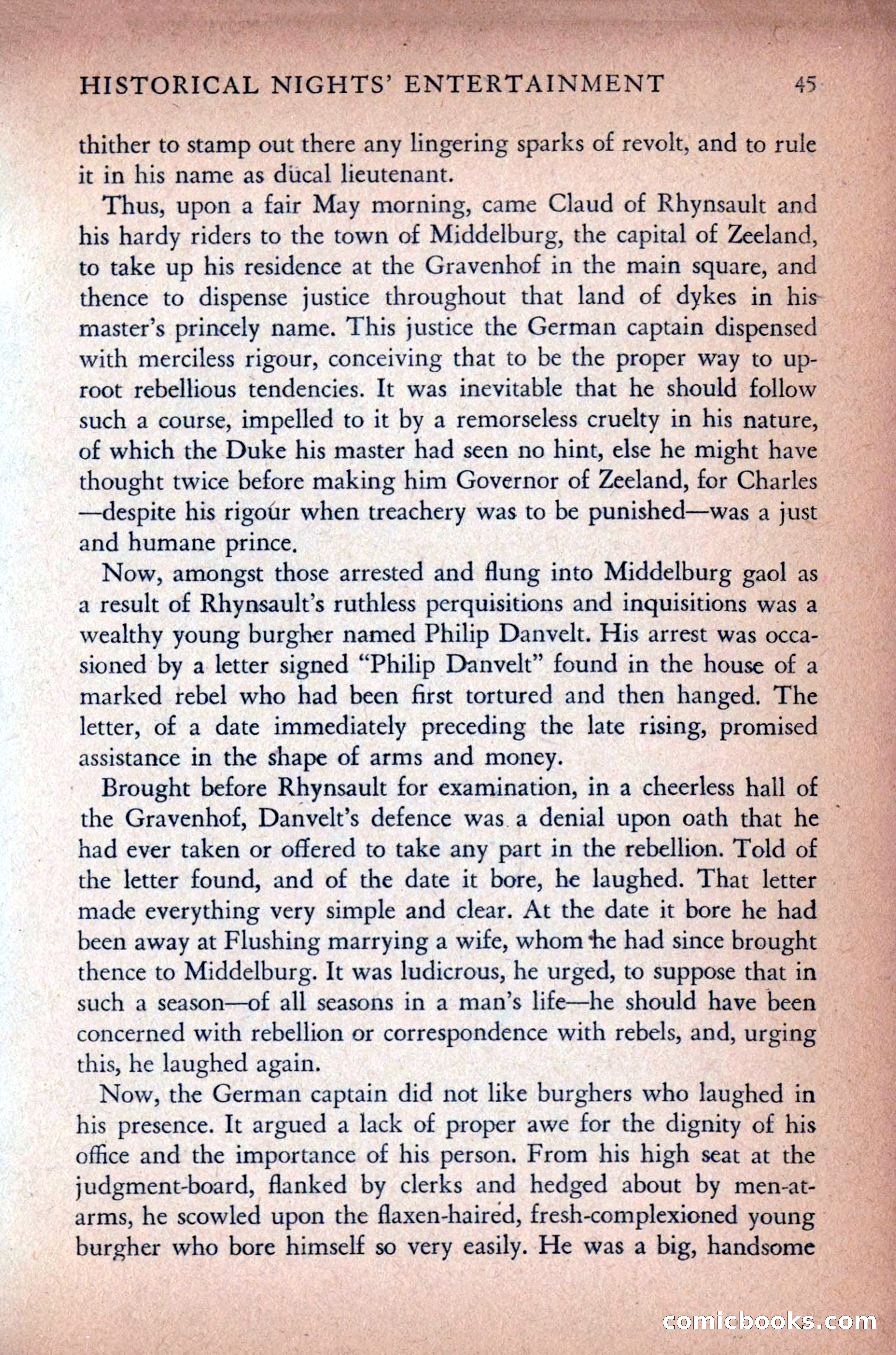
A restored page from Pulp Fiction, 1947. Page through the whole issue in the reader above.
📄 Transcribed text from this page (OCR, searchable)
Machine-transcribed from the original scan — historical spelling and the odd misread are preserved.
M+ > colt te. SONS Seah Ren WIM eat a “ * J to —, =. Par tt i che > a4 Se”, -~t Ph oe Vas —. 5 avy thither to stamp out there any sola 3b chee of seve and to rule Ms ie hae 4 pay HisToRIC: AL NIGE 17S) k it in his name as dical lieutenant. Beye: Thus, upon a fair May morning, came Claud of Rhynseaile in a his hardy riders to the town of Middelburg, the capital of Zeeland, — = to take up his residence at the Gravenhof in the main square, and master’s princely name. This justice the German captain dispeaand A with merciless rigour, conceiving that to be the proper way to up- — root rebellious tendencies. It was inevitable that he should follows 2 such a course, impelled to it by a remorseless cruelty in his nature, of which the Duke his master had seen no hint, else he might have 4 thought twice before making him Governor of Zeeland, for Charles — ey —despite his rigour when treachery was to be punished—was a ee e 1 and humane prince, | i Now, amongst those arrested and flung into Middelburg gaol ai as. a a result of Rhynsault’s ruthless perquisitions and inquisitions wasa wealthy young burgher named Philip Danvelt. His arrest was occa- : iN on sioned by a letter signed “Philip Danvelt” found in the house of a marked rebel who had been first tortured and then hanged. The — 4 i letter, of a date immediately preceding the late rising, promised — assistance in the shape of arms and money. Boats Brought before Rhynsault for examination, in a cheerless hall of | ee the Gravenhof, Danvelt’s defence was.a denial upon oath that he a had ever taken or offered to take any part in the rebellion. Told of | the letter found, and of the date it bore, he laughed. That letter os made everything very simple and clear. At the date it bore he had ? been away at Flushing marrying a wife, whom he had since brought y thence to Middelburg. It was ludicrous, he urged, to suppose that in — such a season—of all seasons in a man’s life—he should have been concerned with rebellion or correspondence with rebels, and, urging ; this, he laughed again. 2 Now, the German captain did not like burghers who laughed i in one his presence. It argued a lack of proper awe for the dignity of his roti office and the importance of his person, From his high seat at the : ae judgment-board, flanked by clerks and hedged about by men-at- la arms, he scowled upon the flaxen-haired, peacangerneg young 5