
Pulp Fiction, 1950 · page 22 of 132
Avon Fantasy Reader No. 14 — page 22: what you’re looking at
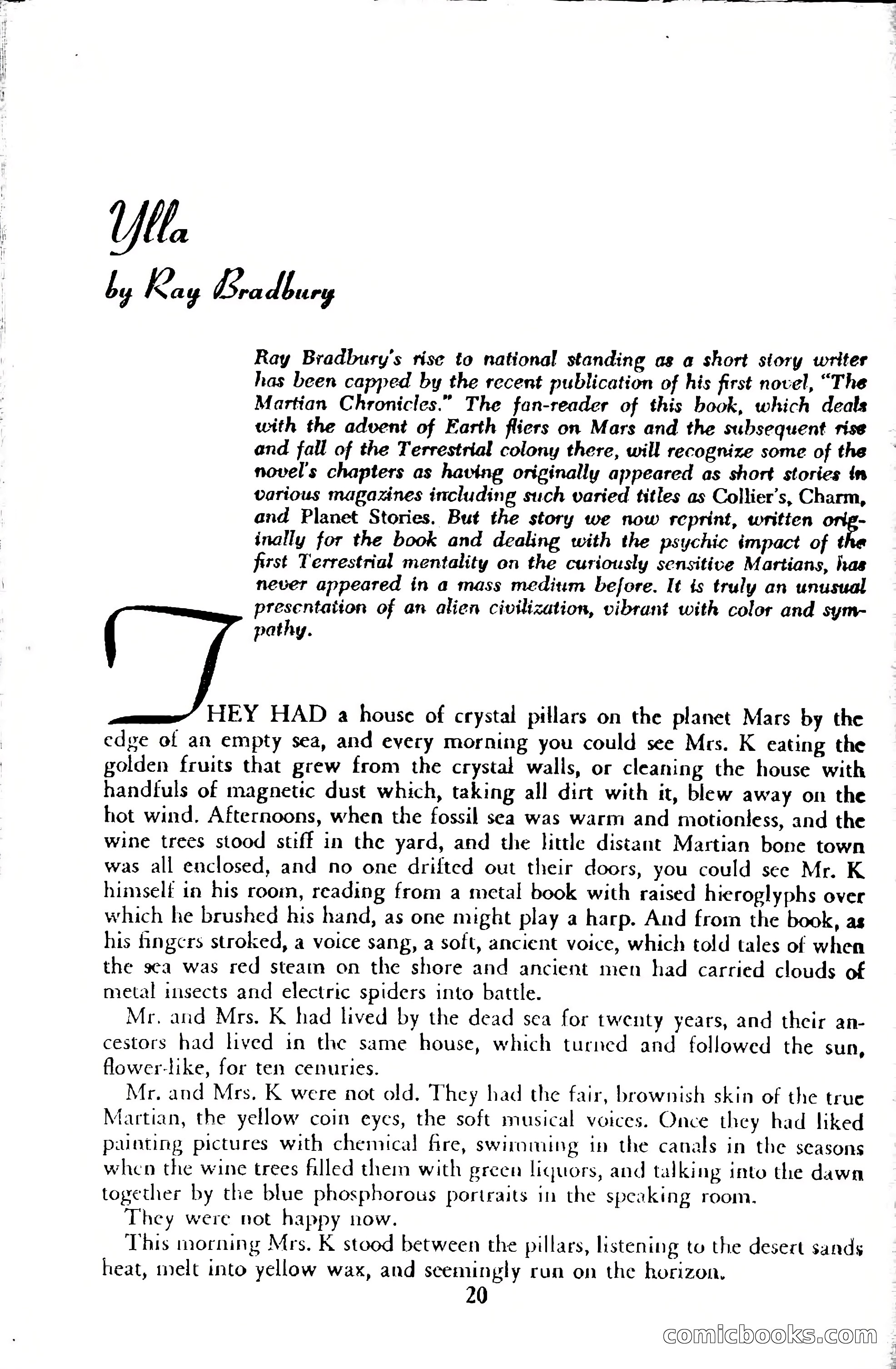
A restored page from Pulp Fiction, 1950. Page through the whole issue in the reader above.
📄 Transcribed text from this page (OCR, searchable)
Machine-transcribed from the original scan — historical spelling and the odd misread are preserved.
Yul Ray Bradbury's rise to national standing as a short story writer has been capped by the recent publication of his first novel, “The Martian Chronicles.” The fan-reader of this book, which deals with the advent of Earth fliers on Mars and the subsequent rise and fall of the Terrestrial colony there, will recognize some of the novel's chapters as having originally appeared as short stories in various magazines including such varied titles as Collier's, Charm, and Planet Stories. But the story we now reprint, written orig: inally for the book and dealing with the psychic impact of t first Terrestrial mentality on the curiously sensitive Martians, has never appeared in a mass meditum before. It is truly an unusual pursontotian of an alien civilization, vibrant with color and sym- pathy. HEY HAD a house of crystal pillars on the planet Mars by the edge of an empty sea, and every morning you could see Mrs. K eating the golden fruits that grew from the crystal walls, or cleaning the house with handtuls of magnetic dust which, taking all dirt with it, blew away on the hot wind. Afternoons, when the fossil sea was warm and motionless, and the wine trees stood stiff in the yard, and the little distant Martian bone town was all enclosed, and no one drifted out their doors, you could see Mr. K himself in his room, reading from a metal book with raised hieroglyphs over which he brushed his hand, as one might play a harp. And from the book, as his fingcrs stroked, a voice sang, a soft, ancient voice, which told tales of when the sca was red steam on the shore and ancient men had carried clouds of metal insects and electric spiders into battle. Mr. and Mrs. K had lived by the dead sea for twenty years, and their an- cestors had lived in the same house, which turned and followed the sun, flower-like, for ten cenuries. Mr. and Mrs. K were not old. They had the fair, brownish skin of the true Martian, the yellow coin eyes, the soft musical voices. Once they had liked punting pictures with chemical fire, swirnoming in the canals in the seasons when the wine trees filled them with green liquors, and talking into the dawn together by the blue phosphorous portraits in the speaking room. They were not happy now. This morning Mrs. K stood between the pillars, listening to the desert sands heat, melt into yellow wax, and seemingly run on the horizon. conmniclbooks.Conn -