
Pulp Fiction, 1950 · page 110 of 132
Avon Fantasy Reader No. 13 — page 110: what you’re looking at
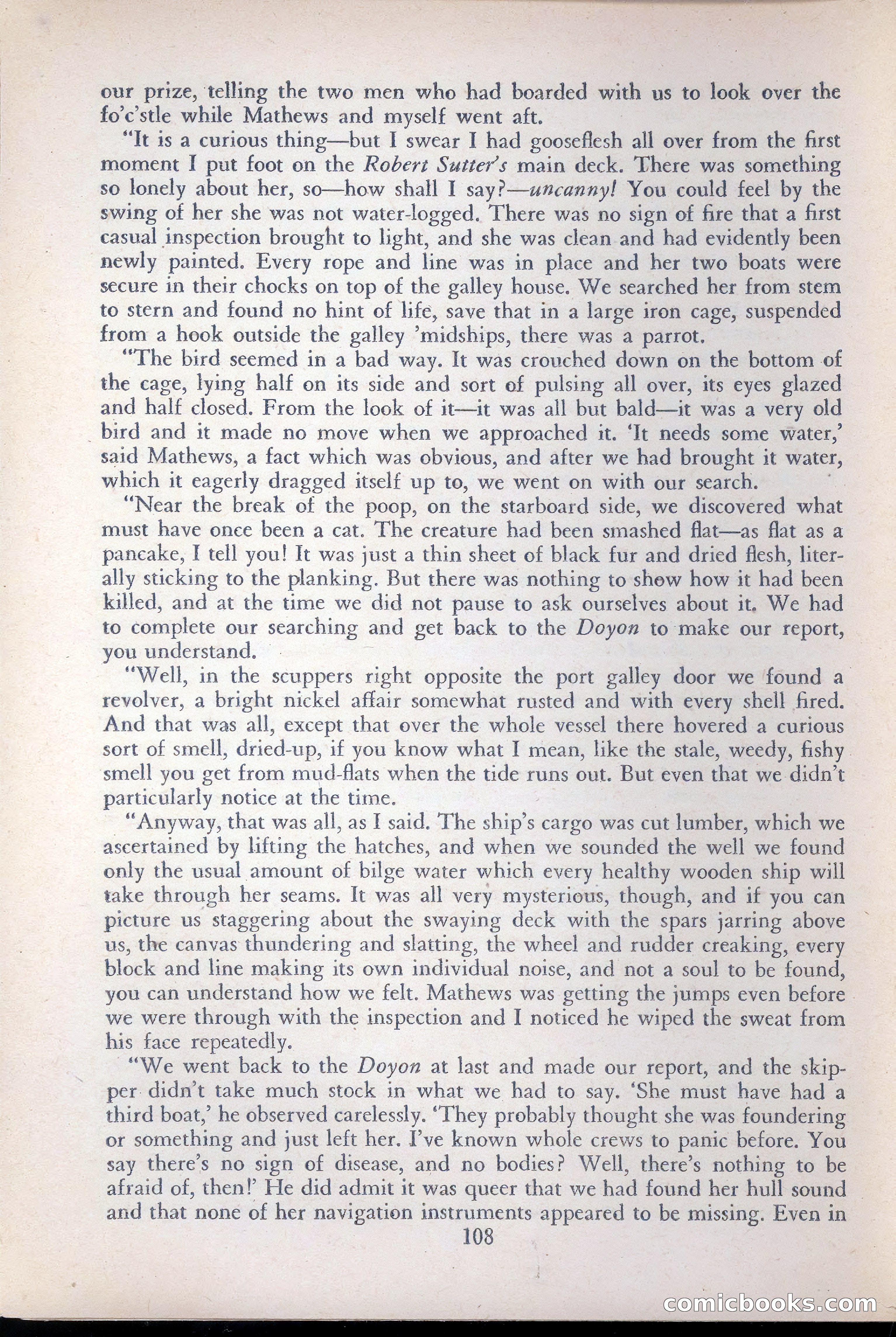
A restored page from Pulp Fiction, 1950. Page through the whole issue in the reader above.
📄 Transcribed text from this page (OCR, searchable)
Machine-transcribed from the original scan — historical spelling and the odd misread are preserved.
our prize, ‘telling the two men who had boarded with us to look over the fo’c’stle while Mathews and myself went aft. “Tt is a curious thing—but I swear I had gooseflesh all over from the first moment I put foot on the Robert Sutter's main deck. There was something so lonely about her, so—how shall I say?—uncanny! You could feel by the swing of her she was not water-logged. There was no sign of fire that a first casual inspection brought to light, and she was clean and had evidently been newly painted. Every rope and line was in place and her two boats were secure in their chocks on top of the galley house. We searched her from stem to stern and found no hint of life, save that in a large iron cage, suspended from a hook outside the galley ’midships, there was a parrot. “The bird seemed in a bad way. It was crouched down on the bottom of the cage, lying half on its side and sort of pulsing all over, its eyes glazed and half closed. From the look of it—it was all but bald—it was a very old bird and it made no move when we approached it. ‘It needs some water,’ said Mathews, a fact which was obvious, and after we had brought it water, which it eagerly dragged itself up to, we went on with our search. | “Near the break of the poop, on the starboard side, we discovered what must have once been a cat. The creature had been smashed flat—as flat as a paneake, I tell you! It was just a thin sheet of black fur and dried flesh, liter- ally sticking to the planking. But there was nothing to shew how it had been killed, and at the time we did not pause to ask ourselves about it, We had to complete our searching and get back to the Doyon to make our report, you understand. “Well, in the scuppers right opposite the port galley door we found a revolver, a bright nickel affair somewhat rusted and with every shell fired. And that was all, except that over the whole vessel there hovered a curious sort of smell, dried- -up, if you know what I mean, like the stale, weedy, fishy. smell you get from mud-flats when the tide runs out. But even that we didn’t particularly notice at the time. “Anyway, that was all, as I said. The ies s cargo was cut lumber, which we ascertained by lifting the hatches, and when we sounded the well we found only the usual amount of bilge water which every healthy wooden ship will take through her seams. It was all very mysterious, though, and if you can picture us staggering about the swaying deck with the spars jarring above us, the canvas thundering and slatting, the wheel and rudder creaking, every block and line making its own individual noise, and not a soul to be found, you can understand how we felt. Mathews was getting the jumps even before we were through with the inspection and I noticed he wiped the sweat from his face repeatedly. “We went back to the Doyon at last and made our report, and the skip- per: didn’t take much stock in what we had to say. ‘She must have had a | third boat,’ he observed carelessly. ‘They probably thought she was foundering or something and just left her. ’ve known whole crews to panic before. You say there’s no sign of disease, and no bodies? Well, there’s nothing to be afraid of, then! He did admit it was queer that we had found her hull sound : and that none of her navigation instruments appeared to be missing. Even in Comicbooks:co m—