
Pulp Fiction, 1949 · page 61 of 133
Avon Fantasy Reader No. 10 — page 61: what you’re looking at
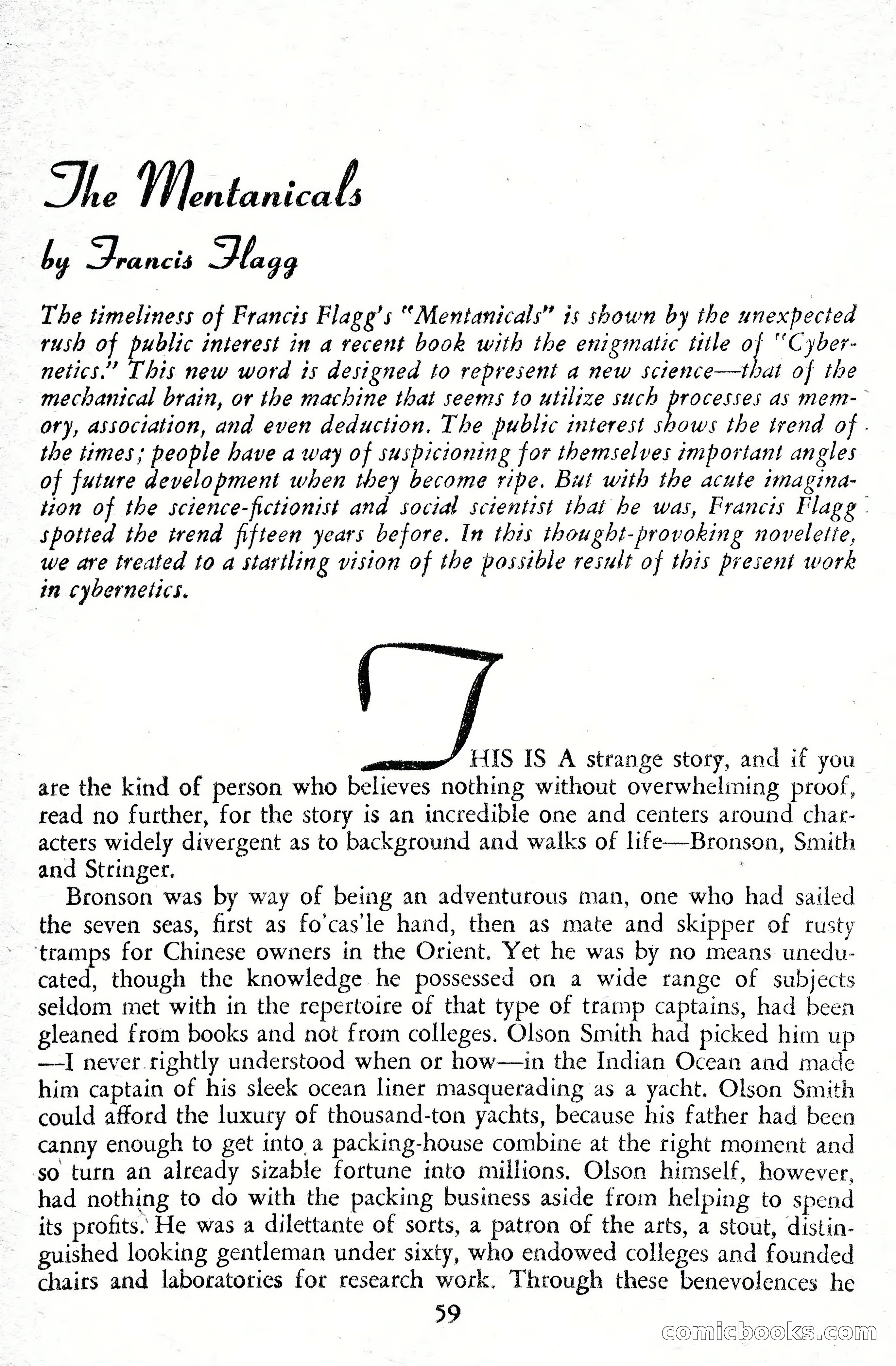
A restored page from Pulp Fiction, 1949. Page through the whole issue in the reader above.
📄 Transcribed text from this page (OCR, searchable)
Machine-transcribed from the original scan — historical spelling and the odd misread are preserved.
Dre Whentanicals by Jrancis Hlagg The timeliness of Francts Flage’s “Mentanicals” is shown by the unexpected rush of public interest in a recent book with the enigmatic title of “Cyber- netics.” [his new word is designed to represent a new sctence—that of the mechanical brain, or the machine that seems to utilize such processes as mem-- ory, association, and even deduction. The public interest shows the trend of . the times; people have a way of suspicioning for themselves important angles of future development when they become ripe. But with the acute imagina- tion of the science-fictionist and social scientist that he was, Francis Flagg - spotted the trend fifteen years before. In this thought-provoking noveletie, we are treated to a startling vision of the possible result of this present work in cybernelics. wameme’ HIS IS A strange story, and if you are the kind of person who believes nothing without overwhelming proof, read no further, for the story is an incredible one and centers around char- acters widely divergent as to background and walks of life—Bronson, Smith and Stringer. ; Bronson was by way of being an adventurous man, one who had sailed the seven seas, first as fo'cas’le hand, then as mate and skipper of rusty ‘tramps for Chinese owners in the Orient. Yet he was by no means unedu- cated, though the knowledge he possessed on a wide range of subjects seldom met with in the repertoire of that type of tramp captains, had been gleaned from books and not from colleges. Olson Smith had picked him up —I never rightly understood when or how—in the Indian Ocean and made him captain of his sleek ocean liner masquerading as a yacht. Olson Smith could afford the luxury of thousand-ton yachts, because his father had been canny enough to get into.a packing-house combine at the right moment and so turn an already sizable fortune into millions. Olson himself, however, had nothing to do with the packing business aside from helping to spend its profits. He was a dilettante of sorts, a patron of the arts, a stout, distin- guished looking gentleman under sixty, who endowed colleges and founded chairs and laboratories for research work. Through these benevolences he 59 : comicbooks.com