
Pulp Fiction, 1949 · page 51 of 132
Avon Fantasy Reader No. 9 — page 51: what you’re looking at
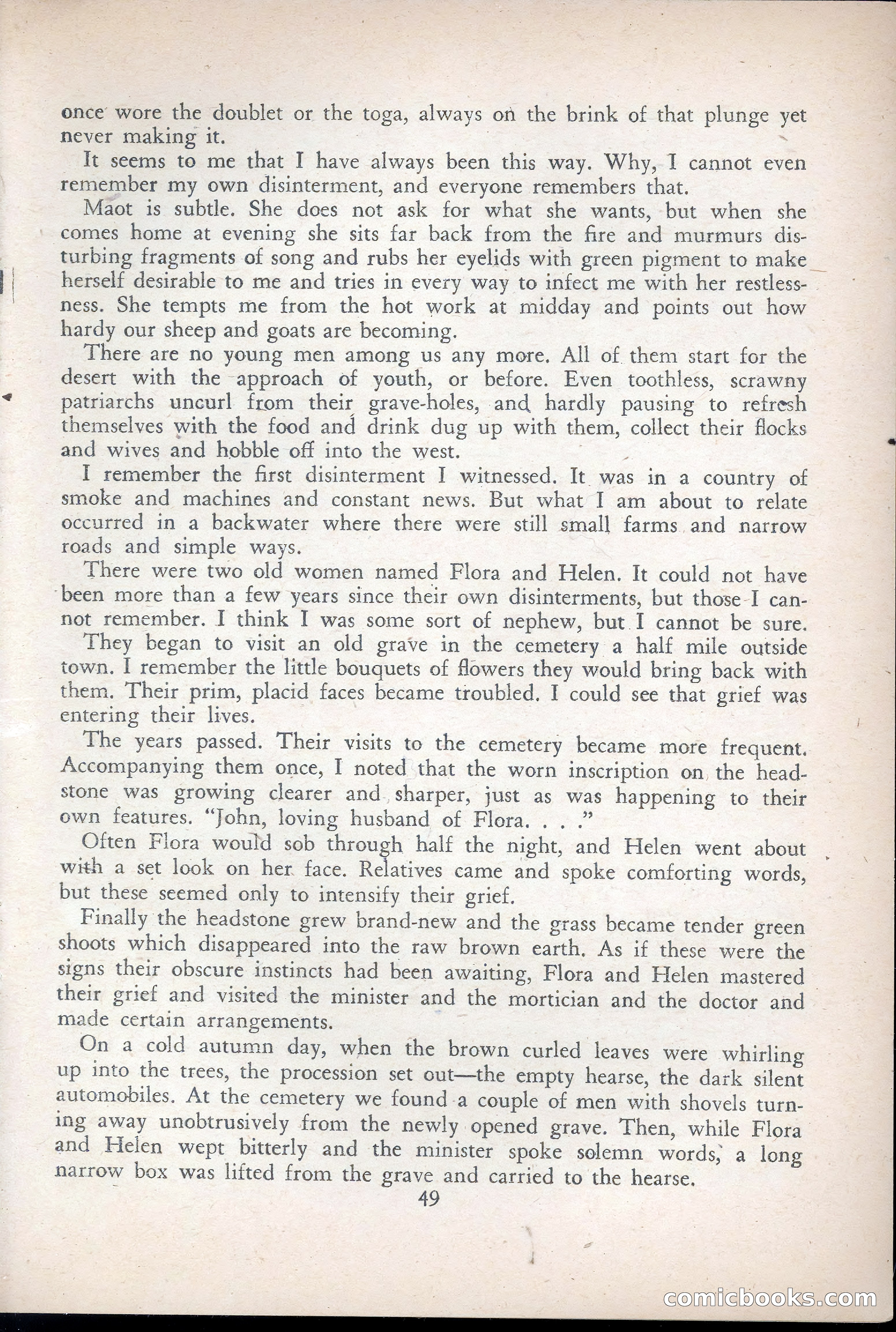
A restored page from Pulp Fiction, 1949. Page through the whole issue in the reader above.
📄 Transcribed text from this page (OCR, searchable)
Machine-transcribed from the original scan — historical spelling and the odd misread are preserved.
+ never making it. It seems to me that I have always been this way. Why, I cannot even remember my own disinterment, and everyone remembers that. Maot is subtle. She does not ask for what she wants, but when she comes home at evening she sits far back from the fire and murmurs dis- 7 turbing fragments of song and rubs her eyelids with green pigment to make | herself desirable to me and tries in every way to infect me with her restless-_ ness. She tempts me from the hot work at midday and points out how hardy our sheep and goats are becoming. There are no young men among us any more, All of them start for the desert with the approach of youth, or before. Even toothless, scrawny = patriarchs uncurl from their grave-holes, and hardly pausing to refresh themselves with the food and drink dug up with them, collect their flocks and wives and hobble off into the west. ee I remember the first disinterment I witnessed. It was in a country of _ smoke and machines and constant news. But what I am about to relate occurred in a backwater where there were still small farms and narrow roads and simple ways. There were two old women named Flora and Helen. It could not have ‘been more than a few years since their own disinterments, but those-I can- not remember. I think I was some sort of nephew, but I cannot be sure. They began to visit an old grave in the cemetery a half mile outside town. I remember the little bouquets of flowers they would bring back with . them. Their prim, placid faces became troubled, I could see that grief was entering their lives. | The years passed. Their visits to the cemetery became more frequent. Accompanying them once, I noted that the worn inscription on, the head- stone was growing clearer and sharper, just as was happening to their own features. “John, loving husband of Flora... .” Often Flora would sob through half the night, and Helen went about with a set look on her face. Relatives came and spoke comforting words, but these seemed only to intensify their grief. Finally the headstone grew brand-new and the grass became tender green shoots which disappeared into the raw brown earth, As if these were the signs their obscure instincts had been awaiting, Flora and Helen mastered their grief and visited the minister and the mortician and the doctor and_ made certain arrangements. i | On a cold autumn day, when the brown curled leaves were whirling up into the trees, the procession set out—the empty hearse, the dark silent automobiles. At the cemetery we found-a couple of men with shovels turn- ing away unobtrusively from the newly opened grave. Then, while Flora. and Helen wept bitterly and the minister spoke solemn words, a long narrow box was lifted from the grave and carried to the hearse. 49 once wore the doublet or the toga, always on the brink of that plunge yet boo