
Pulp Fiction, 1956 · page 159 of 162
Authentic Science Fiction Monthly No. 72 — page 159: what you’re looking at
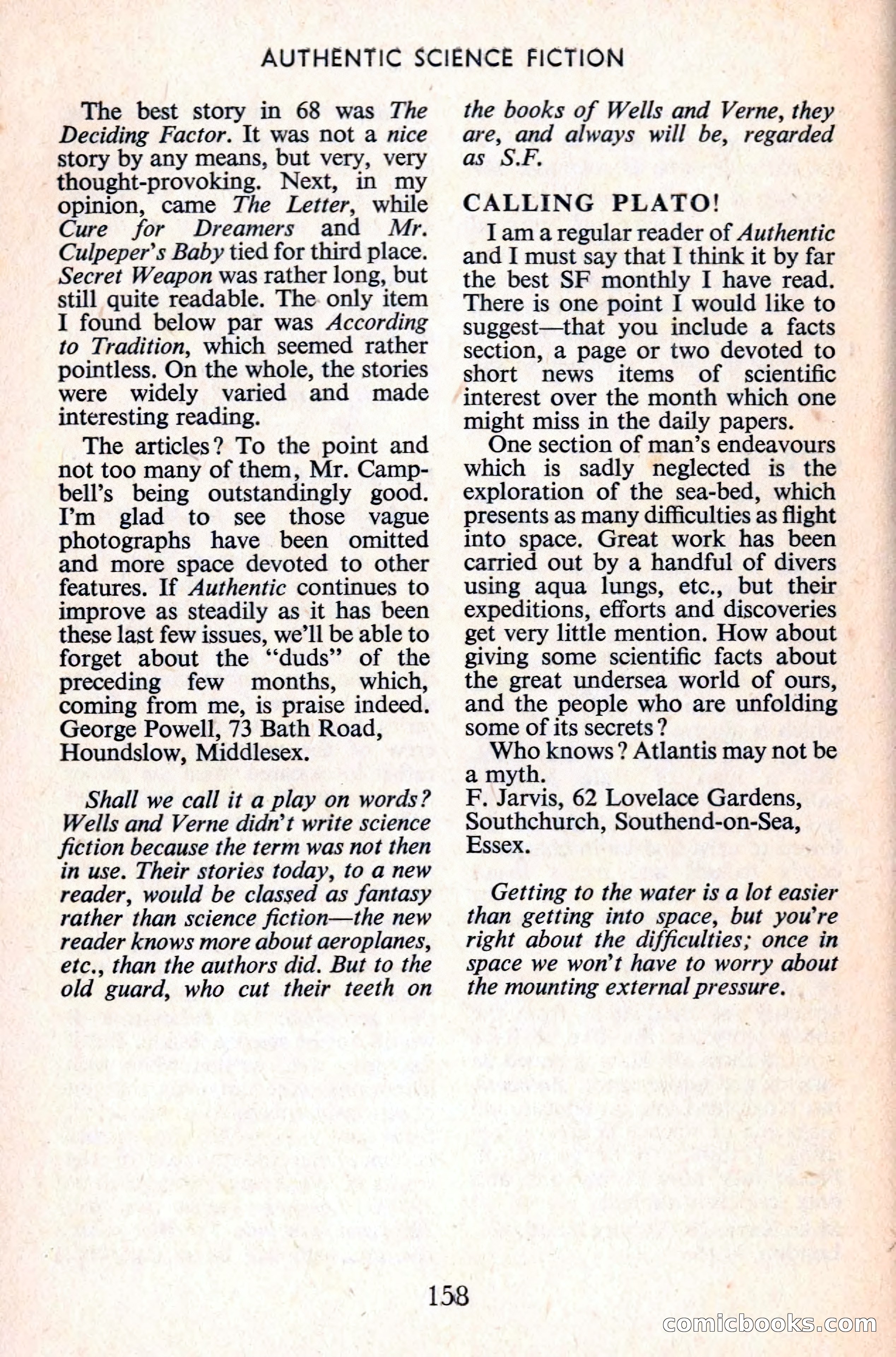
A restored page from Pulp Fiction, 1956. Page through the whole issue in the reader above.
📄 Transcribed text from this page (OCR, searchable)
Machine-transcribed from the original scan — historical spelling and the odd misread are preserved.
AUTHENTIC SCIENCE FICTION The best story in 68 was The Deciding Factor. It was not a nice story by any means, but very, very thought-provoking. Next, in my opinion, came The Letter, while Cure for Dreamers and Mr. Culpeper’s Baby tied for third place. Secret Weapon was rather long, but still quite readable. The only item I found below par was According to Tradition, which seemed rather pointless. On the whole, the stories were widely varied and made interesting reading. The articles? To the point and not too many of them, Mr. Camp- bell’s being outstandingly good. I’m glad to see those vague photographs have been omitted and more space devoted to other features. If Authentic continues to improve as steadily as it has been these last few issues, we'll be able to forget about the “duds” of the preceding few months, which, coming from me, is praise indeed. George Powell, B Bath Road, Houndslow, Middlesex. Shall we call it a play on words? Wells and Verne didn’t write science fiction because the term was not then in use. Their stories today, to a new reader, would be classed as fantasy rather than science fiction—the new reader knows more about aeroplanes, etc., than the authors did. But to the old guard, who cut their teeth on the books of Wells and Verne, they are, and always will be, regarded as S.F, CALLING PLATO! lam aregular reader of Authentic and I must say that I think it by far the best SF monthly I have read. There is one point I would like to suggest—that you include a facts section, a page or two devoted to short news items of scientific interest over the month which one might miss in the daily papers. One section of man’s endeavours which is sadly neglected is the exploration of the sea-bed, which presents as many difficulties as flight into space. Great work has been carried out by a handful of divers using aqua lungs, etc., but their expeditions, efforts and discoveries get very little mention. How about giving some scientific facts about the great undersea world of ours, and the people who are unfolding some of its secrets ? Who knows? Atlantis may not be a myth. F, Jarvis, 62 Lovelace Gardens, Southchurch, Southend-on-Sea, Essex. Getting to the water is a lot easier than getting into space, but you're right about the difficulties; once in space we won’t have to worry about the mounting external pressure. 158 commiclooolkks.com