
Pulp Fiction, 1956 · page 14 of 162
Authentic Science Fiction Monthly No. 72 — page 14: what you’re looking at
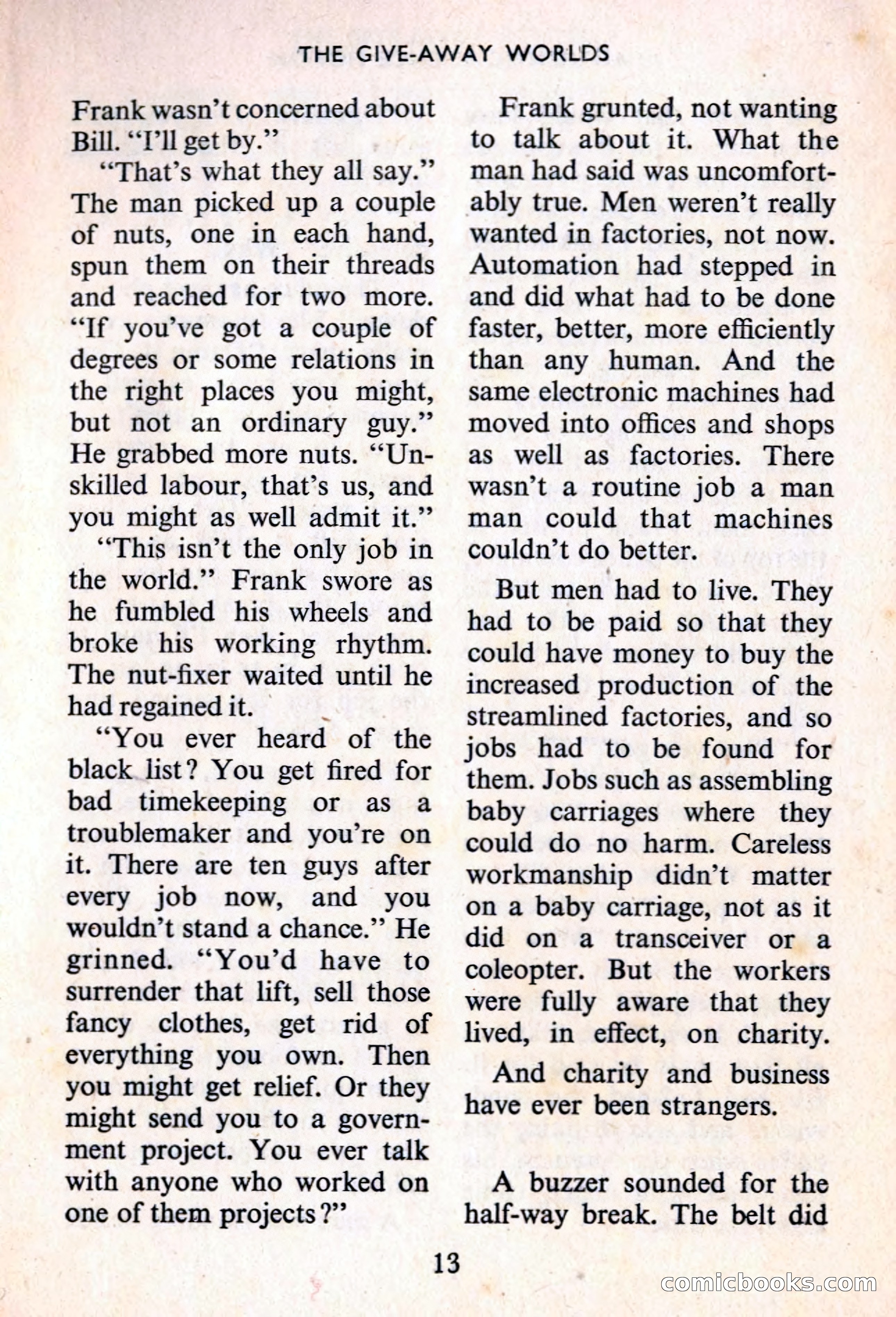
A restored page from Pulp Fiction, 1956. Page through the whole issue in the reader above.
📄 Transcribed text from this page (OCR, searchable)
Machine-transcribed from the original scan — historical spelling and the odd misread are preserved.
THE GIVE-AWAY WORLDS Frank wasn’t concerned about Bill. “T'll get by.” ‘“‘That’s what they all say.” The man picked up a couple of nuts, one in each hand, spun them on their threads and reached for two more. “If you’ve got a couple of degrees or some relations in the right places you might, but not an ordinary guy.” He grabbed more nuts. “‘Un- skilled labour, that’s us, and you might as well admit it.” “This isn’t the only job in the world.’’ Frank swore as he fumbled his wheels and broke his working rhythm. The nut-fixer waited until he had regained it. 5 “You ever heard of the black list? You get fired for bad timekeeping or as a troublemaker and you’re on it. There are ten guys after every job now, and you wouldn’t stand a chance.” He grinned. ““You’d have to surrender that lift, sell those fancy clothes, get rid of everything you own. Then you might get relief. Or they might send you to a govern- ment project. You ever talk with anyone who worked on one of them projects ?” 13 Frank grunted, not wanting to talk about it. What the man had said was uncomfort- ably true. Men weren’t really wanted in factories, not now. Automation had stepped in and did what had to be done faster, better, more efficiently than any human. And the same electronic machines had moved into offices and shops as well as factories. There wasn’t a routine job a man man could that machines couldn’t do better. But men had to live. They had to be paid so that they could have money to buy the increased production of the streamlined factories, and so jobs had to be found for them. Jobs such as assembling baby carriages where they could do no harm. Careless workmanship didn’t matter on a baby carriage, not as it did on a transceiver or a coleopter. But the workers were fully aware that they lived, in effect, on charity. And charity and business have ever been strangers. A buzzer sounded for the half-way break. The belt did comicloooks.com