
Pulp Fiction, 1956 · page 7 of 164
Authentic Science Fiction Monthly No. 71 — page 7: what you’re looking at
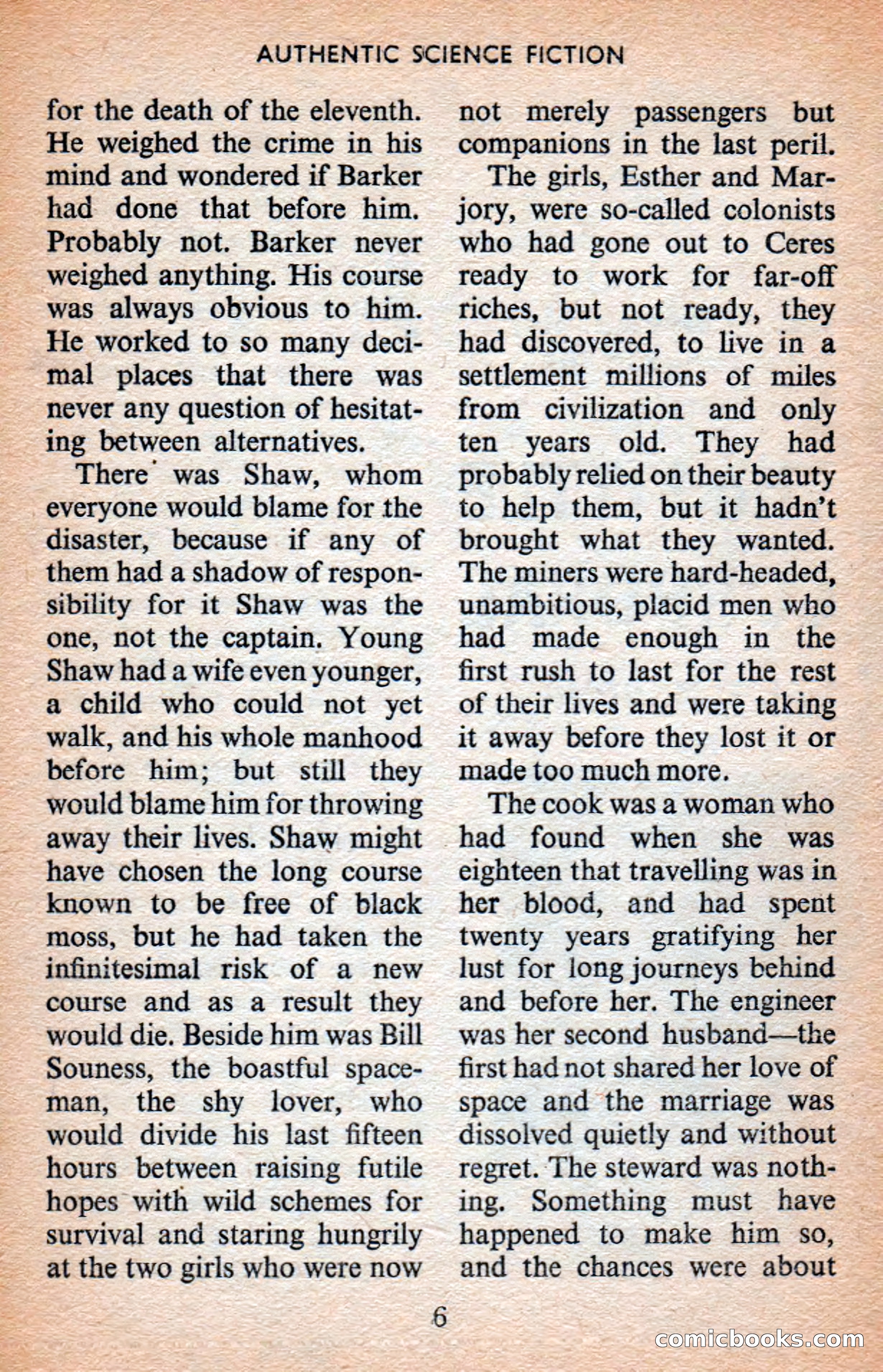
A restored page from Pulp Fiction, 1956. Page through the whole issue in the reader above.
📄 Transcribed text from this page (OCR, searchable)
Machine-transcribed from the original scan — historical spelling and the odd misread are preserved.
=, —s “se hs te, ba for the death of the eleventh. He weighed the crime in his mind and wondered if Barker had done that before him. Probably not. Barker never weighed anything. His course was always obvious to him. He worked to so many deci- mal places that there was never any question of hesitat- ing between alternatives. There was Shaw, whom everyone would blame for the disaster, because if any of them had a shadow of respon- sibility for it Shaw was the one, not the captain. Young Shaw had a wife even younger, a child who could not yet walk, and his whole manhood before him; but still they would blame him for throwing away their lives. Shaw might have chosen the long course known to be free of black moss, but he had taken the infinitesimal risk of a new course and as a result they would die. Beside him was Bill Souness, the boastful space- man, the shy lover, who would divide his last fifteen hours between raising futile hopes with wild schemes for survival and staring hungrily at the two girls who were now AUTHENTIC SCIENCE FICTION not merely passengers but _ companions in the last peril. The girls, Esther and Mar- jory, were so-called colonists who had gone out to Ceres ready to work for far-off riches, but not ready, they had discovered, to live in a settlement millions of miles from civilization and only ten years old. They had probably relied on their beauty to help them, but it hadn’t brought what they wanted. The miners were hard-headed, unambitious, placid men who had made enough in the first rush to last for the rest of their lives and were taking it away before they lost it or made too much more. The cook was a woman who had found when she was eighteen that travelling was in her blood, and had spent twenty years gratifying her lust for long journeys behind and before her. The engineer was her second husband—the first had not shared her love of space and the marriage was — dissolved quietly and without regret. The steward was noth- ing. Something must have | happened to make him so, and the chances were about comichooks, con -