
Pulp Fiction, 1956 · page 16 of 164
Authentic Science Fiction Monthly No. 71 — page 16: what you’re looking at
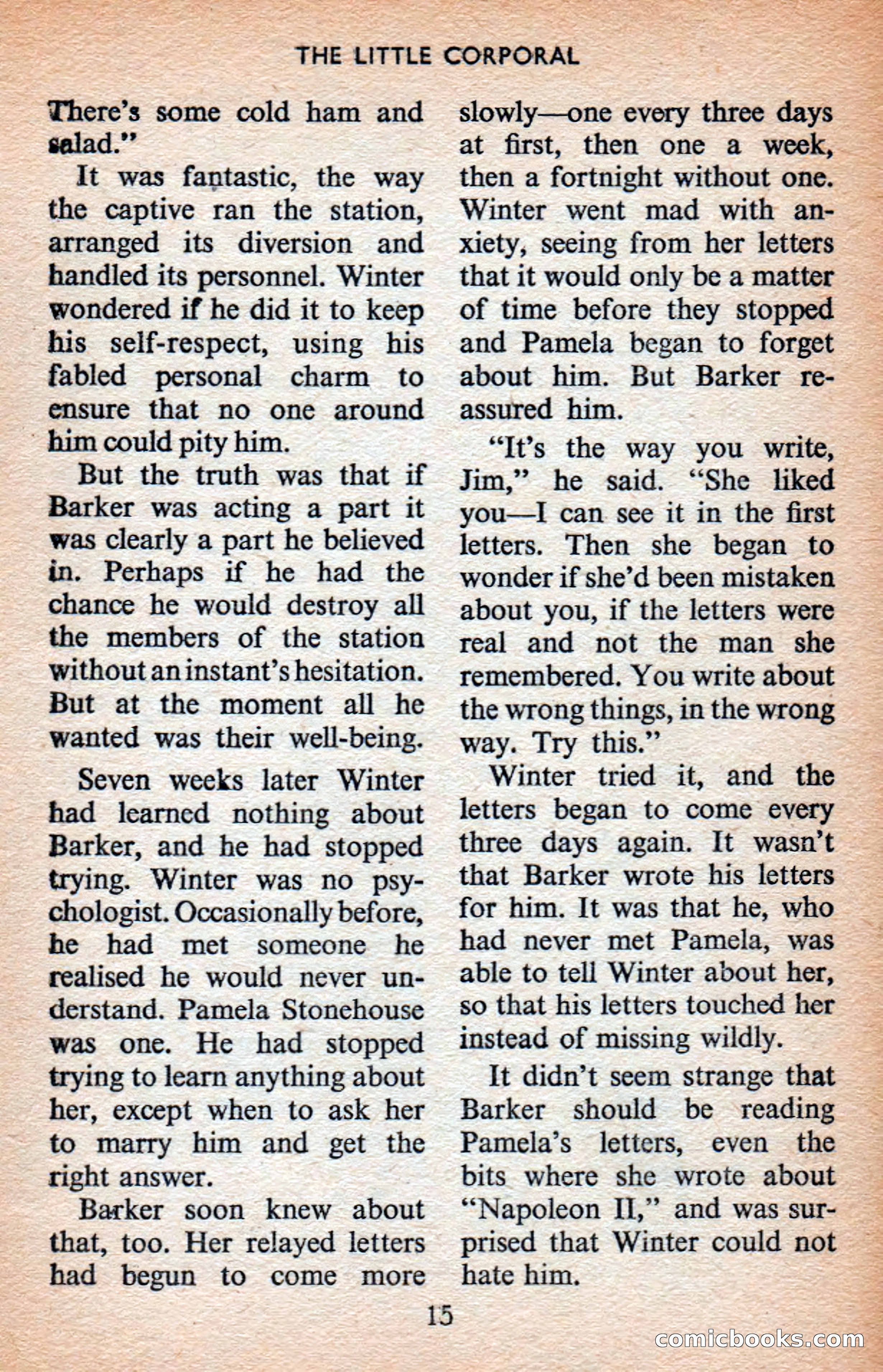
A restored page from Pulp Fiction, 1956. Page through the whole issue in the reader above.
📄 Transcribed text from this page (OCR, searchable)
Machine-transcribed from the original scan — historical spelling and the odd misread are preserved.
=> in, pe. - hod Pon et ee J - “ a ee Png og é = 3 < " ae ~ THE LITTLE CORPORAL There’s some cold ham and salad.” It was fantastic, the way the captive ran the station, arranged its diversion and handled its personnel. Winter wondered if he did it to keep his self-respect, using his fabled personal charm to ensure that no one around him could pity him. But the truth was that if Barker was acting a part it was clearly a part he believed in. Perhaps if he had the chance he would destroy all the members of the station without an instant’s hesitation. But at the moment all he wanted was their well-being. Seven weeks later Winter had learned nothing about Barker, and he had stopped trying. Winter was no psy- chologist. Occasionally before, he had met someone he realised he would never un- derstand. Pamela Stonehouse was one. He had stopped trying to learn anything about her, except when to ask her to marry him and get the right answer. Barker soon knew about that, too. Her relayed letters had begun to come more 15 ee we & es 1 - slowly—one every three days — at first, then one a week, — then a fortnight without one. Winter went mad with an- xiety, seeing from her letters that it would only be a matter of time before they stopped and Pamela began to forget about him. But Barker re-— assured him. “It’s the way you write, Jim,” he said. “She liked you—I can see it in the first letters. Then she began to wonder if she’d been mistaken about you, if the letters were real and not the man she remembered. You write about the wrong things, in the wrong way. Try this.” Winter tried it, and the letters began to come every three days again. It wasn’t that Barker wrote his letters for him. It was that he, who had never met Pamela, was able to tell Winter about her, so that his letters touched her instead of missing wildly. It didn’t seem strange that Barker should be reading Pamela’s letters, even the bits where she wrote about “Napoleon II,” and was sur- prised that Winter could not hate him. commiclsoolkks.conn- i rtner ty W3 re HEY Pe ek ti A) ~ 14 \ BinVAf 100s Abe with We AS be) WAY — a - Ki