
Pulp Fiction, 1956 · page 4 of 162
Authentic Science Fiction Monthly, No. 67 — page 4: what you’re looking at
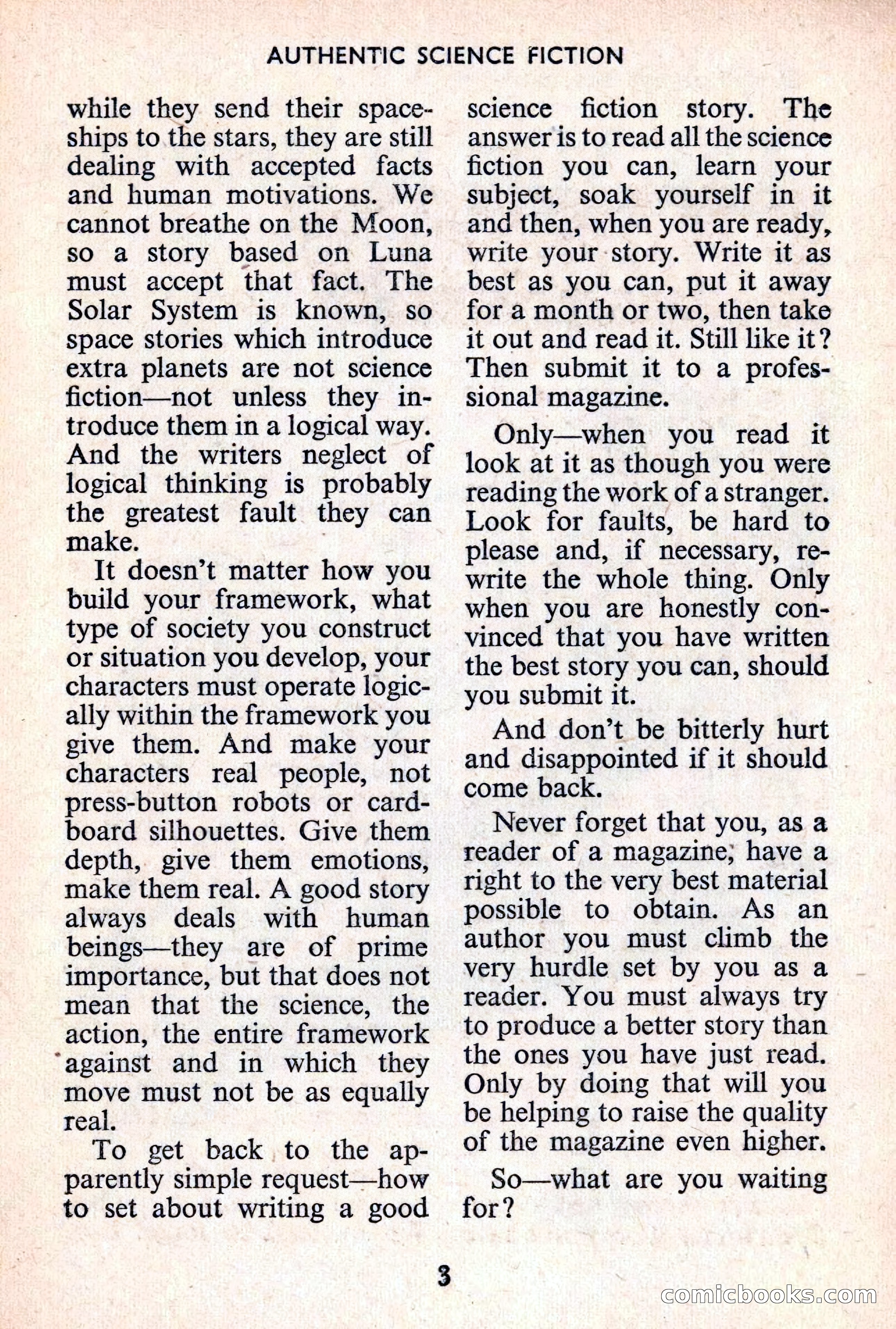
A restored page from Pulp Fiction, 1956. Page through the whole issue in the reader above.
📄 Transcribed text from this page (OCR, searchable)
Machine-transcribed from the original scan — historical spelling and the odd misread are preserved.
AUTHENTIC SCIENCE FICTION while they send their space- ships to the stars, they are still dealing with accepted facts and human motivations. We cannot breathe on the Moon, so a story based on Luna must accept that fact. The Solar System is known, so space stories which introduce extra planets are not science fiction—not unless they in- troduce them in a logical way. And the writers neglect of logical thinking is probably the greatest fault they can make. : It doesn’t matter how you build your framework, what type of society you construct or situation you develop, your characters must operate logic- ally within the framework you give them. And make your characters real people, not press-button robots or card- board silhouettes. Give them depth, give them emotions, make them real. A good story always deals with human beings—they are of prime importance, but that does not mean that the science, the action, the entire framework “against and in which they move must not be as equally real. To get back to the ap- parently simple request—how to set about writing a good science fiction story. The answer is to read all the science fiction you can, learn your subject, soak yourself in it and then, when you are ready, write your story. Write it as best as you can, put it away for a month or two, then take it out and read it. Still like it? Then submit it to a profes- sional magazine. Only—when you read it look at it as though you were reading the work of a stranger. Look for faults, be hard to please and, if necessary, re- write the whole thing. Only when you are honestly con- vinced that you have written the best story you can, should you submit it. And don’t be bitterly hurt and disappointed if it should come back. Never forget that you, as a reader of a magazine; have a right to the very best material possible to obtain. As an author you must climb the very hurdle set by you as a reader. You must always try to produce a better story than the ones you have just read. Only by doing that will you be helping to raise the quality of the magazine even higher. So—what are you waiting for? comicloooks.conm