
Pulp Fiction, 1956 · page 36 of 162
Authentic Science Fiction Monthly, No. 67 — page 36: what you’re looking at
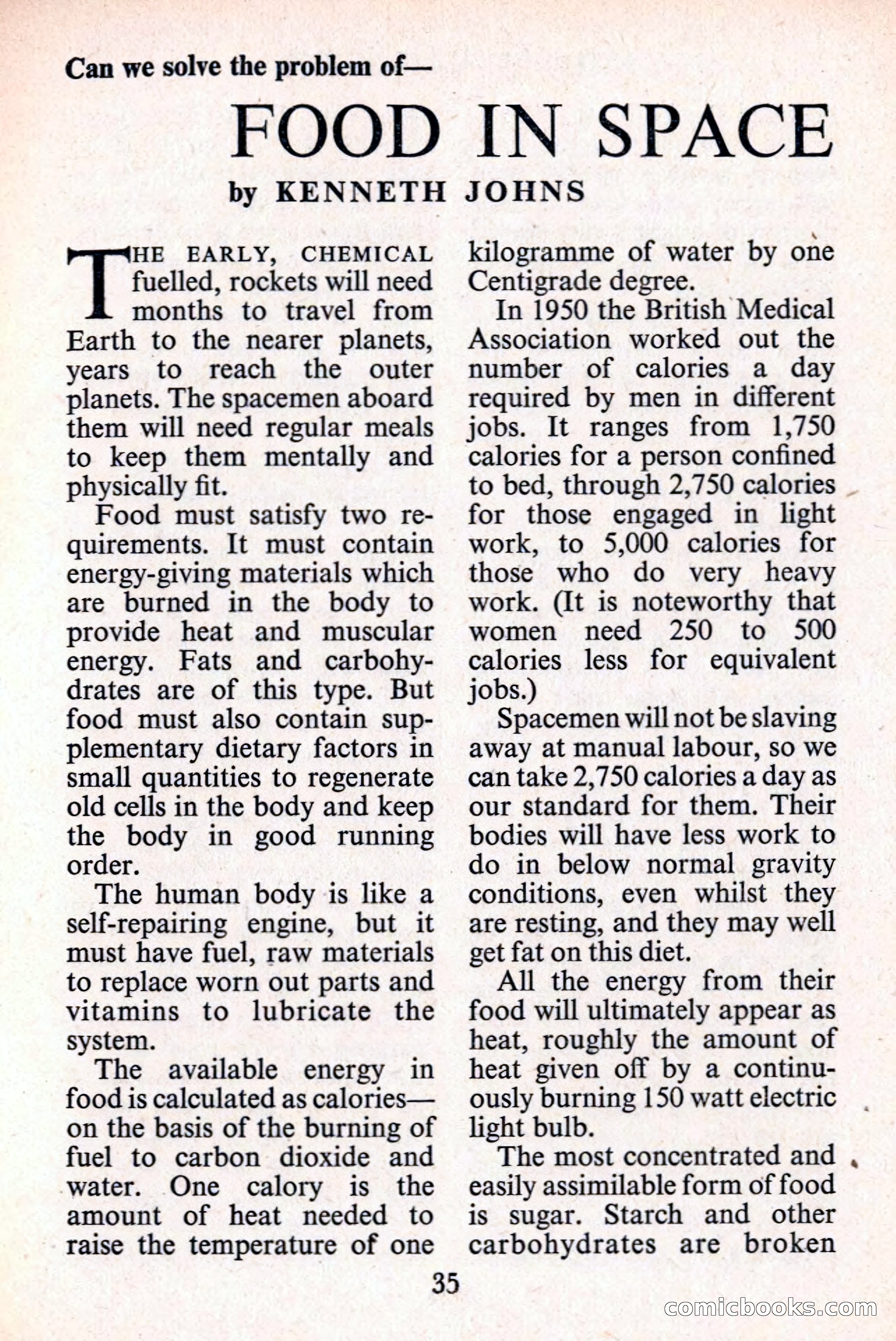
A restored page from Pulp Fiction, 1956. Page through the whole issue in the reader above.
📄 Transcribed text from this page (OCR, searchable)
Machine-transcribed from the original scan — historical spelling and the odd misread are preserved.
Can we solve the problem of— FOOD by KENNETH HE EARLY, CHEMICAL fuelled, rockets will need months to travel from Earth to the nearer planets, years to reach the outer planets. The spacemen aboard them will need regular meals to keep them mentally and physically fit. Food must satisfy two re- quirements. It must contain energy-giving materials which are burned in the body to provide heat and muscular energy. Fats and carbohy- drates are of this type. But food must also contain sup- plementary dietary factors in small quantities to regenerate old cells in the body and keep the body in good running order. The human body is like a self-repairing engine, but it must have fuel, raw materials to replace worn out parts and vitamins to lubricate the system. The available energy in food is calculated as calories— on the basis of the burning of fuel to carbon dioxide and water. One calory is the amount of heat needed to raise the temperature of one 35 IN SPACE JOHNS kilogramme of water by one Centigrade degree. In 1950 the British Medical Association worked out the number of calories a day required by men in different jobs. It ranges from 1,750 calories for a person confined to bed, through 2,750 calories ~ for those engaged in light work, to 5,000 calories for those who do very heavy work. (It is noteworthy that women need 250 to 500 calories less for equivalent jobs.) Spacemen will not be slaving away at manual labour, so we can take 2,750 calories a day as our standard for them. Their bodies will have less work to do in below normal gravity conditions, even whilst they are resting, and they may well get fat on this diet. All the energy from their food will ultimately appear as heat, roughly the amount of heat given off by a continu- ously burning 150 watt electric light bulb. The most concentrated and easily assimilable form of food is sugar. Starch and other carbohydrates are broken * comiclbooks.cormn